
Easy Lemon Posset with Fresh Berries
There is a special kind of magic in a dessert that takes ten minutes to make, uses three main ingredients, and still makes people think you spent all afternoon on it. Lemon posset is that dessert. It is nothing more than cream, sugar, and lemon, gently heated and then left in the fridge to set into something silky, bright, and completely irresistible. No eggs, no gelatine, no baking, no special equipment — just a saucepan, a few glasses, and a little patience while the fridge does the work.
I first tasted lemon posset at a friend’s dinner party years ago, served in small glasses with a pile of raspberries on top, and I could not believe how simple it was when she told me the recipe. Three ingredients? Ten minutes? It felt like a trick. But that is the beauty of a posset: the lemon juice does all the setting for you, reacting with the cream to create a soft, spoonable texture that no amount of whisking or baking could improve. It is one of the oldest desserts in the British tradition, and it has survived for centuries for a very good reason — it is delicious, and it is almost impossible to get wrong.
What I love most about this version is the fresh berries. The posset itself is rich and creamy, and the berries cut through that richness with their sharpness and their juice. Raspberries are my favourite here, because their tartness plays beautifully against the sweet lemon cream, but strawberries, blueberries, and blackberries are all wonderful too, and a mix of whatever is in season looks absolutely beautiful in the glass. A few berries on top, a little mint if you have it, and you have a dessert that looks like it came from a restaurant.
This is the dessert I make when I want something impressive without any stress. Dinner party on Saturday? Make the possets on Friday night and they are waiting in the fridge. A quiet evening when only something sweet will do? Ten minutes of work and a few hours in the fridge. A hot summer day when turning on the oven feels like a crime? This is the answer. It is elegant, it is easy, and once you have made it once, you will wonder why you ever bought a dessert in a shop.
Why You’ll Love This Recipe
The first reason is how little work it takes. Ten minutes of active time, and most of that is standing by the stove stirring cream and sugar while they come to the boil. There is no whisking egg whites, no worrying about a water bath, no checking whether something has set in the oven. You heat, you stir, you pour, you chill. That is the whole recipe, and it is the reason I reach for it whenever I need a dessert in a hurry but still want it to feel special.
The second reason is the flavour. A good lemon posset is a perfect balance: rich from the cream, sweet from the sugar, and bright from the lemon, all at once. It is not as sharp as a lemon curd and not as heavy as a cheesecake — it sits right in the middle, silky and cool and refreshing. The fresh berries on top add another layer of flavour and a lovely pop of colour, and the combination of creamy posset and juicy berries is genuinely hard to beat. If you like desserts that let lemon shine, you will also enjoy this roasted broccoli with Parmesan and lemon — a savoury dish, but the same love of bright lemon flavour.
It is also wonderfully flexible. You can make it in individual glasses for a dinner party, in one big bowl for a family-style dessert, or in tiny ramekins for a lighter portion. You can swap the berries for whatever fruit is in season — poached rhubarb in spring, peaches in summer, stewed plums in autumn — and you can dress it up with shortbread, biscotti, or a crumble of ginger biscuits for crunch. It scales up and down easily, it travels well in a cool bag, and it is naturally gluten-free, which makes it a brilliant option when you are feeding a mixed crowd.
Finally, it is a make-ahead dream. Lemon posset actually needs those hours in the fridge, so it is one of the rare desserts that is better when you make it the day before. That means no last-minute rushing, no oven timing to worry about, and no stress on the day of a dinner party. Make it the night before, add the berries just before serving, and you have a dessert that looks and tastes like you tried far harder than you did.
Ingredients You’ll Need
- 600 ml (2 1/2 cups) double cream (heavy cream, at least 35% fat)
- 150 g (3/4 cup) caster sugar (superfine sugar)
- 2 large lemons, zest of both, juice of both (about 75 ml / 5 tablespoons)
- 200 g (7 oz) mixed fresh berries — raspberries, strawberries, blueberries, blackberries
- 1 teaspoon vanilla extract (optional)
- Fresh mint leaves, for serving (optional)
- Shortbread or biscotti, for serving (optional)
A quick word on the cream, because it matters here: you need proper double cream, or heavy cream with at least 35% fat. Single cream, light cream, and half-and-half will not set, because the posset relies on the fat in the cream reacting with the lemon juice. Check the label before you start — it is the one thing that can genuinely go wrong with this recipe, and it is easy to avoid. For the lemons, use fresh ones and zest them before you juice them; unwaxed lemons are best for zesting, but give any lemon a good wash and dry first. And use berries that are ripe and sweet, because they are the only garnish this dessert needs.
How to Make Easy Lemon Posset with Fresh Berries
Start by getting your serving glasses or ramekins ready, because once the cream is hot, everything moves quickly. You will need six small glasses or ramekins, each holding about 150 ml, set out on a tray so you can move them to the fridge easily. Zest both lemons into a small bowl, then juice them and measure out the juice — you want about 75 ml, which is roughly the juice of two large lemons. If your lemons are small and you only get 60 ml, that is fine; if you get a little more, hold back the extra, because too much lemon can make the posset too sharp.
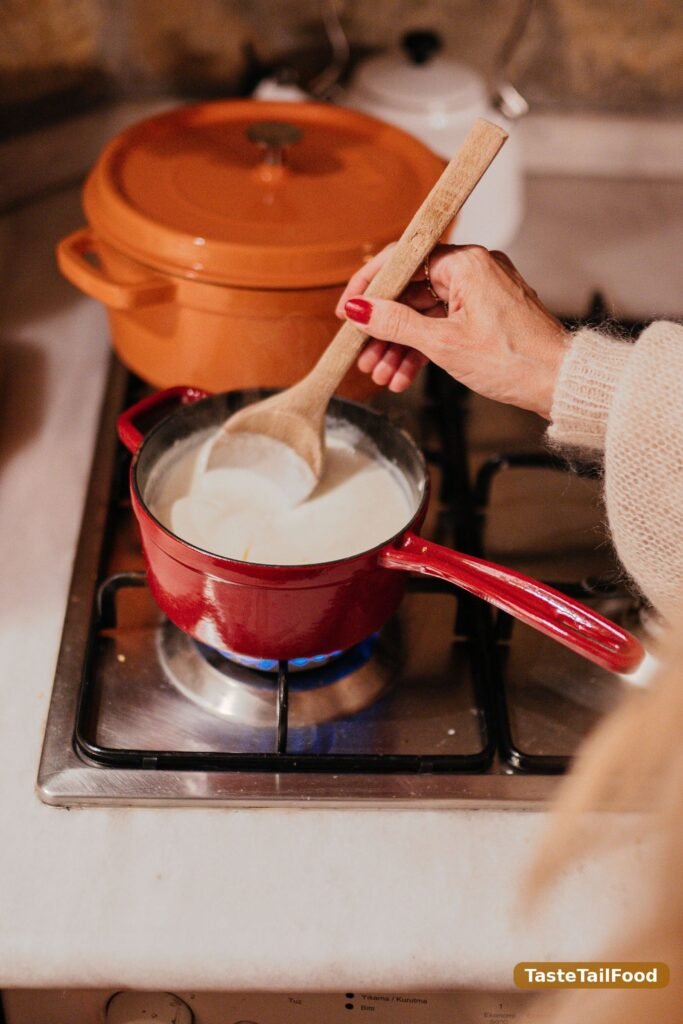
Put the cream and the sugar into a medium saucepan over medium heat, and stir gently until the sugar has dissolved completely. You should not be able to feel any grains on the spoon. Then turn the heat up slightly and bring the mixture to a gentle boil, stirring all the time. Let it bubble for three minutes — not one minute, not five, three is the sweet spot — and watch it closely, because cream can rise up and boil over very fast. If it starts climbing the sides of the pan, lift the pan off the heat for a few seconds, then put it back. The cream will thicken slightly as it boils, and the sugar will be completely dissolved by the end.
Take the pan off the heat and let it cool for about a minute, then stir in the lemon zest and the lemon juice. You will feel the mixture thicken slightly as you stir — that is the lemon doing its work, and it is exactly what you want. If you are using vanilla, stir it in now too. Let the mixture cool for five minutes, then strain it through a fine sieve into a jug, which removes any bits of zest and gives you a perfectly smooth posset. Skim off any bubbles on the surface with a spoon, because they can leave little marks on the finished dessert.
Pour the posset into your prepared glasses or ramekins, dividing it evenly, and let them cool to room temperature for about thirty minutes. Then cover each one loosely with cling film and put them in the fridge for at least three hours, or overnight if you can. The posset needs that time to set properly — it should be firm enough that the surface barely moves when you tilt the glass, but still soft and spoonable. Do not be tempted to rush it; a posset that has only had an hour in the fridge will still be liquid in the middle. Just before serving, top each glass with a generous pile of fresh berries and a mint leaf if you have one. For another easy dessert that comes together with pantry ingredients, these classic chocolate chip cookies are a wonderful partner to a bowl of berries.
Tips for Perfect Lemon Posset
Use the right cream, and I cannot stress this enough. Double cream or heavy cream with at least 35% fat is essential, and anything lighter simply will not set. I learned this the hard way once, when I grabbed the wrong carton and ended up with six glasses of lemon-flavoured cream soup. Check the fat content on the label before you start, and if you are not sure, ask at the shop. It is the single most important thing in this whole recipe.
Boil the cream for the full three minutes. That might sound fussy, but the boiling time is what concentrates the cream and helps it set firmly. If you only bring it to the boil and take it off the heat straight away, the posset will be softer and may not hold its shape. Set a timer, keep stirring, and watch for boil-overs — cream rises fast, so stay by the stove for those three minutes and do not wander off to do something else.
Strain the mixture before you pour it. It takes thirty seconds and it makes the difference between a posset that looks homemade and one that looks professional. The sieve catches the zest and any tiny lumps, and the surface sets perfectly smooth. And let the posset cool to room temperature before it goes in the fridge — putting hot glasses straight into the fridge can make condensation drip onto the surface. This lemon posset recipe follows the same classic method and is a lovely reference if you want to see another take on the traditional version.
Variations to Try
Once you have made the classic version, it is easy to play with it. For a lime posset, swap the lemons for limes and top with mango and passion fruit — it is wonderfully tropical and just as simple. For an orange posset, use orange zest and juice with a little less sugar, and top with segments of orange and a drizzle of honey. You can also infuse the cream before you boil it: add a split vanilla pod, a few lavender buds, or a sprig of rosemary to the pan, let it sit for ten minutes, and strain it out before you add the lemon. Each one gives the posset a completely different character.
For a layered dessert, put a spoonful of berry compote or lemon curd in the bottom of each glass before you pour in the posset. As the posset sets, it sits on top of the fruit layer, and when you dig in with a spoon you get two flavours at once. You can also crumble shortbread, ginger biscuits, or amaretti over the top just before serving for a lovely crunch against the silky cream. If you like the idea of a make-ahead dessert with fruit, this easy banana bread with walnuts is another one that tastes even better the day after you make it.
In winter, when fresh berries are expensive and not at their best, top the posset with stewed plums, poached pears, or a spoonful of good raspberry jam loosened with a little water. It is just as beautiful and just as delicious, and it means you can make this dessert all year round. And if you want a lighter version, serve it in smaller glasses — a little posset goes a long way, and a small portion with a pile of berries feels generous without being heavy.
Serving Ideas
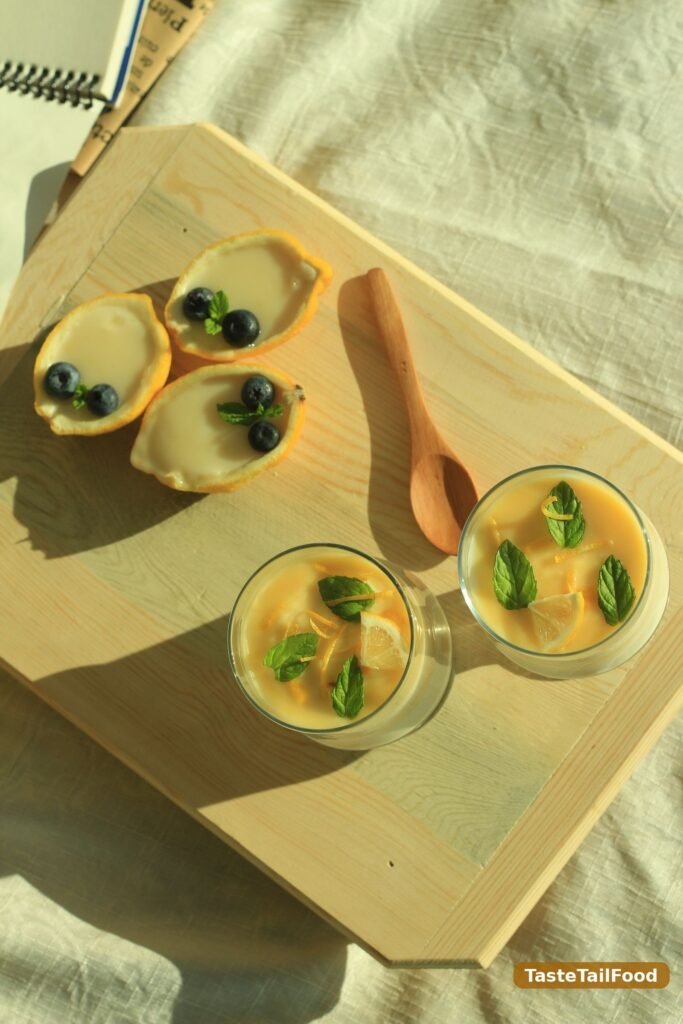
The simplest way to serve lemon posset is exactly as it is: a glass of silky lemon cream topped with fresh berries and nothing else. It needs no more than that, and it is at its best when the berries are ripe and sweet. Put the glasses on small plates with a little spoon each, and let people eat them slowly — this is a dessert to savour, not to rush.
If you want to dress it up for a dinner party, add a shortbread biscuit on the side of each plate, or a thin tuile if you are feeling fancy. A drizzle of berry coulis around the plate looks beautiful, and a little extra zest over the top adds a lovely fragrance. I like to serve posset after a rich main course, because its brightness cleanses the palate — it is wonderful after something like this air fryer honey-glazed salmon, where the lemon in the dessert echoes the flavours of the main course without repeating them.
For a summer gathering, set out a tray of possets with a big bowl of mixed berries on the side and let people top their own. It is interactive, it looks gorgeous, and it means everyone gets exactly the berries they like. In winter, serve the posset with a warm drink — a good coffee, a pot of tea, or a small glass of dessert wine — and it feels like a proper occasion. Whatever the season, serve it cold, straight from the fridge, because that cool, silky texture is half the pleasure.
Storage and Reheating
Lemon posset is a make-ahead dessert by nature, and it keeps beautifully in the fridge. Cover each glass loosely with cling film and store for up to three days — the flavour actually improves after the first day as the lemon mellows slightly. Do not add the berries until just before serving, because they will soften and release their juice into the posset if they sit on top overnight, which looks messy even though it still tastes good.
There is no reheating to worry about, because posset is served cold, straight from the fridge. If you have made it in one big bowl rather than individual glasses, just spoon it into serving dishes when you are ready. And if you have leftover posset that has been sitting for a couple of days, it is still perfectly good — just give it a gentle stir before serving, or use it as a topping for fresh fruit, pancakes, or even a slice of cake.
I would not freeze lemon posset. The texture changes when it thaws — it can go grainy or separate — and it is so quick to make fresh that freezing is not worth it. If you have leftover cream and lemons, it is better to make a fresh batch the day before you need it than to freeze a finished one. The BBC Good Food dessert recipes collection has plenty more make-ahead puddings if you are planning a dinner party and want a few options to choose from.
Frequently Asked Questions
Why didn’t my lemon posset set?
The most common reason is the cream. If you used single cream, light cream, or half-and-half, the posset will not set, because it needs the fat in double or heavy cream to react with the lemon juice. The second most common reason is not boiling the cream for long enough — it needs a full three minutes at a gentle boil to concentrate properly. And the third is not chilling it long enough. Give it at least three hours in the fridge, and overnight if you can, before you decide it has failed.
Can I make lemon posset without double cream?
Unfortunately, no — this is one recipe where the cream really matters. You need double cream or heavy cream with at least 35% fat for the lemon to set it properly. Lighter creams, milk, and plant-based creams will not give you the same result, and you will end up with a liquid dessert instead of a soft, spoonable posset. If you cannot find double cream, look for heavy whipping cream, which usually has enough fat to work.
How far ahead can I make lemon posset?
You can make it up to three days ahead, which makes it perfect for dinner parties. Keep the glasses covered in the fridge and add the berries just before serving. In fact, it tastes even better after a day in the fridge, because the lemon flavour mellows slightly and the texture becomes even silkier. Just do not add the berries or any biscuit topping until the last minute, or they will go soft.
What berries work best with lemon posset?
Raspberries are my favourite, because their tartness plays beautifully against the sweet, creamy posset, but strawberries, blueberries, and blackberries are all wonderful too. A mix of whatever is ripe and in season looks beautiful and tastes even better. In winter, when fresh berries are not at their best, stewed fruit, poached pears, or a spoonful of good jam all work well as a topping instead.
Can I use bottled lemon juice instead of fresh lemons?
You can, but fresh lemons will always taste better, and you need the zest as well as the juice for the best flavour. Bottled lemon juice works in a pinch — use the same amount — but it can taste a little flat and sharp compared to fresh. If you do use bottled juice, add a little extra zest from a fresh lemon if you have one, because the zest is where most of the lemon fragrance lives.
Is lemon posset gluten-free?
Yes, the posset itself is naturally gluten-free, since it is just cream, sugar, and lemon. The only thing to watch is what you serve with it — shortbread, biscotti, and most biscuits contain gluten, so if you are serving someone who is gluten-free, either skip the biscuit or use a gluten-free one. The berries on top are naturally gluten-free too, so the dessert is an easy choice for a mixed crowd.