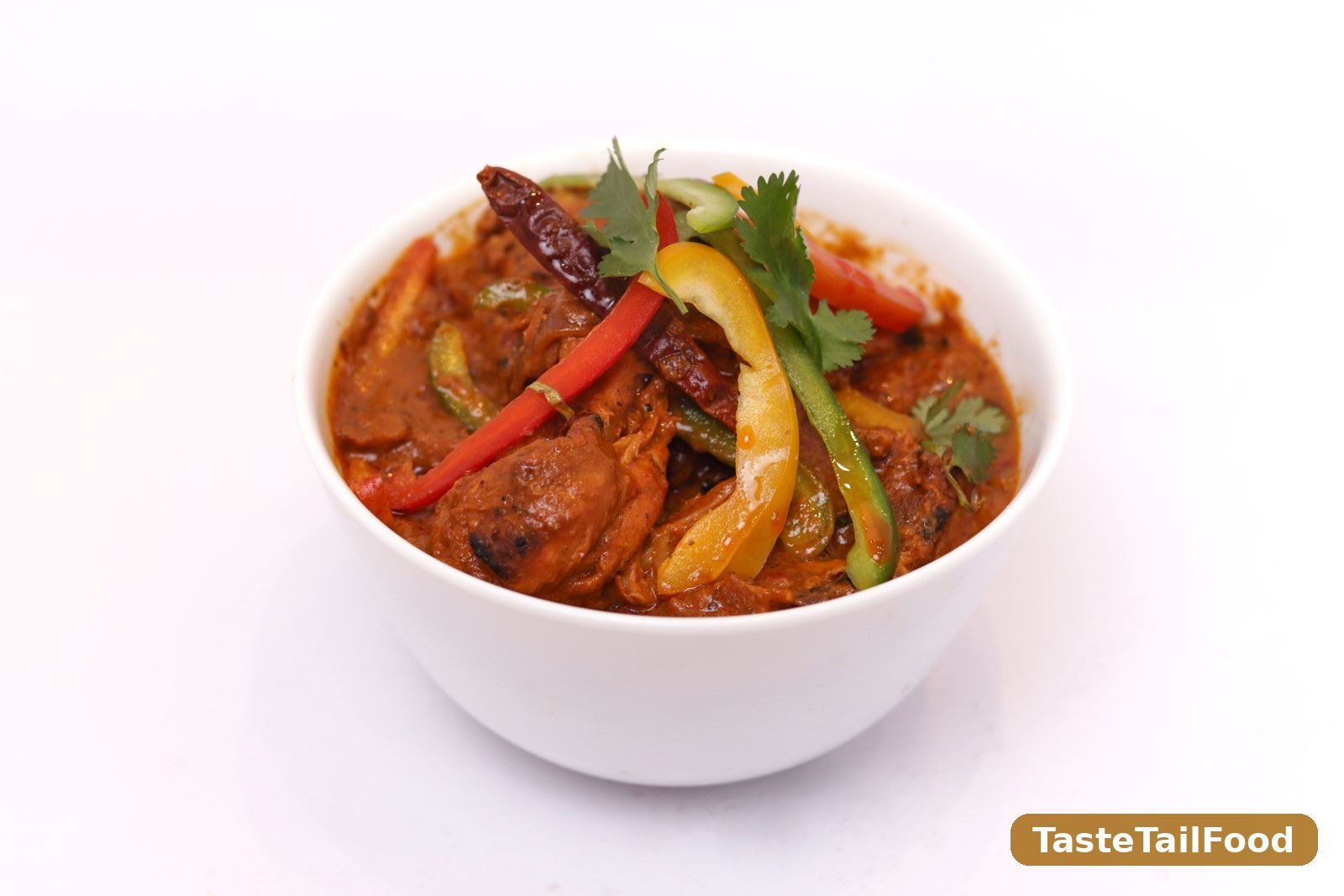
Chicken Jalfrezi with Peppers and Onions
Chicken jalfrezi is the curry I make when I want something bold, colourful, and fast. Unlike the slow-simmered curries that need an hour on the stove, jalfrezi comes together in about thirty minutes, and it is all about fresh peppers and onions stir-fried with chicken in a thick, spicy tomato sauce. There is no long, creamy sauce here. Instead, you get bright, distinct flavours, peppers that still have a bit of bite, onions that have softened just enough, and chicken coated in a rich, clinging sauce that tastes like it took far longer than it did. It is one of the most popular curries for a reason, and once you have made it at home, you will understand why.
The name jalfrezi comes from the Bengali words for hot and stir-fry, and that tells you everything you need to know. This is a stir-fried curry, cooked quickly over high heat, and the vegetables stay lively and fresh instead of melting away. I first had a proper jalfrezi at a friend’s house, where her mother made it with whatever peppers were in the fridge and a generous hand with the spices. It was nothing like the watery takeaway versions I had tried before. It was thick, it was spicy, and every mouthful had a different texture. I asked for the recipe that night, and I have been making my own version ever since.
What makes jalfrezi special is the contrast. The sweet peppers against the spicy sauce, the soft onions against the charred edges, the tender chicken against the crunch of a fresh pepper that has only just met the pan. It is a curry with energy, and it suits a busy weeknight perfectly, because it is ready in the time it takes to cook rice. It is also a brilliant way to use up peppers and onions, and it is endlessly adaptable. Use whatever colour peppers you have, add more chilli if you like it hot, or throw in a handful of mushrooms or green beans. If you enjoy quick chicken stir-fries, you will love this easy chicken stir-fry without soy sauce, which uses the same fast, high-heat method with a different flavour.
This is also a curry that feels generous without being heavy. There is no cream, no coconut milk, and no long simmer, so it is lighter than a korma or a tikka masala, but it is still deeply satisfying. Serve it with rice or naan, a simple salad, and a spoonful of yoghurt, and you have a dinner that tastes like a treat and still leaves you feeling good. It is the kind of meal I make when friends come over on a weeknight, because it looks impressive, tastes wonderful, and never keeps me in the kitchen for long.
Why You’ll Love This Recipe
First of all, it is fast. From the moment you start chopping to the moment you sit down to eat, you are looking at about thirty minutes, and most of that is just the rice cooking. The chicken and peppers cook in minutes over high heat, and the sauce comes together while they are in the pan. On nights when I get home late and I am tempted to order takeaway, this is the recipe that talks me out of it, because I know I can have a better curry on the table faster than a delivery driver could get to my door.
It is also wonderfully colourful and fresh. The red, green, and yellow peppers make the pan look beautiful, and they keep their colour and a little of their crunch, which gives the curry a lively texture that slow-cooked curries do not have. The onions soften and sweeten, the tomatoes break down into a thick sauce, and the whole dish smells warm and spicy. It is food that looks as good as it tastes, and that matters when you are feeding people you love.
The flavour is another reason this jalfrezi earns its place in the regular rotation. It is spicy without being punishing, with cumin, coriander, and turmeric giving it warmth, chilli giving it a kick, and the tomato sauce tying everything together. The peppers add sweetness, the onions add depth, and a squeeze of lemon at the end brightens the whole pan. You can adjust the heat to suit your household, and the curry will still taste like a jalfrezi, because the peppers and the stir-fry method are what define it.
Finally, this recipe is brilliantly flexible. I have made it with chicken breast, chicken thighs, and even leftover roast chicken, and all of them work. I have used whatever peppers were in the fridge, added mushrooms when I had them, and thrown in a handful of spinach at the end when I wanted extra greens. It is a forgiving recipe that welcomes improvisation, and that makes it perfect for real-life cooking. For another quick chicken dinner that uses a similar fast method, these quick cheesy chicken quesadillas for two are ready in minutes and always go down well.
Ingredients You’ll Need
- 700 g (about 1 1/2 lbs) boneless, skinless chicken breast or thighs, cut into bite-size pieces
- 2 tablespoons vegetable oil
- 1 large onion, sliced
- 1 red pepper, deseeded and sliced
- 1 green pepper, deseeded and sliced
- 1 yellow pepper, deseeded and sliced
- 3 cloves garlic, finely minced
- 1 tablespoon fresh ginger, finely grated
- 1 to 2 green chillies, finely chopped
- 2 teaspoons ground cumin
- 2 teaspoons ground coriander
- 1 teaspoon ground turmeric
- 1 teaspoon garam masala
- 1/2 teaspoon chilli powder, or more to taste
- 400 g (14 oz) tin chopped tomatoes
- 2 tablespoons tomato paste
- 1 teaspoon sugar
- 1 teaspoon fine sea salt, plus more to taste
- 1/2 teaspoon black pepper
- Juice of half a lemon
- Fresh coriander leaves, to serve
How to Make Chicken Jalfrezi with Peppers and Onions
Start by preparing everything before you turn on the heat, because jalfrezi cooks fast and you will not have time to chop once the pan is hot. Cut the chicken into bite-size pieces, slice the onion and peppers into strips, mince the garlic, grate the ginger, and chop the chillies. Measure the ground spices into a small bowl so you can add them all at once. This preparation takes ten minutes, and it makes the cooking feel calm and easy instead of rushed. Put the rice on to cook now too, because the curry will be ready in about twenty minutes.
Heat the oil in a large, wide pan or wok over high heat until it shimmers. Add the chicken pieces in a single layer and let them cook without moving them for two to three minutes, so they get a little colour on one side. Then turn them and cook for another two to three minutes until they are golden on the outside. The chicken does not need to be cooked through yet, because it will finish in the sauce. Take it out of the pan and set it aside on a plate. Working in batches matters here, because if you crowd the pan, the chicken will steam instead of searing, and you will lose that lovely golden colour.
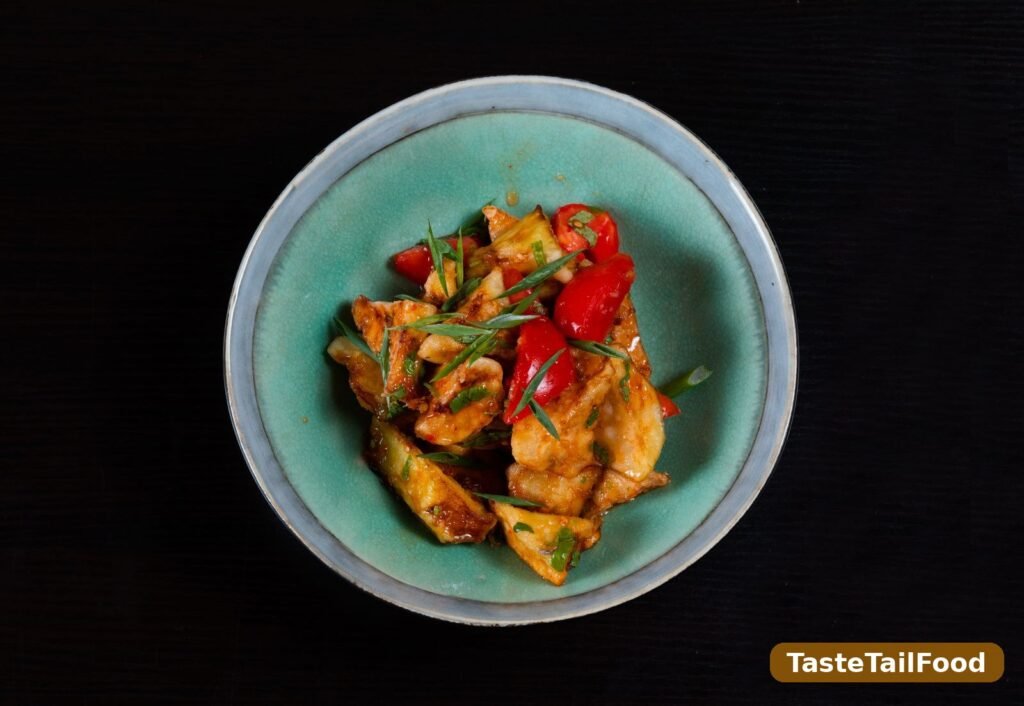
Turn the heat down to medium-high and add a little more oil to the same pan if needed. Add the sliced onion and peppers and cook for four to five minutes, stirring often, until they have softened slightly but still have a bit of bite. You want them tender-crisp, not soft and floppy. The peppers should still look bright and fresh, and the onions should be just starting to turn golden at the edges. This is the texture that makes jalfrezi different from other curries, so do not overcook them.
Add the garlic, ginger, and green chillies and cook for one minute until fragrant, then stir in the cumin, coriander, turmeric, garam masala, and chilli powder. Cook for another minute, stirring constantly, until the spices smell warm and wonderful. Pour in the chopped tomatoes and tomato paste, add the sugar and salt, and stir well. Let the sauce bubble for three to four minutes until it thickens and turns a deep, rich red. It should coat the back of a spoon rather than running like soup.
Return the chicken to the pan, along with any juices from the plate, and stir it into the sauce so every piece is well coated. Turn the heat down to medium and simmer for eight to ten minutes, until the chicken is cooked through and the sauce has thickened nicely around the peppers. Taste it and adjust the salt, add a squeeze of lemon juice, and scatter over the fresh coriander. For another good version to compare, the BBC Good Food chicken jalfrezi uses a similar quick method with a slightly different spice balance.
Tips for Perfect Chicken Jalfrezi
The single most important tip is to keep the heat high and the cooking fast. Jalfrezi is a stir-fry curry, and its character comes from that quick, hot cooking. If you cook it slowly over low heat, the peppers will go soft and the sauce will taste like any other curry. High heat, a wide pan, and not too much time in the pan are what keep the vegetables bright and the flavours lively. Use the largest pan you have, because a crowded pan steams instead of frying.
Do not overcook the peppers. This is the mistake I see most often, and it is an easy one to make. The peppers should still have a little bite when you serve the curry, and they should still look colourful and fresh. Five minutes in the pan is usually enough, and they will soften a little more as they simmer in the sauce. If you like your peppers very crisp, add them a minute later than the onions. If you prefer them softer, give them an extra minute, but do not cook them until they collapse.
Cut the chicken into even, bite-size pieces so it cooks quickly and evenly. Large chunks will take longer and may dry out on the outside before the middle is done, while very small pieces can overcook in minutes. Aim for pieces about the size of a walnut, and sear them in batches so they get colour. That browning adds flavour that you cannot get any other way, and it is worth the extra few minutes. For more ideas on fast chicken meals that use leftovers well, these easy homemade chicken wraps without mayonnaise are a brilliant lunch for the next day.
Finally, taste and adjust at the end. The lemon juice is not optional, because it lifts the whole dish and balances the richness of the tomatoes and spices. Add it just before serving, taste, and adjust the salt. If the sauce tastes too sharp, a pinch more sugar will round it out. If it tastes flat, a little more salt or lemon will wake it up. This last minute of tasting is what separates a good curry from a great one.
Variations to Try
Once you have made the basic jalfrezi, it is easy to make it your own. For a vegetarian version, swap the chicken for paneer, chickpeas, or halloumi, and use the same sauce and peppers. Paneer holds its shape beautifully and soaks up the spicy tomato sauce, while chickpeas make it hearty and filling. Add the paneer at the same time you would return the chicken to the pan, and cook it just until it is heated through.
For a richer jalfrezi, stir in a splash of cream or a spoonful of yoghurt at the end, off the heat. It softens the spice and makes the sauce silkier, and it is a lovely change if you usually make creamy curries. For a lighter version, add a handful of baby spinach or green beans with the peppers, and serve it with cauliflower rice instead of basmati. The sauce is so flavourful that it works with almost any vegetable you add.
If you like it hotter, add an extra green chilli or a pinch more chilli powder. If you want it milder for children, leave the chillies out altogether and use sweet paprika instead of chilli powder. The peppers and tomatoes will still give it plenty of flavour, and the cumin and coriander will keep it tasting like a proper curry. You can also try it with prawns instead of chicken, adding them for the last three minutes so they stay tender. For a one-pan chicken dinner with a completely different flavour, this one-pan lemon herb chicken orzo is another weeknight favourite in our house.
Serving Ideas
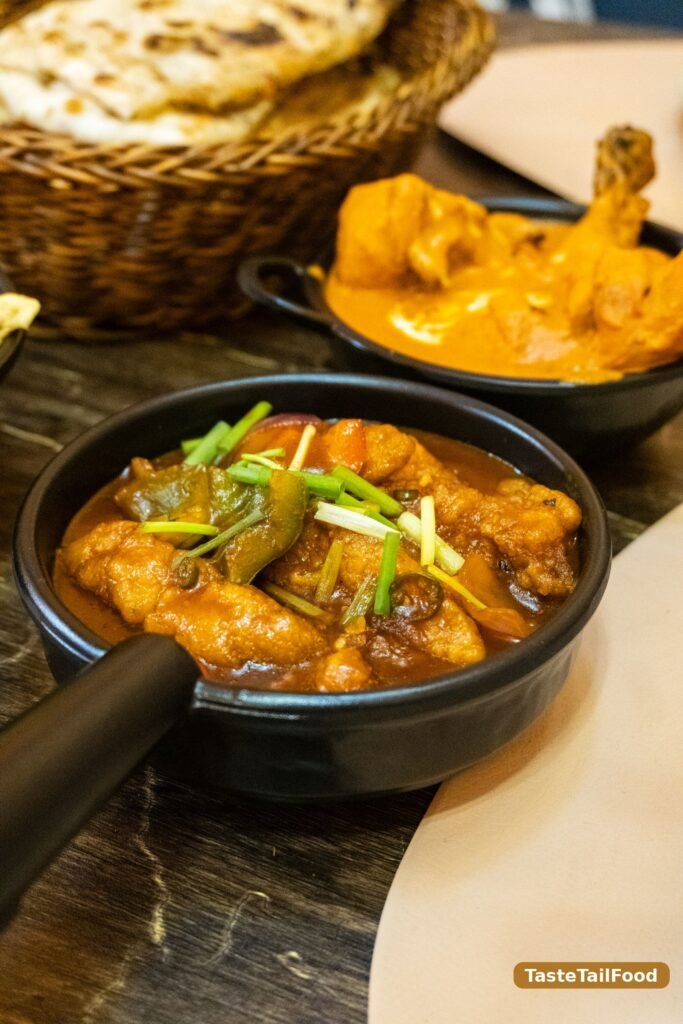
Serve chicken jalfrezi with fluffy basmati rice and warm naan bread, and you have a complete meal. The rice soaks up the thick tomato sauce, and the naan is perfect for scooping up the peppers and chicken. A simple cucumber raita or a bowl of plain yoghurt on the side is lovely too, because the cool yoghurt balances the warmth of the spices. A few poppadoms add crunch, and a simple salad of sliced onion, tomato, and cucumber with lemon juice keeps the meal fresh.
For a lighter meal, serve the jalfrezi with cauliflower rice or a big green salad, and skip the naan. The curry is flavourful enough to stand on its own, and the peppers and onions already give you plenty of vegetables. If you are feeding a crowd, put the jalfrezi in a big serving bowl in the middle of the table with the rice, naan, and salads around it, and let everyone help themselves. It is generous, colourful food, and it looks wonderful on a table full of people.
Leftovers are great the next day, spooned over rice or wrapped in a warm flatbread with salad and yoghurt. I have also served leftover jalfrezi over a baked potato, and it was far better than it sounded. The sauce is so versatile that it goes with almost any plain base, so do not be afraid to improvise. For a classic guide to roasting chicken that pairs well with these flavours, the BBC Good Food roast chicken recipe is a useful reference for a different night.
Storage and Reheating
Leftover chicken jalfrezi keeps well in the fridge for up to four days. Let it cool completely, then store it in an airtight container. The flavours deepen overnight, and the peppers will soften a little more, but it will still taste wonderful. Keep the rice separate if you can, so it does not go soggy.
To reheat, warm the jalfrezi gently in a pan over medium heat, stirring often, until it is piping hot all the way through. Add a splash of water if the sauce has thickened too much. The microwave works in short bursts with a stir in between, but the pan gives you more control. Taste it after reheating and add a fresh squeeze of lemon if it needs brightening up.
For longer storage, jalfrezi freezes well for up to three months. Portion it into freezer containers, label with the date, and thaw overnight in the fridge before reheating. The peppers will be softer after freezing, but the flavour stays excellent. Never refreeze curry once it has been thawed, and always make sure it is heated right through before serving.
Frequently Asked Questions
Is chicken jalfrezi spicy?
Yes, jalfrezi is a medium-hot curry, spicier than a korma but milder than a vindaloo. This recipe has a warmth that builds gently, with green chillies and chilli powder giving it a kick. You can make it milder by leaving out the chillies and using sweet paprika instead of chilli powder, or hotter by adding an extra chilli. The peppers and tomatoes keep it flavourful at any heat level.
What is the difference between jalfrezi and other curries?
Jalfrezi is a stir-fried curry, cooked quickly over high heat with fresh peppers and onions that stay bright and a little crisp. Other curries, like korma or vindaloo, are simmered slowly in a sauce. That fast cooking and the fresh vegetables are what make jalfrezi distinct, and they give it a lighter, fresher character than slow-cooked curries.
Can I use chicken thighs instead of breast?
Yes, chicken thighs work beautifully in jalfrezi. They stay juicier than breast and they are more forgiving if you cook them a minute too long. Cut them into bite-size pieces and sear them the same way. Breast is leaner and cooks a little faster, so either is fine, but thighs are my first choice for flavour and tenderness.
Can I make jalfrezi ahead of time?
Yes, it keeps well in the fridge for up to four days, and the flavours deepen overnight. The peppers will soften a little more by the next day, but it will still taste great. Reheat it gently in a pan, add a splash of water if needed, and finish with a fresh squeeze of lemon to brighten it up.
What should I serve with chicken jalfrezi?
Basmati rice and warm naan bread are the classic partners. A cucumber raita or plain yoghurt cools the spice, and a simple salad adds freshness. For a lighter meal, serve it with cauliflower rice or a green salad. Poppadoms and mango chutney make it feel like a proper Indian dinner.
Can I freeze chicken jalfrezi?
Yes, it freezes well for up to three months. Cool it completely, portion into airtight containers, and label with the date. Thaw overnight in the fridge and reheat gently in a pan. The peppers soften after freezing, but the flavour remains excellent, and it makes a brilliant freezer meal for busy weeks.