Chicken Vindaloo with Potatoes
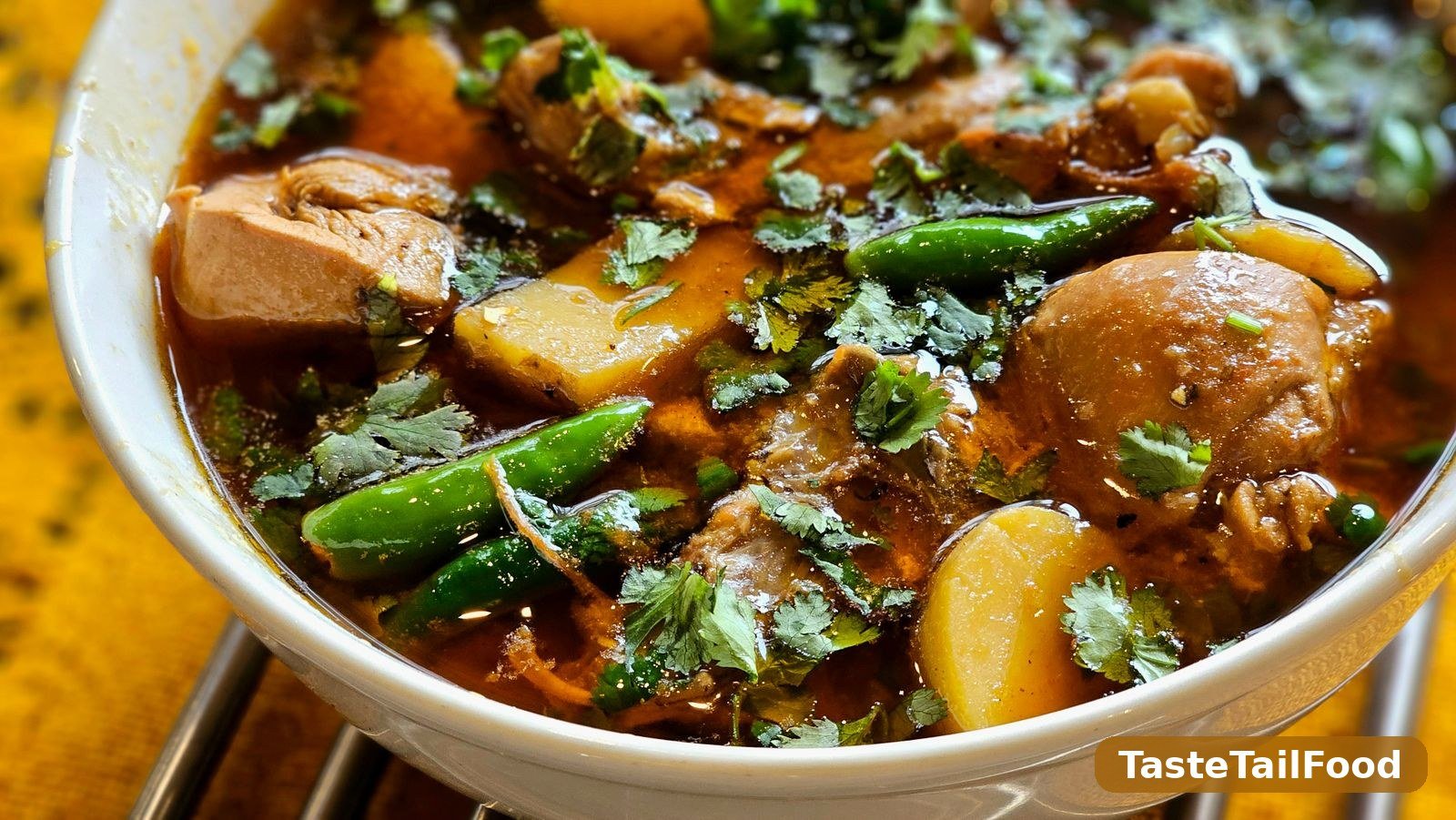
Chicken vindaloo has a reputation, and honestly, most of it is deserved. It is bold, it is fiery, and it is not a curry for the faint-hearted. But behind that reputation is a dish with real depth, a tangy, rich sauce built on vinegar, garlic, and a generous handful of spices, with tender chicken and soft potatoes soaking up every bit of flavour. I first tasted a proper vindaloo at a small family-run restaurant years ago, and I remember thinking it was so much more interesting than the one-note heat I had expected. There was sourness, sweetness, warmth, and a slow burn that built rather than attacked. I went home determined to learn to make it myself, and after a few attempts, this is the version I have settled on.
The story of vindaloo is a lovely one. It began as a Portuguese dish of meat cooked in wine and garlic, brought to Goa centuries ago, and slowly transformed by Indian cooks into the curry we know today. The vinegar stayed, the wine went, and the spices took over. That vinegar is what makes vindaloo different from other curries. It gives the sauce a sharp, bright edge that cuts through the richness and makes the whole dish taste alive. Combined with the earthiness of the potatoes and the warmth of the spices, it creates a curry that is complex, punchy, and deeply satisfying.
What I love about making vindaloo at home is that you control the heat. Restaurant vindaloos can be punishingly hot, but at home you can make it as fiery or as gentle as you like without losing the character of the dish. This recipe sits at a comfortable medium-hot level, with a warmth that builds slowly and a tang that keeps it fresh. If you like it hotter, add more chilli. If you want it milder, hold back a little. Either way, the vinegar, garlic, and spice paste are what make it a vindaloo, and they are all here in full. If you enjoy bold chicken dinners with a bit of personality, you will also like these crispy air fryer potatoes without flour, which make a brilliant side for curries like this one.
This is a curry for a Friday night, for a cold evening when you want something warming, or for any night when plain chicken just will not do. It takes a little longer than a quick stir-fry, because the sauce needs time to simmer and the potatoes need time to go soft, but most of that time is hands-off. Put the rice on, warm the naan, and let the vindaloo bubble away while the kitchen fills with that wonderful spicy smell. It is the kind of meal that makes people ask for the recipe, and it is well worth the small amount of effort.
Why You’ll Love This Recipe
First of all, the flavour is unforgettable. Vindaloo is not a shy curry. The vinegar gives it a tangy brightness, the garlic gives it depth, the spices give it warmth, and the potatoes soak up the sauce and turn soft and delicious. Every spoonful has something going on, and it is the kind of flavour that stays with you. If you have only ever had bland takeaway curry, this homemade version will be a revelation, because you can taste every layer of the spice paste instead of just heat.
It is also surprisingly straightforward. The heart of the recipe is a spice paste made in a blender, and once that is done, the rest is just a gentle simmer. There is no complicated technique, no need for specialist equipment beyond a blender or food processor, and the ingredients are all things you can find in a normal supermarket. I have made this on weeknights when I was short on time, and I have made it slowly on a Sunday when I wanted the house to smell wonderful all afternoon. It works both ways.
The potatoes are another reason this recipe works so well. They are not just a filler. They cook in the sauce until they are soft and soaked through with flavour, and they give the curry a hearty, satisfying quality that makes it a complete meal. They also help balance the heat, because a bite of soft potato with a spoonful of sauce is somehow gentler than the sauce on its own. Children who find the curry too hot often love the potatoes, and adults love them too.
Finally, this vindaloo is a great make-ahead meal. Like most curries, it tastes even better the next day, when the vinegar and spices have had time to settle into the chicken and potatoes. I often make it the day before I need it, and it reheats beautifully. It also freezes well, so it is a smart recipe to double when you have the time. For another hearty potato dinner that is much milder, this easy potato dinner without cheese is a lovely option for nights when you want comfort without the heat.
Ingredients You’ll Need
- 800 g (about 1 3/4 lbs) boneless, skinless chicken thighs, cut into large chunks
- 4 medium potatoes, peeled and cut into large chunks
- 3 tablespoons vegetable oil
- 2 medium onions, finely chopped
- 6 cloves garlic
- 1 tablespoon fresh ginger, roughly chopped
- 2 to 3 dried red chillies, or 1 teaspoon chilli flakes
- 2 teaspoons cumin seeds
- 2 teaspoons coriander seeds
- 1 teaspoon turmeric
- 1 teaspoon ground cinnamon
- 1/2 teaspoon ground cloves
- 1/2 teaspoon black peppercorns
- 4 tablespoons white wine vinegar or cider vinegar
- 2 tablespoons tomato paste
- 1 tablespoon brown sugar
- 400 ml (about 1 2/3 cups) chicken stock or water
- 1 teaspoon fine sea salt, plus more to taste
- Fresh coriander leaves, to serve
How to Make Chicken Vindaloo with Potatoes
Start by making the spice paste, because it is the soul of the whole dish. Put the garlic, ginger, dried chillies, cumin seeds, coriander seeds, turmeric, cinnamon, cloves, and black peppercorns into a blender or food processor with the vinegar and two tablespoons of water. Blend until you have a smooth, thick paste, stopping to scrape down the sides as needed. It should smell fiercely fragrant, garlicky and warm, with a sharp vinegar edge. If it is too thick to blend, add a little more water, a tablespoon at a time. This paste is where all the flavour lives, so do not rush it. A smooth paste makes a smooth sauce, and it is worth the extra minute in the blender.
Heat the oil in a large, heavy-based pan or casserole over medium heat. Add the onions with a pinch of salt and cook for eight to ten minutes, stirring often, until they are soft and golden. This slow cooking matters, because the sweetness of the onions balances the sharpness of the vinegar. While the onions cook, you can cut the chicken and potatoes, and get the rice started if you are serving it alongside. The kitchen will already be starting to smell good, and that is only the beginning.
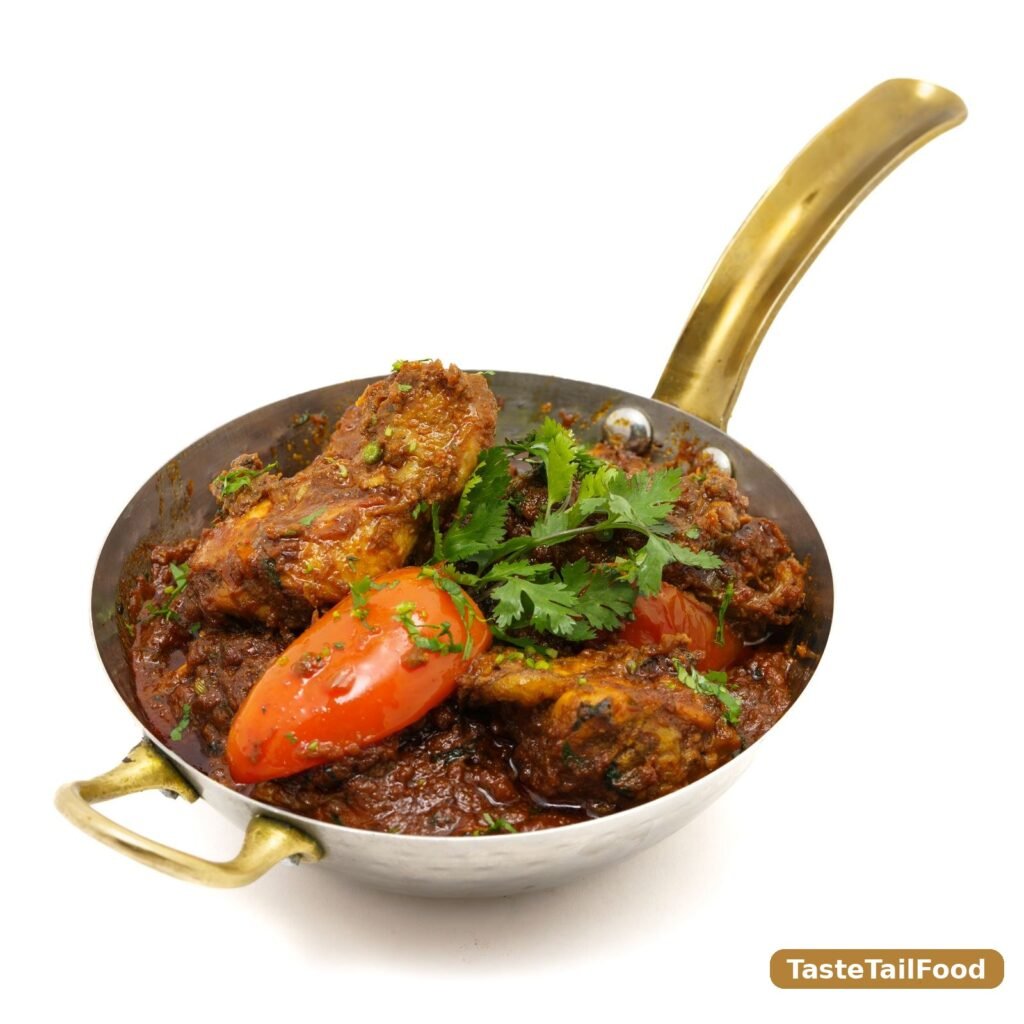
Add the spice paste to the onions and cook it for three to four minutes, stirring constantly, until it darkens slightly and the oil starts to separate at the edges. This frying step is important. It cooks out the raw garlic and spice flavour and deepens everything into a rich, rounded base. Keep the heat at medium and do not walk away, because the paste can catch quickly. When it smells warm, toasty, and intensely fragrant, you know it is ready.
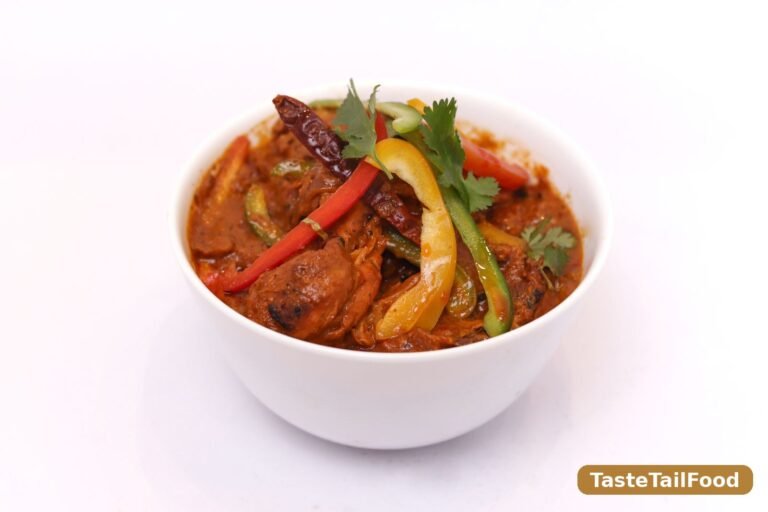
Stir in the tomato paste and brown sugar, then add the chicken pieces and turn them in the paste until every piece is well coated. Cook for five minutes, then pour in the chicken stock and add the potatoes and salt. Stir well, bring it to a gentle boil, then turn the heat right down, put the lid on, and let it simmer for thirty-five to forty minutes. Stir every ten minutes or so, and check that the potatoes are going soft and the chicken is tender. The sauce should thicken into a rich, deep red-brown colour, and the potatoes should be soft enough to break with a spoon but not falling apart completely.
Taste the vindaloo at the end and adjust it to your liking. It should be tangy, warm, and a little sweet all at once. Add more salt if it needs it, a little more vinegar if you want it sharper, or a pinch more sugar if the vinegar is too forward. Remove it from the heat and let it stand for five minutes before serving, scattered with fresh coriander. For a good comparison of how another cook approaches this classic, the BBC Good Food chicken vindaloo is worth reading alongside this recipe.
Tips for Perfect Chicken Vindaloo
The biggest tip is to taste and adjust the vinegar at the end. Vinegar is the defining flavour of vindaloo, but every vinegar is slightly different, and every palate is different too. The recipe gives you a starting point, and the final adjustment is where you make it yours. If it tastes too sharp, a little more sugar and a longer simmer will soften it. If it tastes flat, a splash more vinegar will wake it up. Do not be afraid to tweak it. Good cooking is tasting as you go.
Control the heat to suit your household. The dried chillies in the paste give this vindaloo a solid medium heat, but you can easily make it milder by using one chilli instead of three, or hotter by adding an extra one or a pinch of chilli flakes at the end. Remember that the heat will mellow slightly as the curry simmers and as it sits overnight, so a vindaloo that tastes very hot straight off the stove will be gentler the next day. Serve cooling yoghurt or raita on the side if anyone at the table is nervous about the spice.
Use waxy potatoes that hold their shape, like new potatoes or Charlotte potatoes, rather than floury ones that will fall apart into the sauce. You want the potatoes to stay in soft chunks, not dissolve into mush. Cut them into large pieces so they survive the long simmer, and add them at the same time as the stock so they cook through properly. If you are cooking for people who love a simpler chicken dinner, this easy chicken dinner without an oven is a good gentle alternative for another night.
Finally, give the vindaloo time. It is not a quick curry, and the simmer is where the magic happens. The chicken becomes tender, the potatoes soak up the sauce, and the vinegar mellows into the spices. If you rush it, the sauce will taste sharp and the chicken will be tough. Forty minutes of gentle bubbling is not a long time, and it is mostly hands-off, so put the rice on, set the table, and let the pan do its work.
Variations to Try
Once you have the basic vindaloo down, there are plenty of ways to make it your own. For a pork vindaloo, which is the traditional Goan version, swap the chicken for diced pork shoulder and simmer for an hour until the meat is meltingly tender. The vinegar and spices work beautifully with pork, and it is a wonderful change if you eat meat beyond chicken. You can also try it with lamb, which needs about an hour of simmering as well.
For a vegetarian version, use chickpeas and cauliflower instead of chicken, and add the cauliflower halfway through cooking so it stays in soft chunks. The spice paste is so full of flavour that the vegetables carry it brilliantly, and the potatoes are already there doing their job. You can also add a tin of drained chickpeas at the same time as the potatoes for extra protein and heartiness.
If you like your vindaloo even richer, stir in a tablespoon of tamarind paste with the stock for a deeper sour note, or add a few curry leaves with the onions for fragrance. Some cooks add a splash of coconut milk at the end to soften the heat, though that is not traditional. For a quick rice side that goes with this curry, these quick chicken and rice recipes with frozen vegetables show how easy a one-pan rice dinner can be.
Serving Ideas
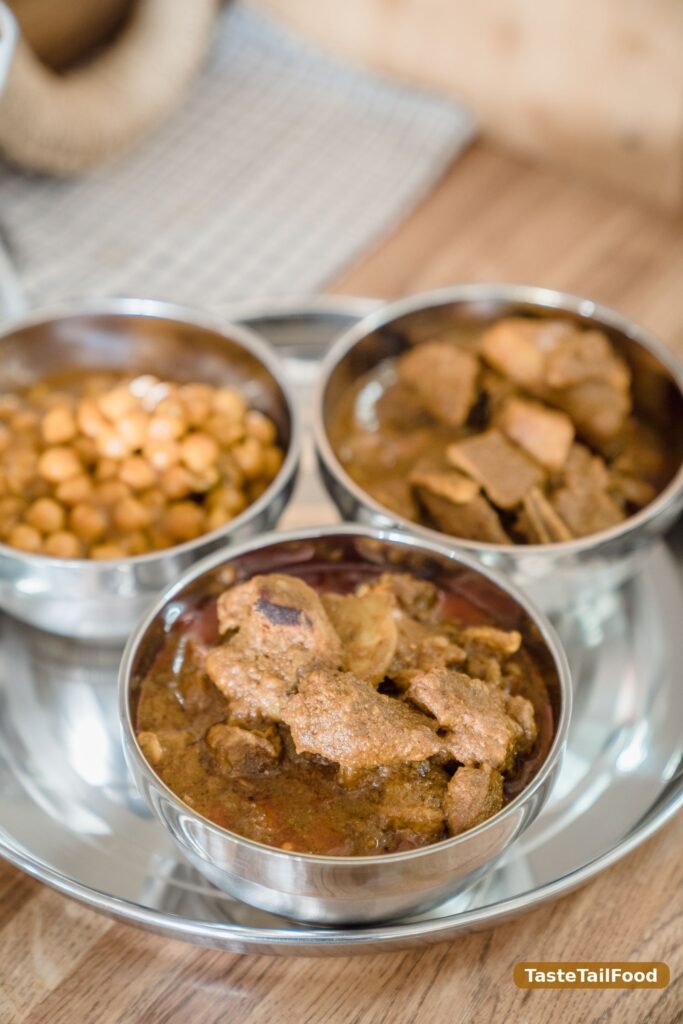
Serve chicken vindaloo with fluffy basmati rice and warm naan bread, and you have a complete meal. The rice is essential, because it soaks up the rich, tangy sauce and gives your palate a break between fiery mouthfuls. A cooling cucumber raita or a simple bowl of plain yoghurt is almost essential too, especially if you have made the vindaloo on the hotter side. The cool yoghurt against the warm spices is one of the great food pairings.
A simple salad of sliced onion, tomato, and cucumber with lemon juice and salt adds freshness and crunch, and a few poppadoms on the side make the meal feel like a proper Indian dinner. If you are feeding a crowd, put the vindaloo in a big bowl in the middle of the table with the rice, naan, raita, and salad around it, and let everyone serve themselves. It is generous, relaxed food, and it suits a table full of people. For a different take on bold curry flavours, the Jamie Oliver chicken tikka masala is another classic worth trying on a different night.
Leftovers are wonderful the next day, spooned over rice or wrapped in a warm flatbread with salad and yoghurt. I have even served leftover vindaloo over a baked potato, and it was far better than it had any right to be. The sauce is so flavourful that it lifts whatever plain base you put it with, so do not be shy about improvising.
Storage and Reheating
Leftover chicken vindaloo keeps beautifully in the fridge for up to four days, and it genuinely tastes better the next day. Let it cool completely, then store it in an airtight container. The vinegar and spices continue to work their way into the chicken and potatoes overnight, and the flavours become deeper and more rounded. Keep the rice separate to stop it going soggy.
To reheat, warm the vindaloo gently in a pan over low heat, stirring often, until it is piping hot all the way through. Add a splash of water if the sauce has thickened too much. The microwave works in short bursts with a stir in between, but the pan gives you more control and lets you check the seasoning again. Taste it after reheating, because you may want a squeeze of lemon or a pinch more salt.
For longer storage, vindaloo freezes well for up to three months. Portion it into freezer containers, label with the date, and thaw overnight in the fridge before reheating. The potatoes may soften a little more after freezing, but the flavour will still be excellent. Never refreeze curry once it has been thawed, and always make sure it is heated right through before serving.
Frequently Asked Questions
Is chicken vindaloo very spicy?
It can be, but it does not have to be. Traditional vindaloo is a hot curry, and this recipe sits at a comfortable medium-hot level with a warmth that builds slowly. You can make it milder by using fewer chillies, or hotter by adding more. The vinegar tang is always there, whatever the heat level, and that tang is what makes it a vindaloo rather than just a hot curry.
What makes vindaloo different from other curries?
The vinegar is the key difference. Vindaloo comes from a Portuguese dish of meat in wine and garlic, and the vinegar gives it a sharp, tangy edge that other curries do not have. Combined with a garlic-heavy spice paste and a long simmer, it creates a rich, sour, and warming curry that is quite unlike a korma or a tikka masala.
Can I use chicken breast instead of thighs?
Yes, chicken breast works, but thighs are better for vindaloo because they stay tender through the long simmer. If you use breast, cut it into large chunks and check it after twenty-five minutes so it does not dry out. Thighs are more forgiving, and they give the sauce a richer flavour as they cook.
What kind of potatoes should I use?
Use waxy potatoes, such as new potatoes or Charlotte potatoes, because they hold their shape during the long simmer. Floury potatoes like Maris Piper can fall apart and turn the sauce starchy. Cut the potatoes into large chunks so they survive the forty minutes of cooking and come out soft but still in pieces.
Can I make vindaloo ahead of time?
Yes, and it is better the next day. Make it as directed, cool it, and store it in the fridge for up to four days. The flavours deepen overnight, and a gentle reheat brings it back to life. It is a brilliant make-ahead curry for busy weeks and for feeding guests.
Can I freeze chicken vindaloo?
Yes, it freezes well for up to three months. Cool it completely, portion into airtight containers, and label with the date. Thaw overnight in the fridge and reheat gently in a pan, adding a splash of water if needed. The potatoes soften slightly after freezing, but the flavour stays excellent.