Chocolate Hazelnut Tart with Sea Salt
There are desserts that impress people, and then there are desserts that make the whole table go quiet for a moment, in the best possible way. This chocolate hazelnut tart is firmly in the second group. The first time I made it was for a small dinner party, and I remember standing in the kitchen afterwards, slightly nervous, watching a friend take her first bite. She closed her eyes, put her fork down, and said nothing at all for a few seconds. Then she asked for the recipe. That is the kind of dessert this is. It looks elegant and a little fancy, like something you would order in a patisserie, but it is honestly one of the most forgiving desserts I know how to make.
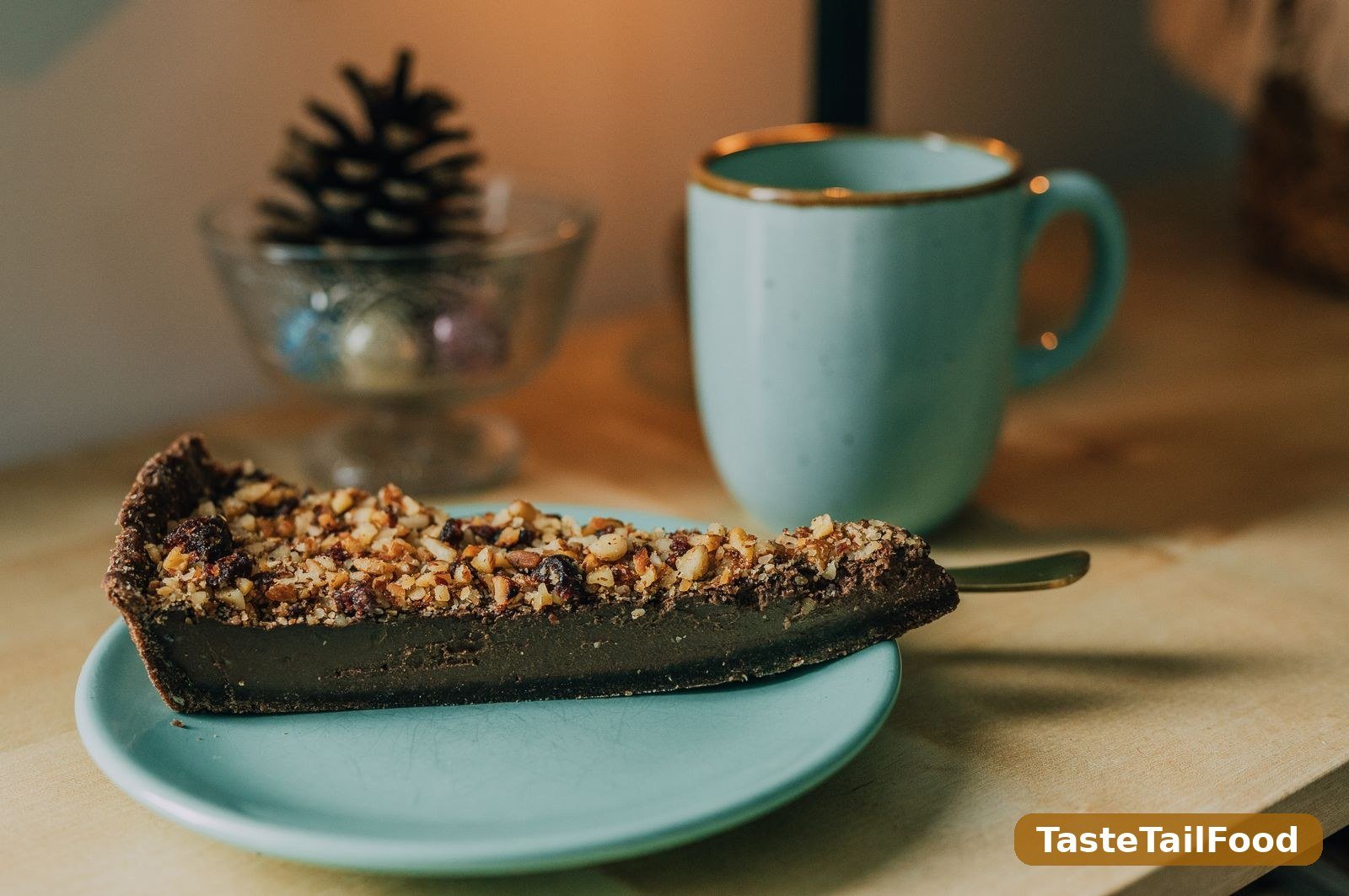
What makes it so special is the combination of flavours. Dark chocolate and hazelnut are a natural pair — think of the best chocolate hazelnut spread you have ever tasted, then imagine it grown up, richer, and a hundred times more interesting. The crust is buttery and crisp, with ground hazelnuts mixed right into the pastry so every bite carries that warm, nutty flavour. The filling is a smooth chocolate ganache, dark and glossy, that sets just firm enough to slice cleanly but still melts the moment it touches your tongue. And then there is the sea salt. A little sprinkle of flaky salt on top does something almost magical: it sharpens the chocolate, wakes up the hazelnuts, and stops the whole thing from tasting too sweet. If you have never tried salt on chocolate before, this tart will convert you.
I love this recipe because it feels like a celebration without demanding a whole day in the kitchen. The pastry comes together in a food processor in minutes, the ganache is just chocolate and cream stirred together in a bowl, and the hardest part is waiting for it to chill and set. There is no fiddly decorating, no piping, no layers to stack. You bake the crust, pour in the filling, scatter over some chopped hazelnuts and salt, and let the fridge do the rest. It is the dessert I make when I want something that looks like I tried very hard, on an evening when I actually have not.
It is also a wonderful make-ahead dessert, which is half the reason it has become my go-to for dinner parties and holidays. You can make the whole tart the day before, keep it in the fridge, and simply take it out a little while before serving so the ganache softens to the perfect texture. Nobody at the table needs to know that you were not in the kitchen all afternoon. Serve it in thin slices — it is rich, and a little goes a long way — with a spoonful of softly whipped cream or a scoop of vanilla ice cream, and you have a dessert that people will remember long after the plates are cleared.
Why You’ll Love This Recipe
First of all, it tastes extraordinary for the amount of effort involved. There is no complicated technique here, no candy thermometer, no tempering chocolate, and no pastry skills beyond pressing dough into a tin. If you can melt chocolate and stir cream, you can make this tart. The result tastes like something from a bakery window, all deep chocolate, toasted nuts, and buttery pastry, and it earns that reaction every single time. I have served it to people who claim they do not like desserts, and watched them go back for a second slice.
The texture is another reason this tart is so loved. The crust bakes up crisp and crumbly, almost like a shortbread cookie, and it holds its shape beautifully when you slice the tart. The ganache is the opposite: smooth, dense, and almost truffle-like, with a softness that melts slowly on the tongue. The chopped hazelnuts on top add a little crunch, and the flakes of sea salt give tiny bright pops of flavour as you eat. Every mouthful has something going on — crisp, creamy, crunchy, salty, sweet — and that contrast is what makes it feel so special rather than just rich.
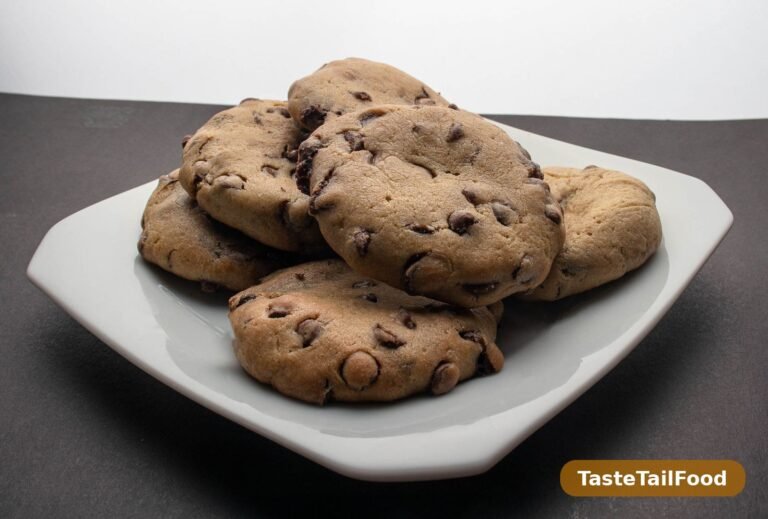
It is also remarkably flexible. You can make it with dark chocolate, milk chocolate, or a mixture of the two, depending on how intense you like your chocolate. You can swap the hazelnuts for almonds or pecans if that is what you have in the cupboard. You can make one large tart for a crowd, or divide the dough and filling between small tartlet tins for individual desserts that look beautiful on a plate. And if you are baking for people who love chocolate, you will also want to try these classic chocolate chip cookies, which use the same idea of good chocolate and a little salt to make something simple taste wonderful.
Finally, this tart is a dream for anyone who likes to plan ahead. Unlike a cake that needs to be baked on the day, or a dessert that wilts in the fridge, this tart actually improves with a night in the fridge. The flavours settle, the ganache firms up to the perfect slicing texture, and the crust stays crisp. You can even freeze it, which means you can have a show-stopping dessert ready to go whenever guests turn up. A recipe that tastes this good and takes this much stress out of hosting is a rare thing, and that is why it has earned a permanent place in my baking rotation.
Ingredients You’ll Need
- 200 g (1 2/3 cups) plain flour
- 100 g (1 cup) ground hazelnuts, plus 50 g (1/2 cup) chopped toasted hazelnuts for topping
- 50 g (1/4 cup) caster sugar
- 1/4 teaspoon fine sea salt
- 140 g (10 tablespoons) cold unsalted butter, cut into cubes
- 1 large egg yolk
- 1-2 tablespoons cold water, if needed
- 200 g (7 oz) dark chocolate (60-70% cocoa), finely chopped
- 200 ml (3/4 cup plus 1 tablespoon) double cream (heavy cream)
- 2 tablespoons unsalted butter, for the filling
- 1 tablespoon golden syrup or honey (optional, for shine)
- 1 teaspoon vanilla extract
- 1 teaspoon flaky sea salt, for sprinkling
- Softly whipped cream or vanilla ice cream, to serve
How to Make Chocolate Hazelnut Tart with Sea Salt
Start with the pastry, because it needs time to chill before it goes anywhere near the oven. Put the flour, ground hazelnuts, caster sugar, and fine sea salt into a food processor and pulse once or twice just to combine them. Add the cold butter cubes and pulse again until the mixture looks like fine breadcrumbs, with no large lumps of butter left. It should feel sandy when you rub a little between your fingers. Add the egg yolk and pulse a few more times until the dough starts to clump together. If it still looks dry and crumbly, add a tablespoon of cold water and pulse again. You want a dough that holds together when you squeeze it, but is not sticky or wet. Tip it out onto the worktop, press it into a flat disc, wrap it in cling film, and put it in the fridge for at least thirty minutes. This chilling time matters — cold pastry holds its shape in the oven instead of shrinking and slumping down the sides of the tin.
While the pastry chills, heat the oven to 180°C (350°F) and get your tart tin ready. A 23 cm (9 inch) loose-bottomed tart tin is ideal, because the loose base makes it so much easier to lift the finished tart out without breaking it. When the dough is chilled, roll it out on a lightly floured surface to a circle a few centimetres wider than your tin. It will be a little crumbly because of the nuts, so do not worry if it cracks at the edges — you can patch it easily. Lift the pastry into the tin, press it gently into the corners and up the sides, and trim off the excess by running a rolling pin across the top rim. Prick the base all over with a fork, then line it with baking paper and fill it with baking beans or dried rice. Bake for fifteen minutes, then carefully lift out the paper and beans and bake for another eight to ten minutes, until the pastry is light golden and dry to the touch. Let the shell cool completely in the tin while you make the filling.
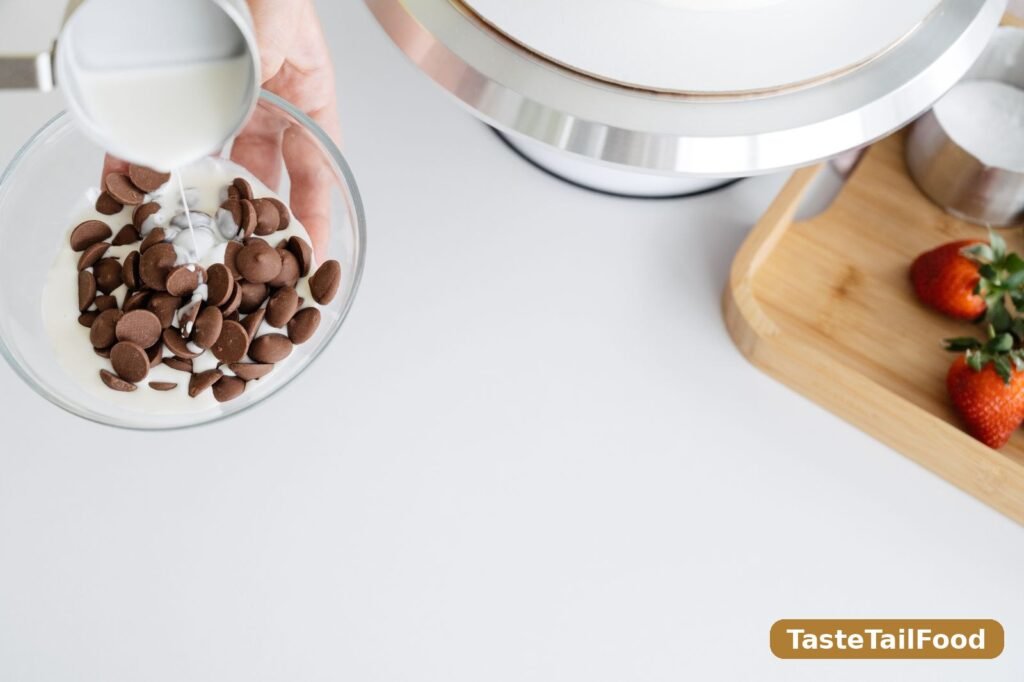
The ganache is the simplest part of the whole recipe, and it is also the part where good ingredients matter most. Put the finely chopped chocolate into a heatproof bowl with the two tablespoons of butter. The finer you chop the chocolate, the more smoothly and evenly it will melt, so take a moment with the knife. Heat the cream in a small saucepan over medium heat until it is just starting to simmer around the edges — you should see tiny bubbles, but do not let it boil hard. Pour the hot cream over the chocolate, add the golden syrup if you are using it, and leave it completely alone for two minutes. Then stir gently from the centre outwards with a spatula until the mixture turns glossy, smooth, and completely combined. Stir in the vanilla extract. If a few stubborn lumps of chocolate remain, set the bowl over a pan of barely simmering water for a minute and stir again. Pour the ganache into the cooled tart shell, tilt the tin gently so it settles into an even layer, and scatter the chopped toasted hazelnuts over the top while it is still soft.
Now comes the hardest part: waiting. Put the tart in the fridge for at least four hours, or overnight if you can, so the ganache sets firmly. It needs this time to go from a soft, pourable filling to that dense, sliceable texture that makes the tart so satisfying to eat. When you are ready to serve, take the tart out of the fridge about thirty minutes beforehand so the ganache softens slightly — it slices much more cleanly at cool room temperature than straight from the fridge. Sprinkle the flaky sea salt over the top just before serving, so it stays crisp and does not dissolve into the chocolate. Run a thin, sharp knife under hot water and wipe it dry between slices for the neatest cuts. For another take on this flavour combination, the BBC Good Food chocolate, hazelnut and salted caramel tart is a lovely reference with a caramel layer that is worth trying one day.
Tips for Perfect Chocolate Hazelnut Tart
The single most important tip is to toast your hazelnuts properly before you use them. Raw hazelnuts taste flat and a little woody, but toasted ones are warm, rich, and deeply nutty, and that flavour carries through the whole tart. Spread them on a baking tray and roast at 180°C (350°F) for eight to ten minutes, until they smell fragrant and the skins start to loosen. Tip them into a clean tea towel, fold it over, and rub them together to remove most of the skins. Let them cool completely before grinding or chopping. If you are short on time, you can buy ready-toasted hazelnuts, but the flavour will never be quite as good as nuts you toasted yourself that morning.
Keep everything cold when you make the pastry. Cold butter, cold water, and a chilled dough are what give you a crisp, short crust instead of a tough, shrunken one. If your kitchen is warm, pop the flour and the tart tin in the fridge for a while before you start, and handle the dough as little as possible — warm hands melt butter, and melted butter makes pastry greasy. If the dough starts to feel soft while you are rolling it out, just slide the whole thing back into the fridge for ten minutes. There is no rush, and a short rest will always improve the result.
Choose your chocolate with care, because it is the star of the filling. A dark chocolate with 60 to 70 percent cocoa gives the best balance — rich and intense without being bitter, and sweet enough that the tart does not need much sugar. Cheap cooking chocolate or chocolate chips often contain stabilisers that stop them melting smoothly, so use a good eating chocolate that you would happily eat on its own. If you prefer a sweeter tart, use half dark and half milk chocolate. And whatever you do, do not let the cream boil hard, or the ganache can split and turn grainy. Gentle heat and patience are all it takes.
Finally, do not skip the resting time in the fridge, and do not add the flaky salt until just before serving. Salt left sitting on ganache overnight will slowly dissolve and disappear, and you will lose those lovely little salty pops that make the tart so memorable. A good flaky salt, like Maldon, is worth buying for this — its large, crisp flakes sit on top of the chocolate and give you a burst of saltiness with every bite. If you want more guidance on working with a hazelnut crust, King Arthur Baking’s malted milk chocolate hazelnut tart shows another beautiful version of the same idea.
Variations to Try
Once you have made the classic version, there is plenty of room to play. For a salted caramel version, spread a thin layer of caramel sauce over the base of the baked shell before you pour in the ganache, and scatter the hazelnuts on top of the caramel. The caramel adds a buttery sweetness that works beautifully against the dark chocolate, and it makes the tart feel even more like a special-occasion dessert. A spoonful of good salted caramel sauce from a jar works fine here — there is no need to make your own unless you enjoy the process.
For a coffee version, dissolve a teaspoon of instant espresso powder into the hot cream before you pour it over the chocolate. Coffee does not make the tart taste like coffee; it simply deepens the chocolate flavour and makes it taste more chocolatey, which is a trick pastry chefs have used for years. Add a little orange zest to the ganache for a chocolate-orange version, or a pinch of chilli powder for a subtle warmth that builds slowly as you eat. A splash of hazelnut liqueur or rum in the ganache is lovely for an adults-only dinner party version, though you should leave it out if children will be eating it.
You can also change the shape of the dessert entirely. Divide the pastry and filling between four small tartlet tins for individual tarts that look beautiful served one per person with a quenelle of whipped cream. Or make a gluten-free version by swapping the plain flour for a good gluten-free flour blend and checking that your chocolate is gluten-free — the ground hazelnuts already give the crust a lovely texture, and the swap works surprisingly well. For a lighter finish after a rich main course, serve the tart with fresh raspberries, which cut through the richness with their sharpness. It pairs beautifully with a rich main like these creamy garlic butter chicken thighs, where the tart provides a sweet, elegant end to the meal.
Serving Ideas
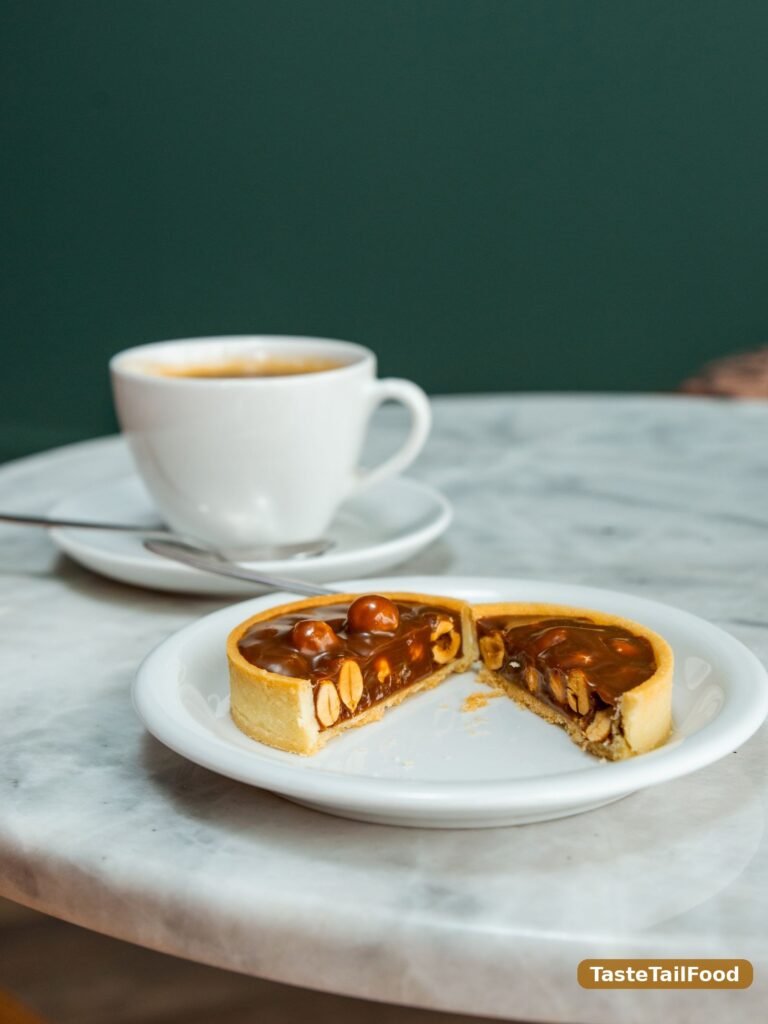
The simplest way to serve this tart is also the best: thin slices on their own, at cool room temperature, with nothing more than a fork and a quiet moment. The ganache is rich enough that a small slice is genuinely satisfying, and letting the tart warm up for half an hour before serving makes all the difference — the filling softens to a silky, almost truffle-like texture, and the flavours open up in a way they never do straight from the fridge. A little sprinkle of flaky salt on each slice just before it goes to the table keeps the topping crisp and the flavour bright.
If you want to dress it up, softly whipped cream is the classic partner. Whip double cream with a touch of icing sugar and vanilla until it just holds soft peaks, and spoon a generous dollop beside each slice. The cool, light cream balances the dense chocolate beautifully. Vanilla ice cream works just as well, especially in warmer weather, and a scoop of salted caramel ice cream is wonderful if you want to lean into the sweet-salty theme. Fresh berries — raspberries, strawberries, or a few blackberries — add colour and a sharp, juicy contrast that cuts through the richness, and a few extra chopped hazelnuts scattered around the plate make it look like you put real thought into the presentation.
For a dinner party, serve the tart as the final course after something fresh and bright, like this one-pan lemon herb chicken orzo, which leaves plenty of room for dessert. Coffee or espresso is the natural drink to serve alongside, and a small glass of dessert wine or a hazelnut liqueur would not go amiss for the adults. If you are serving it at a holiday gathering, arrange the slices on a cake stand with a dusting of cocoa powder and some whole toasted hazelnuts around the edge — it looks like a centrepiece, and it will be the first thing people reach for. If you enjoy baking with nuts as much as I do, this easy banana bread with walnuts is another favourite that uses the same warm, nutty flavours in a completely different way.
Storage and Reheating
This tart keeps beautifully, which is one of its greatest strengths. Once the ganache has set, cover the tart loosely with cling film or store it in an airtight container in the fridge for up to five days. The crust will stay crisp for the first two or three days, and even after that it is still delicious, just a little softer. Take it out of the fridge thirty minutes before serving so the ganache can soften to the right texture, and add the flaky salt fresh each time you serve it.
For longer storage, the tart freezes very well. Freeze it whole, or in individual slices wrapped separately, for up to two months. Wrap each piece tightly in cling film, then in foil, and label it with the date. To serve, thaw overnight in the fridge, then bring to cool room temperature for thirty minutes before adding the salt and serving. The texture after freezing is almost identical to fresh, which makes this a brilliant dessert to have ready in the freezer for unexpected guests.
Leftover slices are lovely the next day with a cup of coffee, and they pack well into a lunchbox if you wrap them carefully. Do not store the tart at warm room temperature for more than a couple of hours, because the ganache will soften too much and the slices will lose their shape. And if you find yourself with a little leftover ganache, it makes a wonderful chocolate spread on toast, or a quick chocolate sauce when gently warmed and poured over ice cream.
Frequently Asked Questions
Can I make this tart ahead of time?
Yes, and it is actually better made ahead. The tart needs at least four hours in the fridge to set, and it tastes even better after a night in the fridge, when the flavours have had time to settle together. You can make it up to two days before you need it and keep it covered in the fridge. Just take it out thirty minutes before serving and add the flaky sea salt at the last minute so it stays crisp.
Do I need a food processor to make the pastry?
No, you can make the pastry by hand without any trouble. Rub the cold butter into the flour and ground hazelnuts with your fingertips until the mixture looks like breadcrumbs, then stir in the sugar and salt, add the egg yolk, and bring it together with your hands. It takes a few minutes longer than a food processor, but the result is exactly the same. Just work quickly and keep your hands cool, so the butter does not melt into the flour.
Can I use milk chocolate instead of dark chocolate?
You can, but the tart will be noticeably sweeter and softer. Milk chocolate has more sugar and milk solids and less cocoa, so the ganache sets more softly and can taste quite sweet with the sugary crust. If you prefer milk chocolate, try using half dark and half milk chocolate — you get the sweetness you like with enough structure and depth from the dark chocolate to keep it balanced. Use the same amount of cream either way.
Why did my ganache split or look grainy?
A split ganache usually happens when the cream is too hot, or when the chocolate and cream are stirred too vigorously. Pour the cream over the chocolate when it is just simmering, not boiling, leave it untouched for two minutes, and then stir gently from the centre outwards. If it does split, whisk in a tablespoon of warm milk or cream a little at a time, and it will often come back together into a smooth, glossy ganache.
Can I make this tart gluten-free?
Yes, it adapts well. Replace the plain flour with a good gluten-free flour blend that contains xanthan gum, and keep the ground hazelnuts the same. The crust may be a little more crumbly, so handle it gently and press any cracks together with your fingers. Check that your chocolate and any other ingredients are labelled gluten-free, and bake the shell exactly the same way.
How do I stop the pastry shrinking in the tin?
Shrinking happens when the pastry is too warm or has been overworked. Chill the dough for at least thirty minutes before rolling, do not stretch it as you press it into the tin, and chill the lined tin in the fridge for fifteen minutes before baking. Blind baking with baking beans holds the pastry in place while it sets, and baking at the right temperature, rather than a very hot oven, also helps. If the edges shrink a little anyway, do not worry — the ganache covers the base, and nobody will notice a slightly shorter crust.