
Honey Mustard Baked Chicken Drumsticks
There are weeknight dinners that feel like work, and then there are weeknight dinners that feel like someone else did the cooking. These honey mustard baked chicken drumsticks belong firmly in the second group, even though you are the one making them. Ten minutes of prep, one baking tray, and about forty minutes in the oven, and what comes out is the kind of dinner that makes people reach for a second drumstick before they have finished the first. The skin goes sticky and golden, the honey caramelises at the edges, the mustard cuts through the sweetness just enough, and the meat underneath stays juicy in a way that chicken breast rarely manages.
I came to this recipe the way most good weeknight recipes arrive in my kitchen, which is to say by accident and out of a nearly empty fridge. I had a pack of drumsticks, half a jar of honey, a jar of Dijon mustard that had been sitting in the door of the fridge for longer than I wanted to admit, and not much else. I mixed the honey and mustard together, added garlic and a splash of soy sauce because it was there, poured it over the drumsticks and put the tray in the oven, half expecting a mediocre dinner. What came out was so good that my family asked for it again the next week, and the week after that, and now it is one of the most requested dinners in our house. The sauce is the whole story. It is sweet, tangy, a little bit garlicky, and it turns into a glaze in the oven that clings to the skin and pools in the tray in the most delicious way.
Drumsticks are also one of the most forgiving cuts of chicken you can buy. They are cheaper than breasts, they are much harder to dry out, and they have a built-in handle that makes them the easiest thing in the world to eat. Children love them, adults love them, and they are one of the few dinners where nobody at the table asks for something else. If you have never cooked with drumsticks before, this is the recipe to start with, because it is almost impossible to get wrong. And if you have cooked them a hundred times, this glaze is the one worth adding to your rotation, because it is the version people remember.
WHY THIS RECIPE WORKS
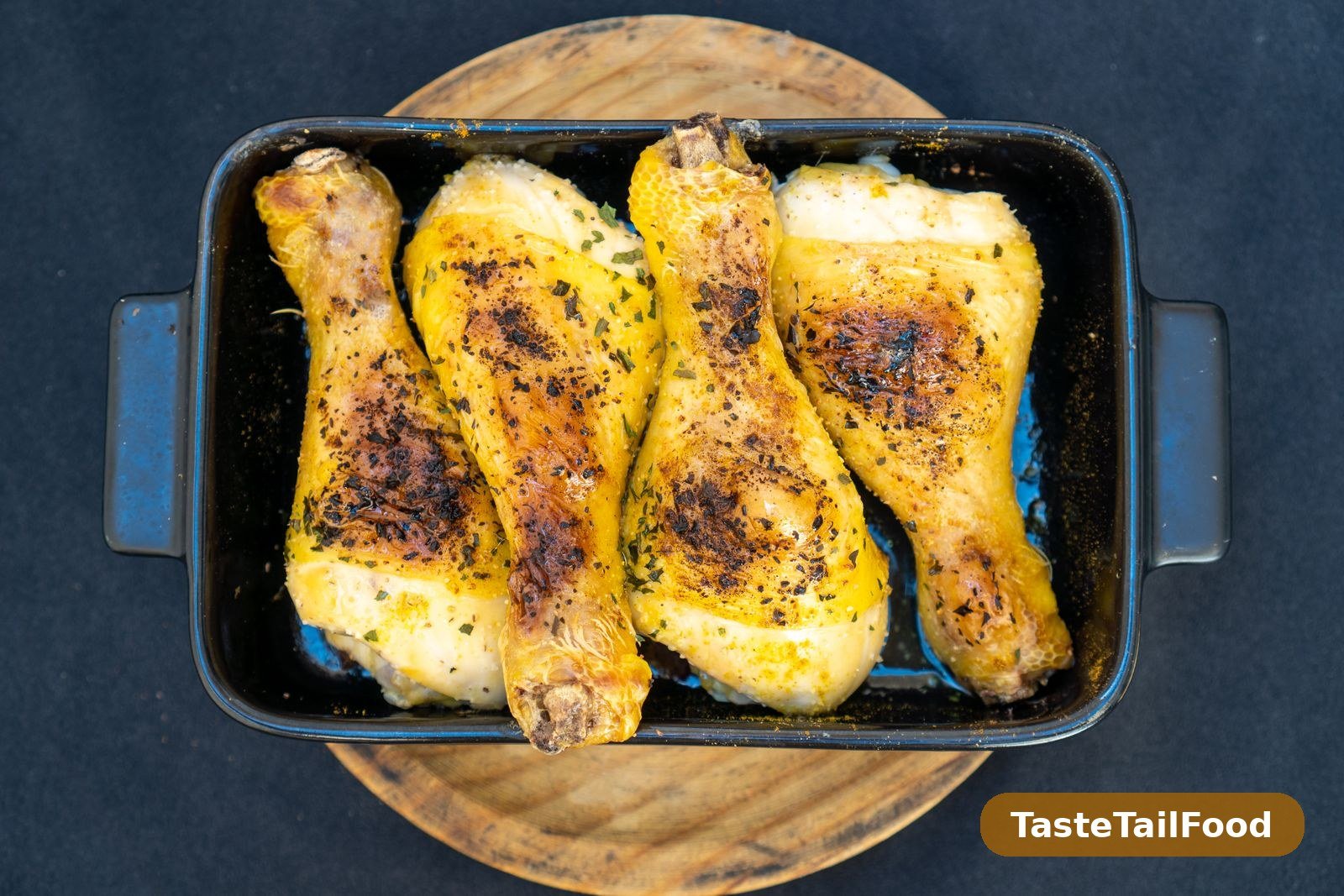
The magic of this dish is the balance in the sauce, and getting that balance right is simpler than it sounds. Honey on its own would be too sweet. It would caramelise in the oven and turn into something sticky and one-note, the kind of sweetness that gets tiring after two bites. Mustard on its own would be too sharp. Dijon has a real bite to it, and too much of it would make the whole dish taste like a jar of mustard with chicken in it. Together, they fix each other. The honey softens the mustard, the mustard keeps the honey from being cloying, and the result is a sauce that tastes like more than the sum of its parts. It is the same kind of balance that makes a good salad dressing work, and it is the reason this recipe is so hard to stop eating.
The second reason it works is the cut of chicken. Drumsticks are dark meat, and dark meat has more fat and connective tissue than breast meat, which means it stays moist through a long bake. A chicken breast at 200°C for forty minutes would be dry and stringy. A drumstick at the same temperature for the same time comes out tender and juicy, because the fat renders slowly and keeps the meat basted from the inside. The skin helps too. It crisps up in the oven, it holds the glaze, and it protects the meat underneath. If you have ever wondered why roasted chicken legs taste better than roasted chicken breast, this is why.
The third reason is the cooking method itself. Baking does two things at once here. It cooks the chicken through, and it reduces the sauce into a glaze. As the drumsticks bake, the sauce bubbles and thickens, the sugars in the honey caramelise, and the sauce that started out thin and runny becomes a thick, sticky coating. The trick is to baste once or twice during cooking, spooning the sauce from the tray back over the drumsticks, so every part of the skin gets glazed and nothing dries out. It takes thirty seconds each time, and it makes a real difference to the finished dish.
THE INGREDIENTS THAT MATTER
You need eight drumsticks, about one kilogram, and it is worth buying them with the skin on. The skin is not optional in this recipe. It is what crisps, it is what the glaze clings to, and it is what makes the drumsticks taste roasted rather than steamed. If you buy skinless drumsticks, the sauce will still taste good, but the texture will be completely different and you will lose the best part of the dish. Look for drumsticks that are roughly the same size, so they cook evenly. If some are much bigger than others, the small ones will be done while the big ones are still pink inside.
The honey should be runny honey, the kind that pours easily from the jar, because it mixes into the sauce without lumps. You need about a third of a cup. It does not need to be expensive honey. The honey in this recipe is going into a sauce with mustard and garlic and soy sauce, and the subtle floral notes of a fancy jar will not survive the oven. A plain, ordinary jar of runny honey is exactly right. If your honey has crystallised, stand the jar in a bowl of warm water for ten minutes and it will go runny again.
The mustard is where you have a real choice, and it is worth thinking about for a moment. Dijon is the classic choice, and it is what I use most of the time, because it has a clean, sharp flavour and it blends smoothly into the sauce. Wholegrain mustard is also lovely, and it gives the sauce a bit of texture and a milder, more rustic flavour. You can use one or the other, or a spoonful of each, which is what I do when I want the best of both. What I would not use is plain yellow mustard from a squeezy bottle. It is too mild and too vinegary for this sauce, and it will not give you the flavour you are looking for.
The garlic matters more than people expect. I use four cloves, minced fine, because garlic is the backbone of the sauce and it needs to be properly distributed. Minced garlic melts into the sauce as it cooks, and by the time the drumsticks come out of the oven, you cannot see it anymore, but you can taste it in every bite. If you are a garlic lover, use five cloves. If you are in a hurry, a teaspoon of garlic powder will work, but add it with the other sauce ingredients and whisk it in well so it does not clump.
The soy sauce is the quiet ingredient, and it is the one people are most likely to skip. Do not skip it. You only need a tablespoon, and it does not make the sauce taste like soy sauce. What it does is add salt and a deep, savoury note that the honey and mustard cannot provide on their own. It is the difference between a sauce that tastes sweet and a sauce that tastes complex. If you do not have soy sauce, a pinch of salt and a splash of Worcestershire sauce will do a similar job, but soy sauce is the easiest option and the one I recommend.
Honey is also one of those ingredients that people ask about, and it is nice to know a little about what is in it. Healthline has a clear rundown of the benefits of honey, and it is worth a read if you have ever wondered what makes it different from plain sugar.
WHAT YOU’LL NEED
This serves four people, with two drumsticks each, or three people with generous appetites. It doubles easily if you are feeding a crowd, but use two trays so the drumsticks are not crowded, because crowded drumsticks steam instead of roast and the skin will never crisp.
For the drumsticks:
- 8 chicken drumsticks (about 1 kg), skin on
- 1/3 cup runny honey
- 3 tablespoons Dijon mustard (or 2 tablespoons Dijon + 1 tablespoon wholegrain)
- 4 cloves garlic, minced fine
- 1 tablespoon soy sauce
- 1 tablespoon olive oil
- 1 tablespoon apple cider vinegar (or lemon juice)
- 1/2 teaspoon fine salt
- 1/4 teaspoon black pepper
- 1/2 teaspoon smoked paprika (optional, but it adds a lovely colour)
- Chopped fresh parsley, to serve (optional)
You will need one large rimmed baking tray, or a roasting pan, and a piece of baking paper or foil if you want easier washing up. I line the tray with foil most of the time, because the honey in the sauce caramelises and sticks to the tray, and foil means the washing up takes thirty seconds instead of ten minutes of scrubbing. A small bowl and a whisk for the sauce, and a spoon for basting, are the only other things you need.
A note on the vinegar. It is a small amount, just a tablespoon, but it does important work. The acid brightens the sauce and keeps the sweetness from feeling heavy, and it helps the glaze develop a bit of shine. Apple cider vinegar is my usual choice because its flavour is mild and slightly fruity, but lemon juice works just as well and adds a fresh note that is lovely with the mustard. If you have neither, a splash of white wine vinegar will do. What you do not want is to leave it out entirely, because without that little bit of acid, the sauce tastes flat.
HOW TO MAKE HONEY MUSTARD BAKED CHICKEN DRUMSTICKS
Start by heating the oven to 200°C (400°F). While it heats, make the sauce. Put the honey, the mustard, the minced garlic, the soy sauce, the olive oil, the vinegar, the salt, the pepper, and the smoked paprika if you are using it, into a small bowl. Whisk everything together until it is smooth and glossy. It should look like a thick, golden sauce, and it should smell sweet and sharp at the same time. Taste it. It should be sweet first, then tangy, then garlicky, with a little warmth from the paprika at the end. If it tastes too sweet, add another squeeze of lemon juice. If it tastes too sharp, add another teaspoon of honey. This is the moment to adjust it, because once it is on the chicken, you cannot change it.
Pat the drumsticks dry with paper towels. This step takes a minute, and it is worth doing properly, because dry skin crisps and wet skin steams. If the drumsticks go into the oven wet, the sauce will slide off and the skin will stay soft. Pat them dry, then season them lightly with a pinch of salt and pepper, even though the sauce is already seasoned, because seasoning the chicken itself makes a difference to the flavour of the meat underneath the skin.
Put the drumsticks on the lined baking tray in a single layer, with a bit of space between each one. Pour about two thirds of the sauce over them, and use your hands or a brush to coat each drumstick all over. Save the rest of the sauce in the bowl. You will need it for basting, and it is important to keep it separate, because the sauce that has touched the raw chicken cannot be used for serving later. This is the one food safety rule that matters in this recipe, and it is easy to get right if you set the reserved sauce aside before you start.
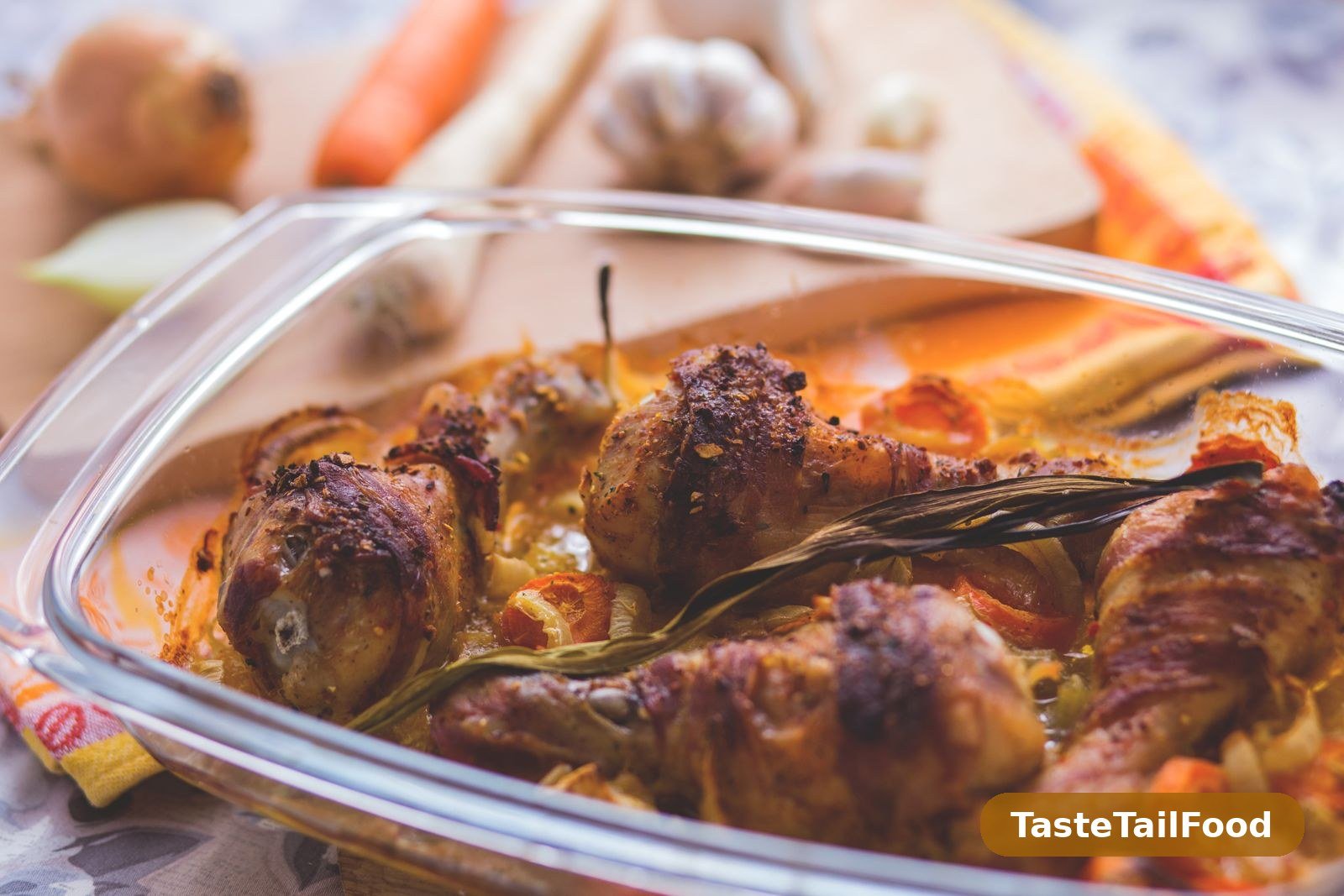
Put the tray in the oven and bake for 20 minutes. Then take it out, spoon the sauce from the tray and the reserved sauce over the drumsticks, and turn them over so the other side gets a turn on the bottom. The sauce in the tray will have started to bubble and thicken by now, and the drumsticks will be starting to colour. Put the tray back in the oven for another 15 minutes, then take it out and baste again, turning the drumsticks back to their first side. The skin should be turning golden and sticky by now, and the smell coming out of the oven should be wonderful.
Bake for a final 5 to 10 minutes, until the drumsticks are deep golden brown and the sauce is thick and glossy. The total cooking time is about 40 to 45 minutes, but the real test is not the clock. It is the temperature and the colour. The chicken is done when the juices run clear when you pierce the thickest part with a knife, and the safest way to be sure is a meat thermometer. Chicken is safe to eat at 74°C (165°F) in the thickest part, and the USDA has a clear safe temperature chart that is worth checking if you cook chicken regularly.
Take the tray out of the oven and let the drumsticks rest for five minutes before serving. This is not optional. When chicken comes out of the oven, the juices are still moving around inside the meat, and if you cut into it straight away, they run out onto the plate. Five minutes of resting lets the juices settle back into the meat, and the drumsticks will be noticeably juicier for it. While they rest, spoon the sauce from the tray over the top, so every drumstick gets a final glossy coat. Scatter over the chopped parsley if you are using it, and serve straight from the tray or on a warm serving plate.
THE GLAZE: HOW TO GET IT STICKY, NOT BURNT
Honey burns. That is the single most important thing to know about this recipe, and it is the thing that catches people out. Honey is mostly sugar, and sugar burns at high temperatures, so if the oven is too hot or the drumsticks stay in too long, the glaze will go from golden to black and bitter in a matter of minutes. That is why the oven temperature is 200°C and not higher, and that is why basting matters so much. The basting keeps the sauce moving and stops any one spot from sitting in the heat and burning.
The signs to watch for are simple. At twenty minutes, the sauce should be bubbling gently and the drumsticks should be a light golden colour. At thirty-five minutes, the sauce should be thicker, the drumsticks should be a deeper gold, and the edges of the sauce in the tray should be starting to darken. That darkening at the edges is normal, and it is not burning. It is caramelisation, and it is exactly what you want. Burning looks different. Burning is black, it smells acrid, and it happens fast. If you see black spots on the skin or the sauce smells sharp and smoky, take the tray out immediately. The drumsticks are almost certainly done, and another five minutes will only make it worse.
If your oven runs hot, which many ovens do, you may need to turn the temperature down to 190°C. An oven thermometer will tell you the truth, and it is one of the cheapest and most useful tools in any kitchen. If you do not have one, watch the colour of the drumsticks rather than the clock. Colour is the honest signal. When the skin is deep golden and the sauce is thick and glossy, the drumsticks are done, whatever the timer says. And if the glaze is browning too fast but the chicken is not quite cooked through, cover the tray loosely with foil for the last ten minutes. The foil will slow the browning while the chicken finishes cooking, and you can take it off for the final few minutes to let the glaze set.
COMMON MISTAKES AND HOW TO AVOID THEM
The most common problem is soggy skin, and it almost always comes back to one of two things. The first is that the drumsticks were not patted dry before the sauce went on. Wet skin cannot crisp, no matter how hot the oven is, because the moisture has to evaporate before the skin can start browning, and by the time it does, the chicken is already cooked. Pat the drumsticks dry, every time, and the skin will be noticeably better. The second is overcrowding. If the drumsticks are packed tightly on the tray, they steam each other, and the skin stays soft and pale. Give each one space, use two trays if you have to, and the skin will crisp properly.
The opposite problem is a glaze that burns before the chicken is cooked. This usually means the oven is too hot, or the sauce has too much honey in it. If it happens to you, the fix is simple. Turn the oven down to 190°C, cover the tray loosely with foil, and let the chicken finish cooking under the foil. Next time, use a tablespoon less honey and a tablespoon more mustard, which will give you the same flavour with less sugar to burn. And remember that the last five minutes are the most dangerous, because that is when the sauce is at its thickest and most likely to catch. Stay near the kitchen for the last stretch, and check the tray rather than trusting the timer.
If the sauce is too thin and runny at the end, it usually means the drumsticks released a lot of liquid as they cooked, and that liquid thinned the sauce out. The fix is to take the drumsticks out of the tray when they are done, pour the sauce into a small saucepan, and simmer it for two or three minutes until it thickens. Then pour it back over the drumsticks. It is an extra step, but it takes almost no time and it gives you a proper glaze instead of a watery sauce. You can also prevent it by patting the drumsticks very dry before cooking, which means less liquid in the tray in the first place.
And if the chicken is cooked on the outside but pink near the bone, the drumsticks were probably too big, or the oven was too hot and the outside cooked faster than the inside. The fix is to turn the oven down and give them more time. A meat thermometer is the only way to be sure, and it is worth having one. Push it into the thickest part of the drumstick, next to the bone but not touching it, and look for 74°C. If it is below that, put the tray back in for five minutes and check again. It is always better to check than to guess.
STORING AND REHEATING
Leftover honey mustard drumsticks keep well, and they are one of those leftovers that people actually look forward to. Let them cool completely, then store them in an airtight container in the fridge with any leftover sauce spooned over the top. They will keep for three to four days, and the flavour deepens a little overnight as the sauce soaks into the meat. The skin will soften in the fridge, and that is normal. It will not be as crisp as it was fresh from the oven, but it will still be delicious.
Reheating is where a little care makes a big difference. The microwave will heat them through, but it will make the skin soft and the glaze sticky in the wrong way. If you have a few minutes, reheat them in the oven at 190°C for ten to twelve minutes, or in an air fryer at 180°C for six to eight minutes, and the skin will crisp up again and the glaze will go glossy. The air fryer is especially good for this, and it is one of the reasons I use mine so often for leftover chicken. If you only have a microwave, reheat them in short bursts and finish them under the grill for a couple of minutes to crisp the skin.
Cold drumsticks are also worth trying, and I mean that seriously. Straight from the fridge, with the glaze set and the meat still tender, they make a wonderful picnic food or lunchbox item. Children love them cold, and they are much easier to pack than a sandwich. Just make sure they have been stored properly and have not been sitting out at room temperature for hours. The same food safety rules that apply to any cooked chicken apply here, and the fridge is your friend.
WHAT TO SERVE WITH THEM
These drumsticks are rich and sweet, so the best sides are the ones that bring something fresh or sharp to the plate. A simple green salad with a lemon dressing is the easiest choice, and it is the one I reach for most often. The acidity of the dressing cuts through the sweetness of the glaze, and the crisp lettuce is a nice contrast to the sticky chicken. Our roasted broccoli with Parmesan and lemon does the same job with more substance, and it is the side dish I make when I want the meal to feel a bit more complete. The lemon in the broccoli echoes the tang in the mustard, and the two dishes sit together happily on the plate.
For something heartier, mashed potatoes are the classic partner, and they are perfect here because they soak up the extra sauce from the tray. A spoonful of the honey mustard sauce over the top of the mash is genuinely one of the best bites in this whole meal. Rice works just as well, especially a simple steamed rice or a pilaf, and our quick chicken and rice with frozen vegetables is a good reminder of how well rice and chicken go together, even though this is a different kind of chicken entirely.
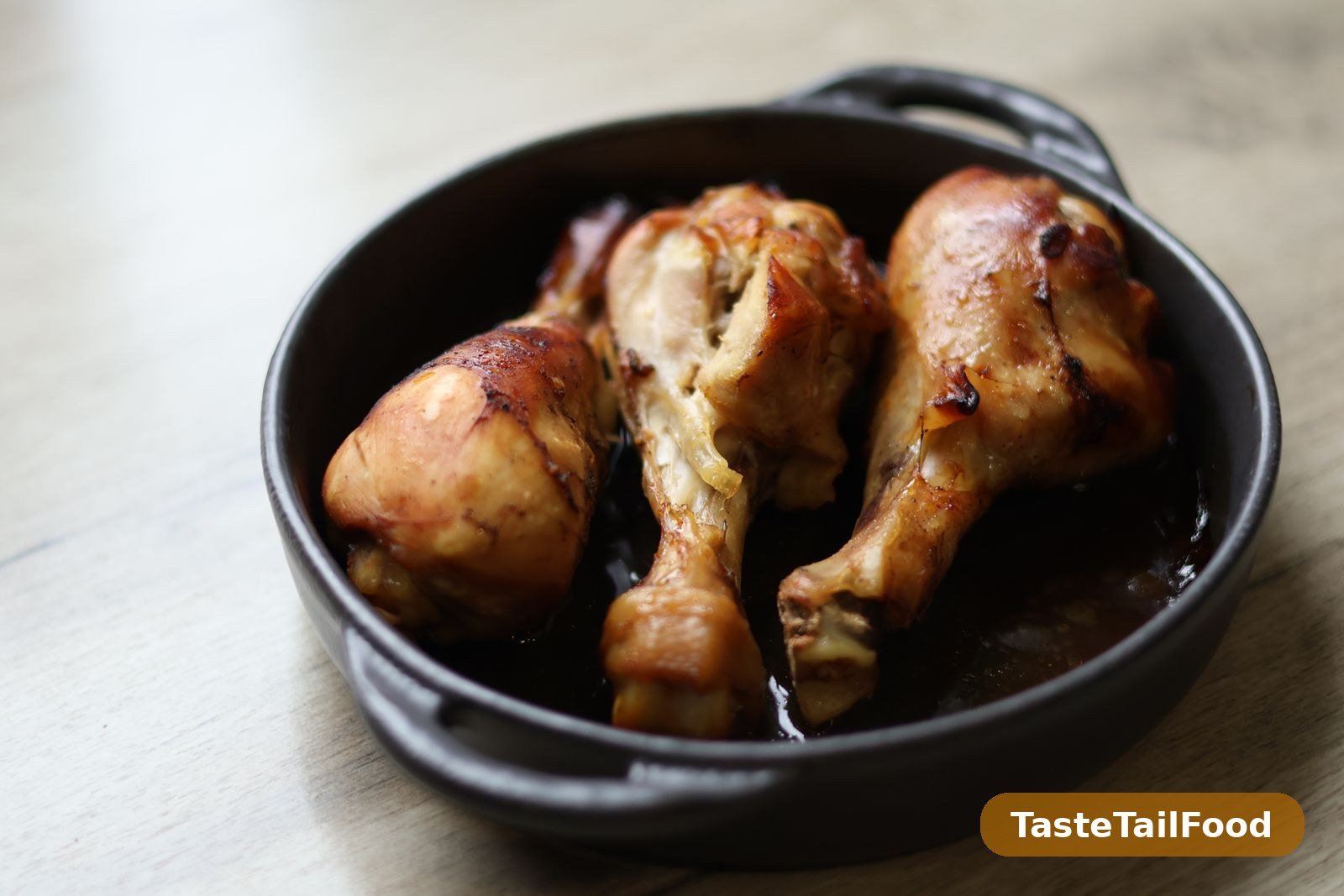
If dinner is a weeknight and you want the whole thing on one tray, roast some vegetables alongside the drumsticks. Potatoes cut into wedges, carrots cut into sticks, and chunks of sweet potato all roast at the same temperature and in roughly the same time, and they soak up the honey mustard sauce as it bubbles in the tray. Just add them to the tray at the start, toss them in a little oil and salt first, and keep them in a single layer so they roast rather than steam. The vegetables will come out golden and sticky, and the whole dinner will be on one tray, which means one tray to wash.
For a lighter evening, the drumsticks are just as good on their own with some good bread for mopping up the sauce. A crusty loaf, torn into pieces, is all you need, and it is the kind of dinner that feels almost too simple until you taste it. And if you are feeding a crowd, these drumsticks are the perfect party food. They are easy to eat with your hands, they look wonderful piled up on a platter, and you can double or triple the recipe without any extra effort. Just use more trays, and make sure each one has enough space.
VARIATIONS WORTH TRYING
Once you have the basic version working, this sauce is easy to make your own, because the method stays the same and only the sauce changes. The simplest variation is to add heat. A teaspoon of sriracha or a pinch of chilli flakes whisked into the sauce gives it a slow warmth that builds as you eat, and it is the version I make when the adults are eating and the children have something else. A spoonful of hot sauce will do the same job, and the honey softens it so it never gets too fierce.
For a smokier version, add a teaspoon of smoked paprika and a splash of Worcestershire sauce to the marinade, and use wholegrain mustard instead of Dijon. The sauce becomes deeper and more savoury, almost like a barbecue glaze, and it is wonderful with a baked potato and a pile of coleslaw. For a lighter, fresher version, swap the soy sauce for lemon juice and add the zest of one lemon to the sauce. The result is brighter and sharper, and it tastes more like spring than the original does.
You can also use this sauce on other cuts of chicken. It works beautifully on thighs, which are just as forgiving as drumsticks, and it works on wings, which are the best party version of this dish. For wings, cut the cooking time to about thirty minutes, because they are smaller and cook faster. It also works on a whole chicken, rubbed all over the skin and roasted, though you will need to double the sauce and baste more often. And if you want to make it ahead, the sauce keeps in a jar in the fridge for a week, so you can mix it on Sunday and use it on Tuesday without any extra work.
The drumsticks themselves can also go in a different direction. If you have an air fryer, this recipe adapts beautifully. Cook the drumsticks at 190°C for twenty to twenty-five minutes, turning them once and brushing with sauce halfway through, and you will get skin that is even crispier than the oven version. Our air fryer honey glazed salmon uses the same idea of a sweet glaze in the air fryer, and it is a good reminder of how well the air fryer handles sticky sauces. Just remember to line the basket with foil or baking paper, because the honey will drip and burn on the element if you do not.
WHY DRUMSTICKS DESERVE MORE LOVE
Drumsticks have an unfair reputation. They are cheap, so people assume they are inferior. They are the cut that children eat with their hands, so people assume they are not serious food. But anyone who has cooked with them properly knows better. Drumsticks are one of the most flavourful cuts of chicken there is, and they are one of the most forgiving. They stay juicy when a breast would dry out, they develop a wonderful texture when roasted, and they cost a fraction of the price. A family dinner of drumsticks costs less than a family dinner of breasts, and it tastes better. That is not a compromise. That is a better dinner for less money.
They are also the most practical cut for a busy household. They cook in one tray, they need almost no preparation, they are portioned already so there is no carving, and they are the easiest thing in the world to serve. You put the tray on the table, people help themselves, and dinner is done. There is no slicing, no plating, no fuss. And the leftovers, if there are any, are just as good the next day, which is more than you can say for most chicken dinners. If you want another weeknight chicken idea that is just as simple, our easy chicken dinner without an oven is the one I reach for when I do not want to switch the oven on at all.
That is really what this recipe is about. It is not a clever dish, and it is not a difficult one. It is a cheap, honest cut of chicken cooked the right way, with a sauce made from things you probably already have in your cupboard. It takes ten minutes of work and forty minutes in the oven, and it turns the most ordinary weeknight into the kind of dinner people ask for again. Once you have made it, you will understand why it is in our regular rotation. And once your family has tasted it, they will ask for it just as often.
FREQUENTLY ASKED QUESTIONS
Can I make honey mustard drumsticks ahead of time?
Yes, and they are a good make-ahead dinner. You can coat the drumsticks in the sauce and leave them in the fridge for up to 24 hours, covered, and the flavour will be even better because the sauce has had time to soak in. Take them out of the fridge 20 minutes before cooking so they are not ice cold when they go in the oven, and bake them as normal. You can also cook them fully ahead of time and reheat them in the oven or air fryer, though the skin will be at its best when they are freshly baked.
How do I know when the drumsticks are done?
The safest way is a meat thermometer. Push it into the thickest part of the drumstick, next to the bone but not touching it, and look for 74°C (165°F). Without a thermometer, pierce the thickest part with a knife and check that the juices run clear, not pink, and that the meat near the bone is no longer pink. The skin should be deep golden and the sauce thick and glossy. If you are unsure, give them another five minutes. Drumsticks are very forgiving, and a few extra minutes will not dry them out.
Can I use chicken thighs instead of drumsticks?
Yes, and they work beautifully. Bone-in, skin-on thighs are the closest swap, and they need roughly the same cooking time, about 40 to 45 minutes. Boneless thighs will cook faster, in about 25 to 30 minutes, so check them earlier. The sauce and the method are exactly the same, and the result is just as good. Thighs are a little meatier than drumsticks, so they are a good choice if you are feeding very hungry people.
Why is my honey mustard glaze burning?
Honey burns easily because it is mostly sugar, and the most common cause is an oven that is too hot. Turn the oven down to 190°C and cover the tray loosely with foil for the last ten minutes of cooking. The foil slows the browning while the chicken finishes cooking. You can also reduce the honey by a tablespoon and add a tablespoon more mustard, which gives you the same flavour with less sugar to burn. And stay near the kitchen for the last five minutes, because that is when the sauce is thickest and most likely to catch.
Can I make this without soy sauce?
Yes. The soy sauce adds salt and a deep savoury note, but you can leave it out and add an extra pinch of salt and a splash of Worcestershire sauce instead. The flavour will be slightly different, but it will still be delicious. If you avoid soy sauce because of allergies, tamari is a good gluten-free alternative that tastes very similar and works in exactly the same amount.
Can I cook these in the air fryer?
Yes, and they come out wonderfully crisp. Cook them at 190°C for 20 to 25 minutes, turning them once halfway through and brushing with sauce at the turn. Line the basket with foil or baking paper first, because the honey will drip and burn on the element if you do not. Work in a single layer and cook in batches if your basket is small, because crowded drumsticks will steam instead of crisp.
What should I serve with honey mustard drumsticks?
The best sides are the ones that bring something fresh or sharp to balance the sweetness of the glaze. A simple green salad with a lemon dressing is the easiest choice. Roasted vegetables like broccoli or carrots work beautifully, and mashed potatoes are perfect for soaking up the extra sauce. Rice is also a good partner, especially a simple steamed rice. Anything with a bit of acidity or freshness will sit happily next to these drumsticks.
One Comment