One-Pan Honey Garlic Salmon and Asparagus
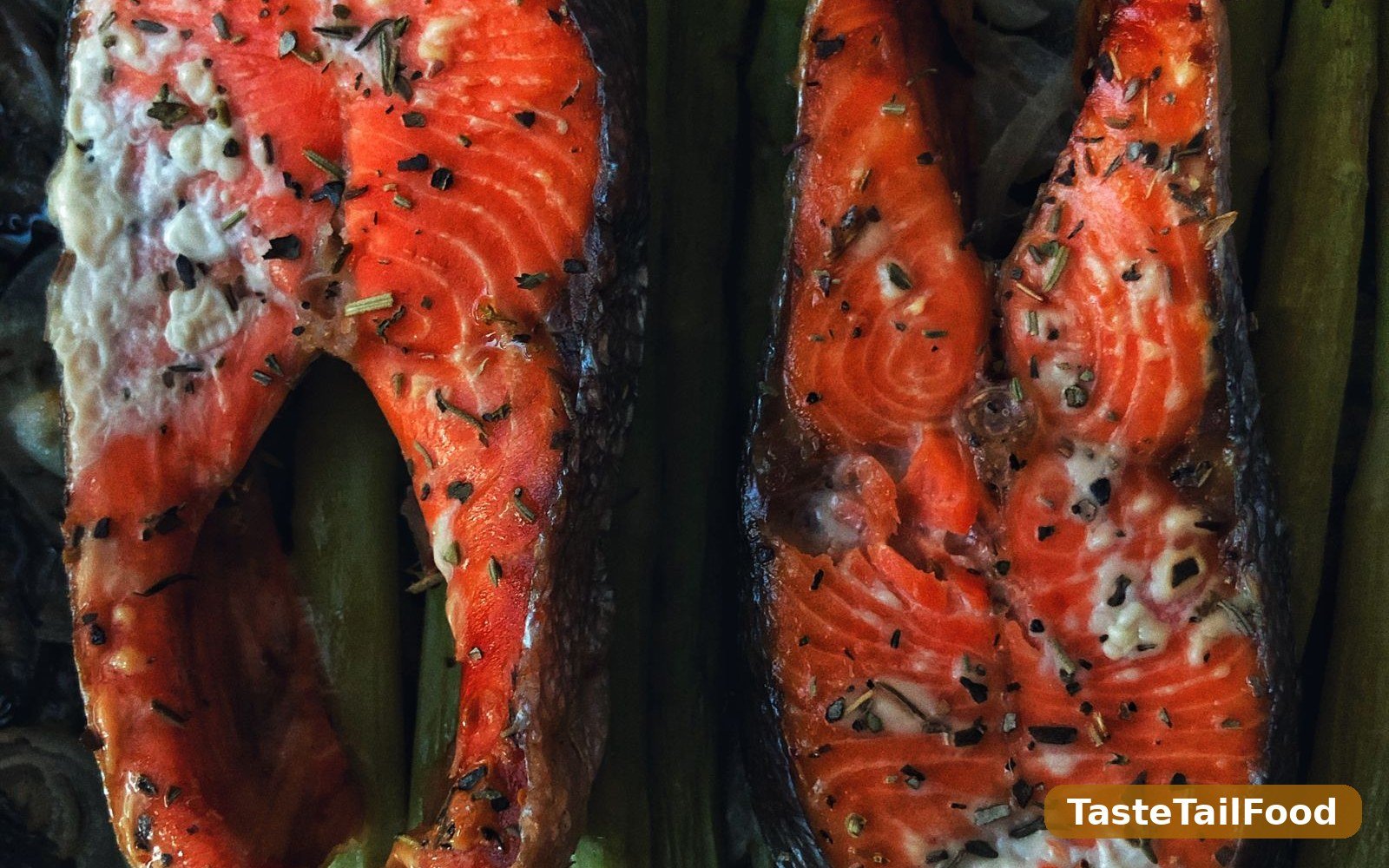
Some dinners feel like they were designed for busy weeknights, and this one-pan honey garlic salmon and asparagus is the best example I know. It is fast — twenty minutes from the moment you start to the moment you sit down — it uses a single pan, which means there is almost nothing to wash up, and it tastes like something you would happily order in a restaurant. I first made it on a Wednesday evening when I had a couple of salmon fillets in the fridge, a bunch of asparagus that needed using up, and no energy for anything complicated. Twenty minutes later, I was eating salmon with a sticky, golden glaze and asparagus that was still bright green and crisp, and I remember thinking that this was the kind of recipe I wished I had found years earlier.
Salmon and honey garlic are a combination that just works. The honey caramelises in the hot pan and turns into a glossy, sticky glaze that coats the salmon beautifully, while the garlic adds a warm, savoury depth that stops the dish from being too sweet. A splash of soy sauce brings saltiness, a squeeze of lemon brings brightness, and the whole thing comes together into a sauce that is far more interesting than the four ingredients it is made from. It is the kind of flavour that makes people think you have spent much longer cooking than you have, and it is the kind of sauce that you will find yourself spooning over the rice long after the salmon is gone.
Asparagus is the perfect partner for this dish, and not just because it is in season in spring. It cooks in the same pan, in the same sauce, in about five minutes, and it soaks up the honey garlic flavour while staying bright green and crisp. There is no need for a separate pot, no need for a steamer, and no extra washing up — the asparagus just goes into the pan alongside the salmon and cooks in the sauce. If you have never cooked asparagus in a pan sauce before, you are in for a treat, because it tastes completely different from the boiled version most of us grew up with. It is tender, flavourful, and still has a proper bite to it.
What I like most about this recipe is how it fits into real life without any fuss. It works with fresh or frozen salmon, thick or thin asparagus, and whatever you happen to have in the cupboard. Serve it with rice and it is a complete dinner. Serve it with crusty bread and a salad and it feels like a proper weekend meal. The leftovers are lovely cold the next day, flaked into a salad or tucked into a wrap, and the whole dish scales up easily if you have friends coming over. It is one of those rare recipes that is fast enough for a Tuesday, impressive enough for guests, and healthy enough to make you feel good about eating it.
The other thing worth saying is that this is a brilliant recipe if you are trying to eat more fish. Salmon is rich in omega-3 fatty acids, it is a great source of protein, and it cooks so quickly that there is really no excuse not to make it more often. A lot of people tell me they avoid cooking fish at home because they are worried about overcooking it or filling the house with a fishy smell, and this recipe solves both problems — the salmon cooks in five to six minutes, and the honey garlic sauce means the kitchen smells like garlic and honey, not fish. If you have been meaning to cook more salmon, this is the recipe to start with.
Why You’ll Love This Recipe
First of all, it is fast. I mean genuinely fast, not the kind of fast that still involves half an hour of preparation. The salmon gets seasoned, the sauce gets whisked together in a small bowl, the asparagus gets trimmed, and everything cooks in a single pan in about fifteen minutes. From the moment you start to the moment you sit down to eat, you are looking at about twenty minutes, and most of that is hands-off while the pan does its work. On nights when I get home late and the last thing I want is a complicated recipe, this is the dinner I reach for, because I know it will be on the table before anyone has had time to get properly hungry.
The flavour is the second reason this recipe earns its place in the regular rotation, and it is worth describing properly, because it is what makes this dish so special. The honey caramelises in the hot pan and turns into a glossy, sticky glaze that coats the salmon in a way that is sweet, savoury, and deeply satisfying all at once. The garlic adds warmth, the soy sauce adds saltiness, and the lemon adds a brightness that keeps the whole dish from feeling too rich. The asparagus, cooked in the same sauce, picks up all of those flavours while staying crisp and fresh. It is a combination that feels sophisticated without being fussy, and it is the kind of thing that makes people ask for the recipe before they have finished eating. If you enjoy this style of honey-glazed cooking, you will also love this air fryer honey glazed salmon, which uses a similar glaze in a completely different way.
It is also a recipe that is wonderfully healthy without feeling like health food. Salmon is rich in omega-3 fatty acids and protein, asparagus is full of fibre and vitamins, and the whole dish is cooked in a single pan with a small amount of oil. There is no deep frying, no heavy cream, and no pile of butter — just fresh ingredients, a simple sauce, and a quick cook. It is the kind of dinner that leaves you feeling satisfied rather than sluggish, and it is one of the few healthy meals I know that my whole family actually asks for by name.
Finally, this is a recipe that is kind to your kitchen and your schedule. Because everything happens in one pan, there is a single skillet to wash at the end, which is a genuine blessing on a busy evening. The sauce can be whisked together in the morning and kept in the fridge, the asparagus can be trimmed ahead of time, and the salmon cooks so quickly that the whole dish comes together in minutes when you are ready. I have doubled the recipe for a dinner party and served it straight from the pan in the middle of the table, and it was gone within twenty minutes. Simple, reliable, and delicious is a combination that never goes out of style, and this honey garlic salmon delivers all three without any drama.
Ingredients You’ll Need
- 4 salmon fillets (about 170 g / 6 oz each), skin on or skinless
- 1 teaspoon fine sea salt
- 1/2 teaspoon black pepper, freshly ground
- 1/2 teaspoon garlic powder
- 1/2 teaspoon smoked paprika
- 1 tablespoon olive oil
- 1 tablespoon butter
- 4 cloves garlic, finely minced
- 1/3 cup honey
- 2 tablespoons soy sauce
- 1 tablespoon fresh lemon juice
- 1 teaspoon lemon zest
- 1 teaspoon rice vinegar or apple cider vinegar
- 1/4 teaspoon chilli flakes (optional)
- 1 bunch asparagus (about 300 g / 10 oz), woody ends trimmed
- 1 tablespoon water or chicken stock
- 1 teaspoon cornflour (cornstarch) mixed with 1 tablespoon cold water (optional, for a thicker glaze)
- 2 spring onions, finely sliced, for serving
- 1 tablespoon sesame seeds, for serving
- Lemon wedges, for serving
How to Make One-Pan Honey Garlic Salmon and Asparagus
Start by preparing the salmon and the asparagus, because once the pan is hot, everything happens quickly. Pat the salmon fillets completely dry with paper towels, top and bottom, and do not skip this step. Dry fish is the secret to a good sear, and any moisture left on the surface will just steam in the pan instead of browning. Season both sides of each fillet with the salt, pepper, garlic powder, and smoked paprika, and set them aside. Trim the asparagus by holding each spear at both ends and bending it gently until it snaps — it will naturally break at the point where the woody end begins, which is exactly where you want to cut. If you prefer, you can line the spears up on a chopping board and cut off the bottom three or four centimetres in one go.
Whisk together the honey garlic sauce while the pan heats. In a small bowl, combine the honey, soy sauce, lemon juice, lemon zest, rice vinegar, and chilli flakes if you are using them. Whisk until the mixture is smooth and glossy, then taste it. It should be sweet first, with a savoury background from the soy sauce and a bright edge from the lemon and vinegar. If it tastes too sweet, add another half teaspoon of vinegar. If it tastes too sharp, add another teaspoon of honey. Set the sauce aside — you will add it to the pan in a few minutes, and it only needs a couple of minutes to thicken into a glaze.
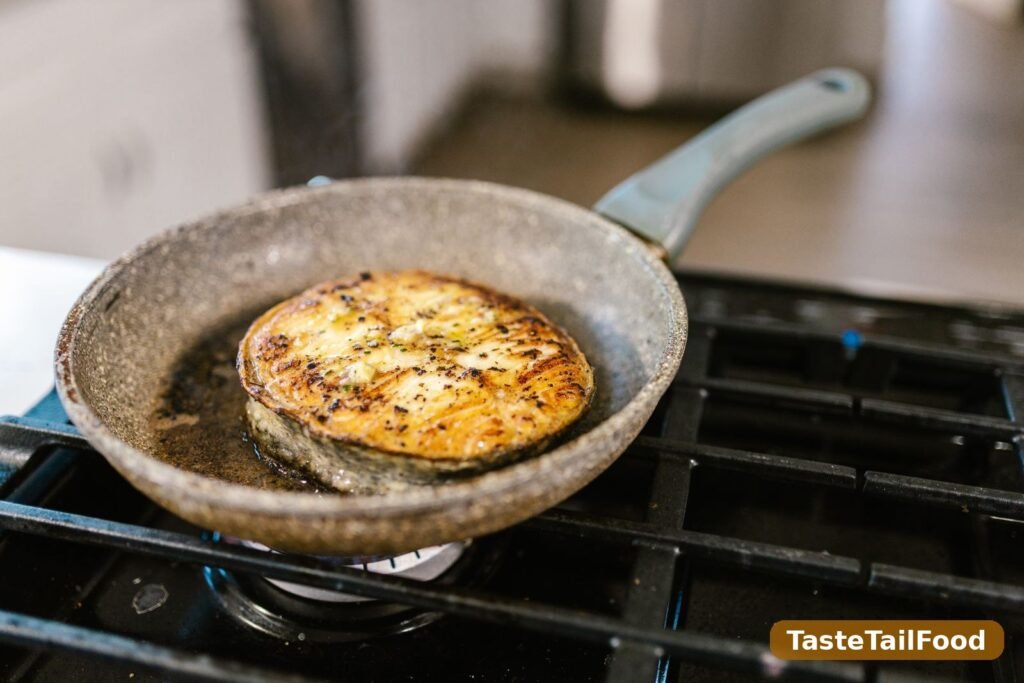
Heat the olive oil in a large skillet over a medium-high heat until it shimmers. A large pan matters here, because you need enough room for the salmon fillets and the asparagus to cook in a single layer without crowding. Lay the salmon fillets in the pan, skin-side down if they have skin, and leave them alone for four to five minutes. Do not move them, do not poke them, and do not lift them up to check. The salmon needs that undisturbed contact with the hot pan to develop a proper golden crust, and every time you move it, you interrupt that process. If your fillets have skin, it will go beautifully crisp, and it will release from the pan naturally when it is ready. For another one-pan dinner that uses the same sear-then-sauce method, try this one-pan lemon herb chicken orzo, which is a great weeknight option.
Flip the salmon carefully with a fish slice or a wide spatula, and add the butter to the pan. As the butter melts, add the minced garlic and cook it for thirty seconds, stirring constantly, until it is fragrant. Do not let the garlic brown, because burnt garlic tastes bitter and it will spoil the whole sauce. Pour the honey garlic sauce into the pan, scraping the bottom with a wooden spoon to lift up any browned bits, and let it bubble for a minute until it starts to thicken slightly. If you like a thicker glaze, stir in the cornflour mixture now and let the sauce bubble for another thirty seconds until it is glossy and coats the back of a spoon.
Add the asparagus to the pan, arranging the spears in the sauce around the salmon, and spoon some of the sauce over the top of each fillet. Add the tablespoon of water or stock, which helps the asparagus steam slightly, then reduce the heat to medium-low, cover the pan loosely with a lid, and let everything cook together for four to five minutes. The salmon is done when it flakes easily with a fork and is still slightly translucent in the very centre — that is the sweet spot, and it is better to take it off the heat a minute early than a minute late, because salmon continues cooking for a minute or two after you take it out of the pan. The asparagus should be bright green and tender-crisp, not soft. If your asparagus spears are very thick, they may need an extra minute, and if they are very thin, check them after three minutes.
Take the pan off the heat and let it rest for two minutes, which lets the sauce thicken slightly and the salmon finish cooking gently. Spoon the glaze over the salmon and the asparagus, scatter over the sliced spring onions and sesame seeds, and serve the salmon straight from the pan with lemon wedges on the side. A squeeze of fresh lemon over the hot salmon just before eating lifts every flavour in the dish, and it is the one finishing touch I never skip.
Tips for Perfect Honey Garlic Salmon
The single biggest tip I can give you is to pat the salmon completely dry before you cook it. I know it sounds fussy, but it genuinely makes the difference between salmon that sears beautifully and salmon that steams and sticks to the pan. Paper towels, a few seconds per fillet, and you are done. The second thing is to use a properly hot pan. The oil should shimmer before the salmon goes in, and you should hear a confident sizzle the moment the fillet touches the pan. If the pan is not hot enough, the salmon will stick, the skin will not crisp, and you will lose all that flavour.
Do not overcook the salmon. This is the mistake almost everyone makes, and it is the difference between salmon that is moist and tender and salmon that is dry and chalky. Salmon is done when it flakes easily with a fork and is still slightly translucent in the very centre — that translucency disappears as the salmon rests, so if it looks completely opaque in the pan, it is already overcooked. Four to five minutes on the first side and three to four minutes on the second side is usually right for a fillet about two centimetres thick, but the exact time depends on the thickness of your fillets. If you cook salmon often, a meat thermometer is useful — you want the thickest part to read about 52°C (125°F) for medium, or 57°C (135°F) if you prefer it more well done. For more ideas on cooking fish, the BBC Good Food salmon recipes collection is full of useful inspiration, from weeknight dinners to special occasions.
Watch the honey sauce closely, because honey burns quickly. Once the sauce goes into the pan, it will bubble and thicken fast, and if the heat is too high, it can catch and turn bitter in less than a minute. Keep the heat on medium, stir the sauce often, and take the pan off the heat as soon as the glaze is thick enough to coat the back of a spoon. If the sauce does get too thick, a splash of water or stock will loosen it. And taste the sauce before you pour it into the pan — honey varies in sweetness, and a little more vinegar or lemon juice can make all the difference to the balance.
Finally, choose your asparagus carefully. Look for spears that are firm, bright green, and about the thickness of your little finger. Very thin spears cook in three minutes and can go limp quickly, while very thick spears need five or six minutes and can stay woody in the middle. If your spears are very thick, you can peel the bottom third with a vegetable peeler, which helps them cook evenly. The BBC Good Food asparagus recipes collection has plenty of ideas for using up any leftover asparagus, from salads to tarts, if you ever find yourself with extra.
Variations to Try
Once you have the basic recipe down, it is easy to make it your own. For a spicier version, double the chilli flakes and add a teaspoon of sriracha to the honey garlic sauce. The heat works beautifully against the sweetness of the honey, and it gives the whole dish a warmth that builds slowly rather than hitting you all at once. You can also add a spoonful of gochujang to the sauce for a Korean-inspired twist, which pairs wonderfully with steamed rice and kimchi. On the other hand, if you are cooking for children, leave the chilli out entirely — the dish is still delicious, and the sweet honey glaze is usually a hit with picky eaters.
For a different vegetable, swap the asparagus for green beans, broccoli florets, or sugar snap peas, all of which cook in the same pan in about the same time. Green beans need five minutes, broccoli florets need four to five minutes, and sugar snap peas need just two to three minutes, so add them at the right moment. You can also add a handful of cherry tomatoes to the pan with the asparagus — they soften in the sauce and burst slightly, which adds a lovely freshness to the dish. If asparagus is out of season or hard to find, any of these swaps will work beautifully. For another honey-glazed dinner with a different protein, these honey mustard baked chicken drumsticks use a similar sweet glaze on chicken, and they are a great family favourite.
For a lighter version, use less honey and a little more lemon juice and vinegar in the sauce, which keeps the flavour bright without as much sweetness. You can also swap the butter for an extra tablespoon of olive oil, which makes the dish a little lighter overall. If you want to make the dish dairy-free, simply leave out the butter and use olive oil instead — the sauce will still be glossy and flavourful. You can also try this with other fish — sea bass, cod, or trout all work well with the honey garlic glaze, although they cook slightly faster than salmon, so check them a minute earlier.
For a more substantial meal, serve the salmon and asparagus over a bed of noodles instead of rice. Cook the noodles separately, then toss them through the sauce in the pan before you add the salmon back in, so they soak up all the honey garlic flavour. You can also flake the leftover salmon into a salad the next day, or tuck it into wraps with shredded cabbage and a spoonful of the leftover glaze. The sauce itself is worth making a double batch of, because it keeps in the fridge for a week and works beautifully as a glaze for grilled chicken or roasted vegetables.
Serving Ideas
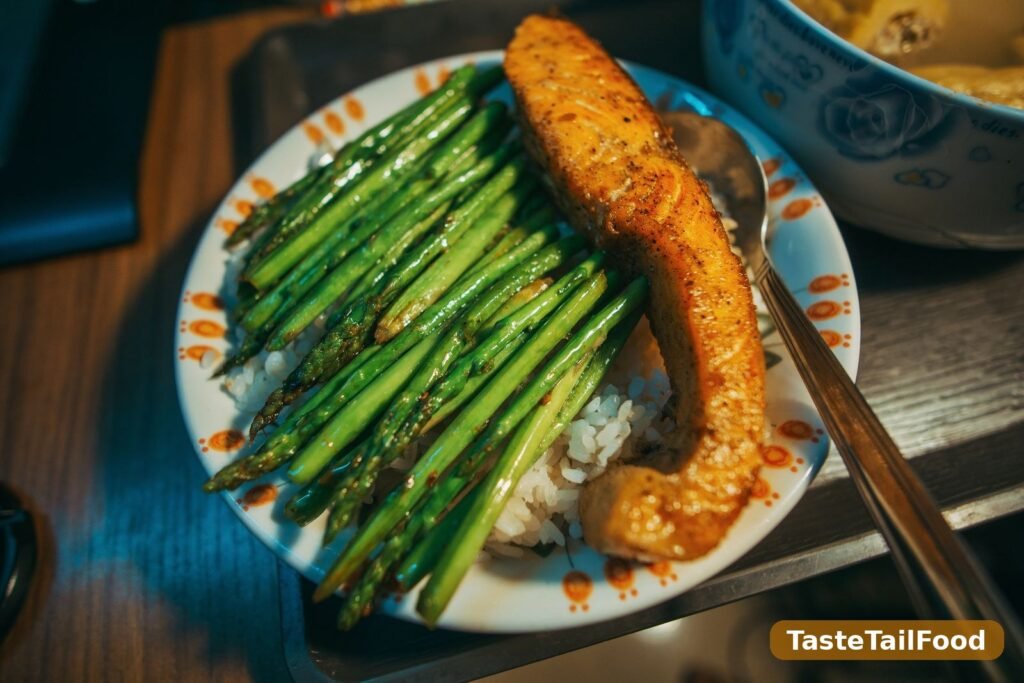
The simplest way to serve this salmon is the way I first made it: straight from the pan, with a bowl of steamed jasmine rice on the side and a scattering of spring onions and sesame seeds over the top. The rice soaks up the honey garlic sauce beautifully, and it turns the dish into a complete dinner that feels like something from a good Asian restaurant. Add a simple cucumber salad, with thinly sliced cucumber, rice vinegar, and a pinch of sugar, and you have a meal that is fresh, balanced, and ready in twenty minutes.
For a more Western feel, serve the salmon with creamy mashed potatoes and a green salad, or with crusty bread and a big bowl of roasted vegetables. The sauce is rich enough that you do not need much else, and a simple salad with a lemon and olive oil dressing is the perfect contrast. In summer, I like to serve this with new potatoes, a tomato salad, and some warm bread, which keeps the meal light while still feeling satisfying. If you are feeding kids, the salmon goes down a treat with rice and a little extra honey glaze spooned over the top — the sweet flavour makes it an easy sell even for picky eaters.
This salmon also makes a wonderful lunch. Flake the leftovers and tuck them into wraps with shredded lettuce, sliced cucumber, and a spoonful of the leftover glaze, or scatter them over a big salad of mixed leaves, avocado, and toasted seeds. For a lighter lunch, serve the cold salmon over a grain bowl with quinoa, roasted vegetables, and a drizzle of the glaze thinned with a little lemon juice. And if you want a quick stovetop dinner to go with it on another night, this easy chicken dinner without an oven is a great backup for nights when you do not want to turn the oven on.
Storage and Reheating
Leftover honey garlic salmon keeps well for a day or two, although it is at its absolute best when it is fresh from the pan. Let it cool completely, then store it in an airtight container in the fridge for up to two days. Keep the salmon and the asparagus in the sauce, because the sauce keeps the fish moist and the flavour deepens overnight. The salmon is also lovely cold, flaked into salads or sandwiches, and I often pack it for lunch the next day exactly like that.
To reheat, the hob is your best friend. Put the salmon and asparagus in a pan over a low heat, add a splash of water or stock to loosen the sauce, cover the pan with a lid, and warm it gently for five to six minutes, until it is heated through. Do not let it boil, and do not reheat it for too long, because salmon dries out very quickly when it is reheated. The microwave works in a pinch — about ninety seconds on medium power, covered — but the hob gives you much better control. If the sauce has thickened too much in the fridge, a splash of water or stock will bring it back to the right consistency.
For longer storage, cooked salmon does not freeze as well as chicken, so I would not recommend freezing this dish. The salmon can go dry and the asparagus loses its texture when it thaws. If you do want to freeze it, wrap the cooled salmon fillets individually in cling film, place them in a freezer bag, and use them within a month. Thaw overnight in the fridge and reheat gently on the hob. The honey garlic sauce, on the other hand, freezes beautifully on its own — make a double batch, freeze it in small containers, and thaw it whenever you need a quick glaze for salmon, chicken, or roasted vegetables.
Frequently Asked Questions
Can I use frozen salmon for this recipe?
Yes, absolutely, but thaw it completely first. The best way to thaw salmon is overnight in the fridge, but if you are in a hurry, you can put the sealed fillets in a bowl of cold water for thirty to forty minutes. Never thaw salmon in warm water or in the microwave, because it will start to cook unevenly. Once the salmon is thawed, pat it completely dry with paper towels before you season it, because any moisture left on the surface will stop it from searing properly. Frozen salmon is often excellent quality, and it works just as well as fresh in this recipe.
How do I know when the salmon is done?
Salmon is done when it flakes easily with a fork and is still slightly translucent in the very centre. That translucency disappears as the salmon rests, so if it looks completely opaque in the pan, it is already overcooked. For a fillet about two centimetres thick, four to five minutes on the first side and three to four minutes on the second side is usually right. If you have a meat thermometer, you want the thickest part to read about 52°C (125°F) for medium, or 57°C (135°F) if you prefer it more well done. When in doubt, take it off the heat a minute early — the salmon continues cooking for a minute or two after you take it out of the pan.
Can I use a different vegetable instead of asparagus?
Yes, easily. Green beans, broccoli florets, and sugar snap peas all cook in the same pan in about the same time, and they all taste wonderful in the honey garlic sauce. Green beans need about five minutes, broccoli florets need four to five minutes, and sugar snap peas need just two to three minutes, so add them at the right moment. You can also add a handful of cherry tomatoes, sliced mushrooms, or baby courgettes. If asparagus is out of season or hard to find, any of these swaps will work beautifully, and the method stays exactly the same.
Can I make the honey garlic sauce ahead of time?
Yes, and it keeps beautifully. You can whisk the sauce together up to a week ahead and keep it in a sealed jar in the fridge. The flavours settle and deepen as it sits, and it thickens slightly, which makes it even better as a glaze. Give it a good stir before using it, and taste it again — you might want an extra squeeze of lemon or another teaspoon of honey, depending on how sweet your honey is. It also works as a glaze for grilled chicken, a dressing for noodle salads, or a sauce for roasted vegetables, so it is worth making a double batch.
Should I cook the salmon with the skin on or off?
Either works, and it really comes down to personal preference. Skin-on salmon gives you a beautifully crisp skin if you sear it properly, and the skin protects the flesh from overcooking. Place the fillet skin-side down in the hot pan and leave it alone for four to five minutes until the skin is crisp and releases naturally from the pan. Skinless salmon is easier to eat and works just as well — just be a little more careful when you flip it, because it is more delicate. Whichever you choose, pat the salmon dry before cooking and do not move it until it is ready to flip.
Can I make this recipe in the oven instead of on the hob?
Yes, and it is a great option if you prefer a hands-off method. Arrange the seasoned salmon fillets and the trimmed asparagus on a baking tray lined with parchment, brush them generously with the honey garlic sauce, and roast them at 200°C (400°F) for twelve to fifteen minutes, until the salmon flakes easily and the asparagus is tender-crisp. The sauce will not thicken into a glaze in the oven in quite the same way, so you can warm any leftover sauce in a small pan on the hob and spoon it over the salmon before serving. It is a slightly different result, but it is just as delicious.