Chicken Pasta Without Cream Sauce
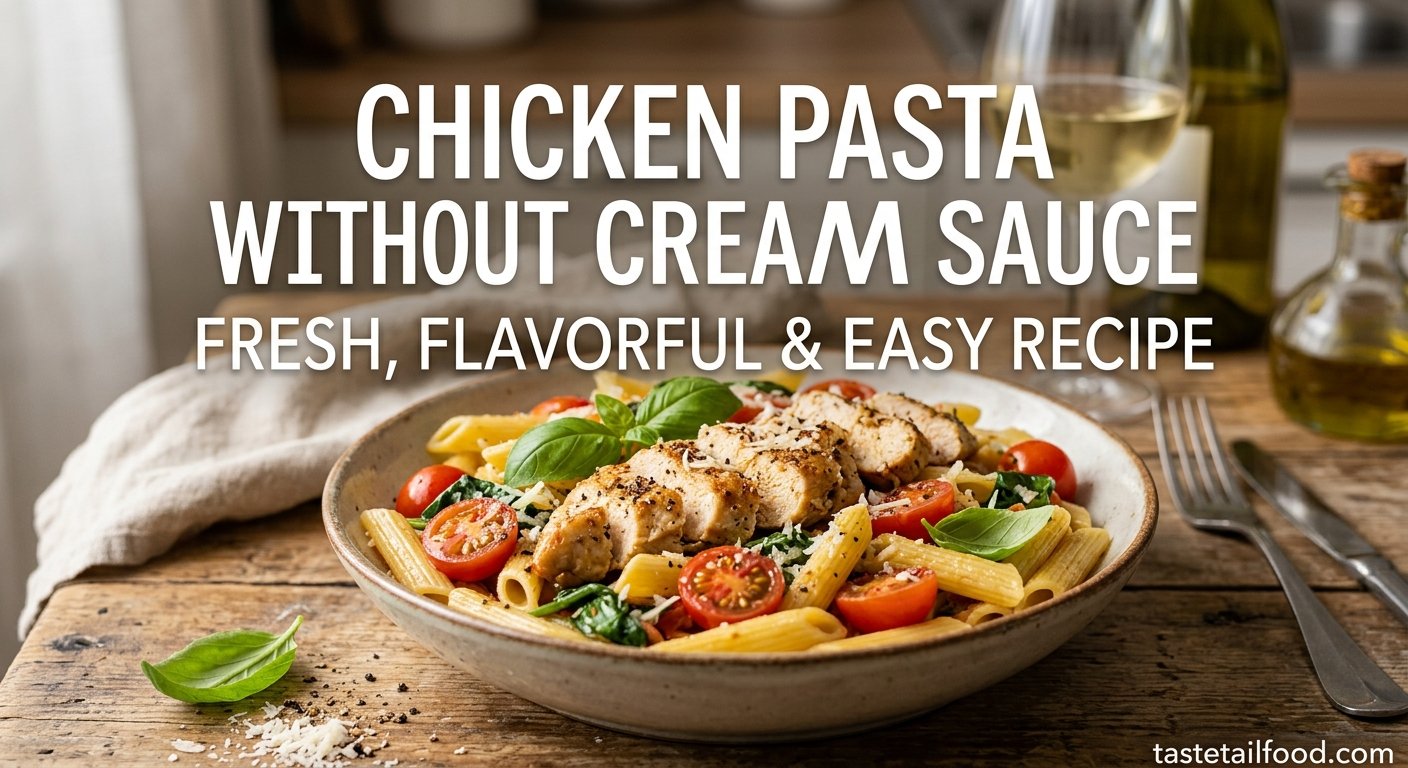
When you want a comforting bowl of pasta but don’t have heavy cream in the fridge, there is no need to change your dinner plans. This chicken pasta without cream sauce is proof that you can make a rich, flavorful, and satisfying pasta dinner without using cream at all.
Instead of relying on heavy cream, this recipe uses simple pantry ingredients, tender chicken, garlic, seasonings, pasta water, and a little cheese to create a light sauce that coats every bite. The result is creamy-tasting pasta without an actual cream sauce.
This chicken pasta is also easy enough for a busy weeknight. You can have everything ready in about 30 minutes, making it a great option when you need a homemade dinner without spending hours in the kitchen.
Why You’ll Love This Chicken Pasta Without Cream Sauce
There are plenty of reasons to keep this recipe in your regular dinner rotation.
First, you don’t need heavy cream. If you are out of cream or simply prefer a lighter pasta dish, this recipe gives you plenty of flavor without it.
Second, the ingredients are simple. Most of them are probably already sitting in your kitchen.
The chicken adds protein and makes the pasta filling enough for a complete meal, while garlic, herbs, Parmesan cheese, and pasta water come together to make a flavorful sauce.
Here are a few more reasons this recipe works so well:
- No heavy cream is required
- Ready in about 30 minutes
- Uses simple ingredients
- Perfect for busy weeknights
- Easy to customize with vegetables
- Family-friendly and comforting
- Great for lunch or dinner
- Can be made with different types of pasta
- Uses pasta water to create a silky sauce
- Easy enough for beginner cooks
Ingredients You Need
The beauty of this chicken pasta without cream sauce is that you don’t need a long ingredient list.
Pasta
Use your favorite pasta. Spaghetti, penne, fettuccine, linguine, rotini, and bow-tie pasta all work well.
Penne is especially useful because the sauce gets into the hollow center, giving you flavorful bites throughout the meal.
Chicken
Boneless, skinless chicken breast is a convenient choice, but chicken thighs work beautifully too. Chicken thighs tend to be more tender and juicy because they contain a little more fat.
Cut the chicken into small bite-sized pieces so it cooks quickly and evenly.
Garlic
Fresh garlic gives the pasta much more flavor than garlic powder. You can use two or three cloves depending on how much garlic you like.
If you’re a serious garlic lover, don’t be afraid to add an extra clove.
Olive Oil
Olive oil helps cook the chicken and garlic while adding a subtle richness to the finished dish.
You can also use butter if you prefer a more traditional buttery pasta flavor.
Parmesan Cheese
Parmesan helps create a delicious savory flavor and gives the sauce a creamy texture without requiring heavy cream.
Freshly grated Parmesan usually melts better than pre-shredded cheese.
Pasta Water
Don’t throw away all the water after cooking your pasta.
A little reserved pasta water is one of the most useful ingredients in this recipe. The starch in the water helps combine the oil, cheese, garlic, and seasonings into a smooth sauce that clings to the pasta.
Seasonings
You can keep the seasoning simple with:
- Salt
- Black pepper
- Garlic
- Italian seasoning
- Paprika
- Red pepper flakes
The red pepper flakes are optional, but they add a pleasant little kick.
How to Make Chicken Pasta Without Cream Sauce
Making this pasta is straightforward, even if you’re not an experienced cook.
Step 1: Cook the Pasta
Bring a large pot of salted water to a boil.
Add your pasta and cook according to the package directions until it reaches al dente texture.
Before draining, reserve about one cup of the pasta cooking water.
Drain the pasta and set it aside.
Don’t rinse the pasta because the starch on the surface helps the sauce stick.
Step 2: Prepare the Chicken
While the pasta cooks, cut the chicken into bite-sized pieces.
Season it with salt, black pepper, paprika, and a little Italian seasoning.
Heat olive oil in a large skillet over medium-high heat.
Add the chicken in a single layer. Cook for several minutes, stirring occasionally, until the chicken is golden on the outside and completely cooked through.
The exact cooking time depends on the size of your chicken pieces.
Once cooked, transfer the chicken to a plate.
Step 3: Cook the Garlic
Reduce the heat to medium.
Add a little more olive oil or butter to the same skillet if necessary.
Add minced garlic and cook for about 30 seconds to one minute.
Be careful not to burn the garlic. Burnt garlic can become bitter very quickly.
Step 4: Build the Sauce
Add about half a cup of reserved pasta water to the skillet.
Scrape the bottom of the pan with a wooden spoon to loosen the flavorful browned bits left behind by the chicken.
Add Parmesan cheese gradually while stirring.
The starch from the pasta water helps create a silky sauce, while the Parmesan adds richness and savory flavor.
If the sauce seems too thick, add another splash of pasta water.
Step 5: Add the Pasta and Chicken
Return the cooked pasta to the skillet.
Add the cooked chicken and toss everything together.
Keep tossing for a minute or two so the sauce coats the pasta evenly.
If necessary, add another small splash of pasta water.
Taste and adjust the seasoning.
You can add more black pepper, Parmesan, Italian seasoning, or red pepper flakes according to your preference.
Step 6: Serve
Once everything is hot and well combined, turn off the heat.
Finish with freshly grated Parmesan and chopped parsley if desired.
Serve immediately while the pasta is warm and the sauce is silky.
How Does the Sauce Become Creamy Without Cream?
This is one of the most useful tricks in this recipe.
You don’t actually need heavy cream to make pasta feel rich and satisfying.
The secret is starchy pasta water.
When pasta cooks, some of its starch moves into the water. That starchy liquid can help emulsify fats such as olive oil or butter.
When you combine pasta water with Parmesan and the flavorful ingredients in the skillet, you get a smooth sauce that coats the pasta.
The sauce won’t taste exactly like a traditional heavy cream sauce, and that’s actually part of the appeal. It is lighter, flavorful, and doesn’t leave you feeling like you just ate an extremely heavy meal.
Tips for Making the Best Chicken Pasta
A few simple techniques can make a big difference.
Don’t Overcook the Chicken
Chicken breast can become dry if you cook it too long.
Cut it into evenly sized pieces and cook just until it reaches a safe internal temperature.
Salt the Pasta Water
Seasoning the pasta water helps flavor the pasta from the inside.
The water should taste noticeably salty before you add the pasta.
Save More Pasta Water Than You Think You Need
It’s better to have extra than to discover that you need more after you’ve already drained the pasta.
I usually reserve around one cup, even if I only end up using half of it.
Use Fresh Parmesan
Freshly grated Parmesan melts more smoothly and adds better flavor.
If possible, grate it yourself just before making the sauce.
Don’t Burn the Garlic
Garlic cooks quickly.
Once it becomes fragrant, move on to the next step. If it turns dark brown, the flavor can become bitter.
Toss the Pasta in the Sauce
Don’t simply pour sauce over pasta on a plate.
Adding the pasta directly to the skillet allows the sauce to coat every piece.
What Pasta Works Best?
Almost any pasta shape works for this recipe.
Some of my favorites include:
Penne: Great for holding onto the sauce.
Fettuccine: Gives the dish a classic Italian-style pasta feel.
Spaghetti: Simple and familiar.
Linguine: Slightly wider than spaghetti and excellent with light sauces.
Rotini: The twists catch bits of chicken, garlic, and Parmesan.
Bow-tie pasta: A fun option, especially for family dinners.
You can also use whole-wheat pasta if you prefer.
Can You Add Vegetables?
Absolutely.
Adding vegetables is an easy way to make this chicken pasta more colorful and nutritious.
Good choices include:
- Broccoli
- Spinach
- Bell peppers
- Mushrooms
- Zucchini
- Peas
- Cherry tomatoes
- Frozen mixed vegetables
For example, you can sauté sliced mushrooms with the chicken or add fresh spinach near the end.
If using broccoli, cook it separately or add it to the pasta water during the final few minutes of cooking.
How to Make Chicken Pasta Without Cream and Cheese
If you don’t have Parmesan or prefer to avoid dairy, you can still make a tasty version.
Use olive oil, garlic, pasta water, lemon juice, herbs, and seasonings to create a simple garlic chicken pasta.
A little lemon juice can brighten the entire dish.
You can also add nutritional yeast if you want some cheesy flavor without using Parmesan.
Can I Use Leftover Chicken?
Yes.
This recipe is actually a great way to use leftover cooked chicken.
Instead of cooking raw chicken, simply shred or chop your leftover chicken and add it to the skillet near the end.
Since the chicken is already cooked, you only need to heat it through.
Rotisserie chicken is another convenient option.
It can turn this recipe into an especially quick dinner because most of the cooking is already done.
How to Store Leftover Chicken Pasta
If you have leftovers, allow the pasta to cool before transferring it to an airtight container.
Store it in the refrigerator for up to three days.
Because pasta absorbs sauce as it sits, leftovers may seem drier the next day.
When reheating, add a splash of water or chicken broth before warming.
Heat gently and stir occasionally.
A little fresh Parmesan and black pepper can also bring the flavor back to life.
Can You Freeze Chicken Pasta?
You can freeze chicken pasta, although the texture is usually best when eaten fresh.
If you plan to freeze it, allow the pasta to cool completely and store it in a freezer-safe container.
When you’re ready to eat it, thaw it in the refrigerator and reheat gently.
Adding a little water or broth can help loosen the sauce.
For the best texture, however, I recommend making only as much as you expect to eat within a few days.
Easy Variations
Once you’ve mastered the basic recipe, there are many ways to change it.
Lemon Garlic Chicken Pasta
Add fresh lemon juice and a little lemon zest at the end.
The bright citrus flavor works especially well with garlic and Parmesan.
Spicy Chicken Pasta
Add extra red pepper flakes or a pinch of cayenne pepper.
You can also add sliced fresh chili peppers.
Chicken Spinach Pasta
Stir fresh spinach into the skillet during the final few minutes.
The heat will quickly wilt the spinach.
Chicken Mushroom Pasta
Sauté sliced mushrooms after cooking the chicken.
Let them brown nicely before adding the garlic and pasta water.
Tomato Chicken Pasta
Add halved cherry tomatoes or a few spoonfuls of tomato sauce.
This creates a completely different flavor while keeping the recipe simple.
Garlic Butter Chicken Pasta
Use butter instead of some or all of the olive oil.
The result is richer and especially comforting.
What to Serve With Chicken Pasta
This pasta can easily stand on its own as a complete meal, but you can serve it with a simple side if you’re feeding a family or guests.
A crisp green salad is an excellent choice.
You can also serve it with:
- Garlic bread
- Roasted vegetables
- Steamed broccoli
- Green beans
- Caesar salad
- Bruschetta
- Sautéed spinach
If you’re serving the pasta for a special dinner, a simple salad and warm garlic bread are more than enough.
Common Mistakes to Avoid
Even a simple pasta recipe can go wrong if you overlook a few details.
Using Too Much Pasta Water
Start with a small amount and add more gradually.
Too much water can make the sauce thin.
Adding Parmesan Over Very High Heat
Extremely high heat can cause cheese to clump instead of creating a smooth sauce.
Lower the heat before adding Parmesan and stir continuously.
Overcooking the Pasta
Cook it until al dente whenever possible.
Very soft pasta can become mushy when tossed with the sauce.
Forgetting to Season
Chicken and pasta both need seasoning.
Taste the finished dish before serving and adjust the salt and pepper if necessary.
Frequently Asked Questions
Can I make chicken pasta without heavy cream?
Yes. You can make delicious chicken pasta without heavy cream by using reserved pasta water, Parmesan cheese, olive oil or butter, garlic, and seasonings to create a flavorful sauce.
What can I use instead of cream in chicken pasta?
Pasta water, Parmesan cheese, milk, Greek yogurt, cream cheese, broth, or a light garlic and olive oil sauce can all be used depending on the recipe.
How do you make pasta creamy without cream?
Starchy pasta water combined with Parmesan and a little fat can create a smooth, silky sauce without using heavy cream.
Can I use milk instead of heavy cream?
Yes, milk can be used in some pasta recipes, although it will produce a lighter sauce. You may need Parmesan or another thickening ingredient to give the sauce more body.
Can I make this recipe with chicken thighs?
Absolutely. Chicken thighs are juicy and flavorful and work very well in this recipe.
Is this recipe good for meal prep?
Yes. Store portions in airtight containers in the refrigerator and reheat gently with a splash of water or broth.
Recipe at a Glance
Recipe: Chicken Pasta Without Cream Sauce
Prep Time: 10 minutes
Cook Time: 20 minutes
Total Time: About 30 minutes
Servings: 4
Cuisine: Italian-inspired
Main Ingredients: Chicken, pasta, garlic, Parmesan, olive oil, pasta water, and seasonings
Final Thoughts
You don’t need heavy cream to make a comforting and flavorful pasta dinner.
This chicken pasta without cream sauce uses simple ingredients and a few easy cooking techniques to create a satisfying meal that feels much more special than the amount of effort required.
The key is saving the starchy pasta water and using it to bring the sauce together. Add Parmesan, garlic, good seasoning, and perfectly cooked chicken, and you have a weeknight dinner that is simple but full of flavor.
The recipe is also flexible. Add spinach, mushrooms, broccoli, tomatoes, or your favorite vegetables. Use chicken thighs instead of breast, swap pasta shapes, or add a little lemon and red pepper for a completely different flavor.
Most importantly, don’t worry if you don’t have heavy cream in the refrigerator. Sometimes the best pasta dinners come from using a handful of basic ingredients and letting them work together.
If you’re looking for an easy, comforting, and flavorful chicken pasta without cream sauce, this recipe is one worth keeping handy for those busy nights when you want homemade food without a complicated cooking process.