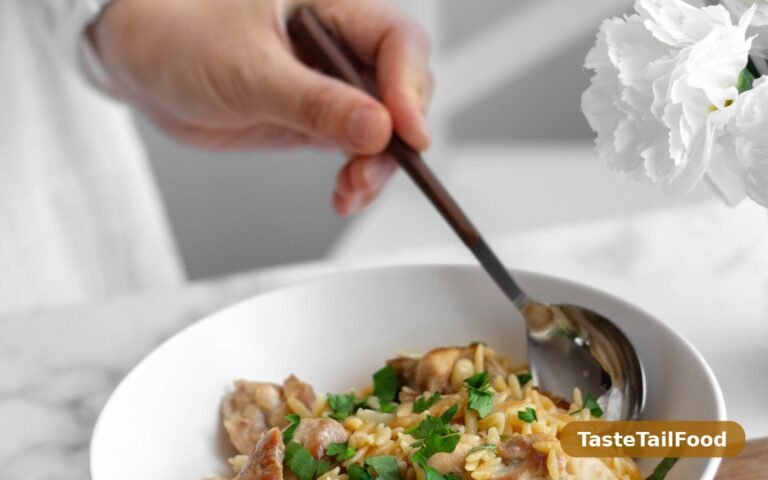
Creamy Tuscan Chicken Skillet
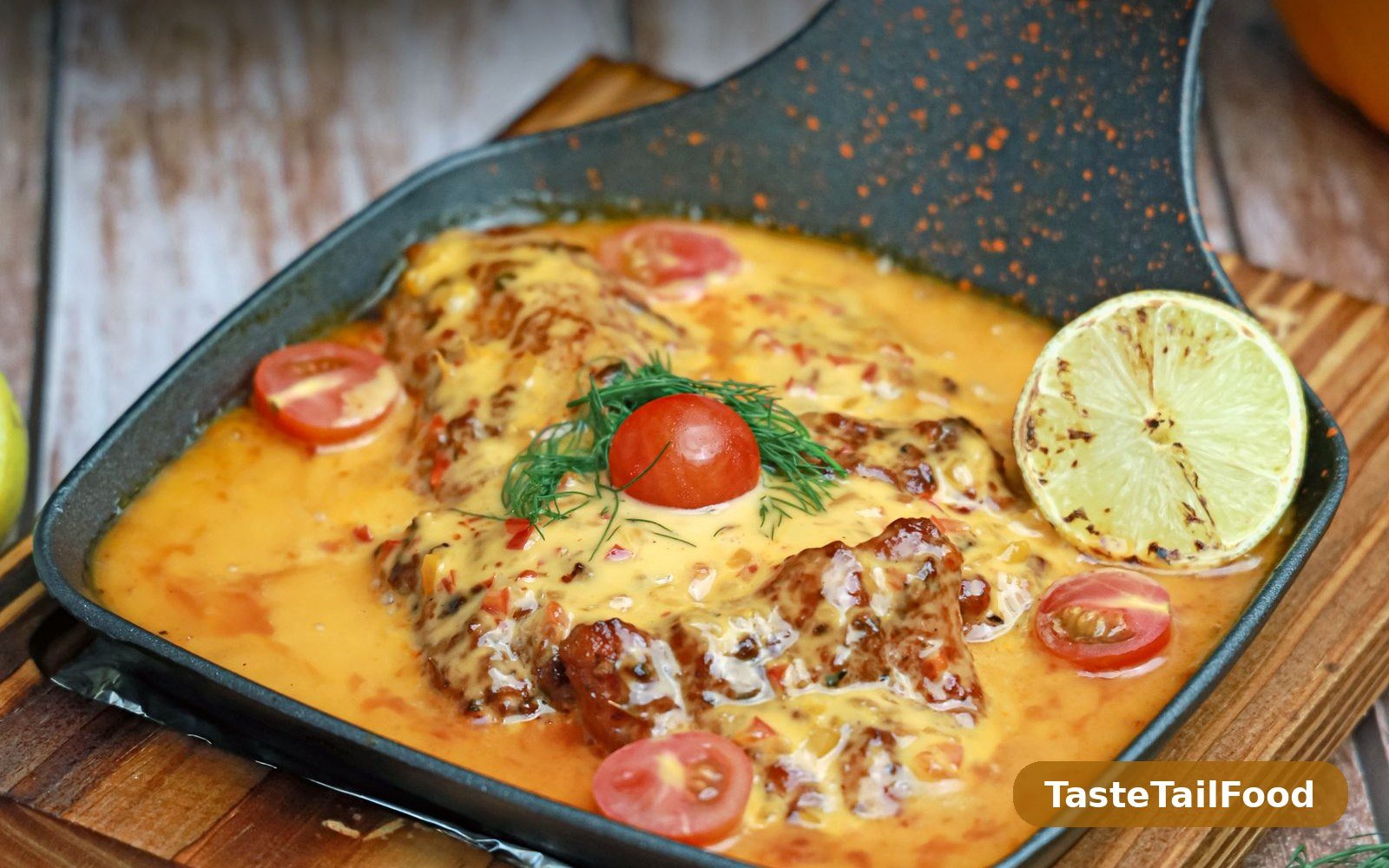
Some dinners announce themselves the moment they hit the table. This creamy Tuscan chicken skillet is one of them. Golden chicken breasts simmered in a sauce of garlic, cream, sun-dried tomatoes, spinach and parmesan, all in one pan, in about thirty minutes, and it looks and tastes like something a restaurant would charge a fortune for. The sauce is rich without being heavy, the tomatoes bring a sweet tang that cuts through the cream, and the spinach wilts into the sauce at the very end so you get a bit of green in every spoonful. It is the kind of meal that makes an ordinary Tuesday feel like someone planned something special.
I first made a version of this on a night when the fridge was nearly empty and guests were coming in an hour. I had chicken breasts, a jar of sun-dried tomatoes that had been sitting in the cupboard for months, a bag of spinach that needed using, and a block of parmesan. I seared the chicken, threw everything else into the same pan, and hoped for the best. What came out was so good that my guests asked for the recipe before they had finished eating, and it has been in our regular rotation ever since. That is the thing about Tuscan-style cooking. It is not fancy. It is simple ingredients, cooked properly, in one pan, and the result is always more than the sum of its parts.
The other reason this recipe has stuck around in my kitchen is how little washing up it creates. One skillet, one chopping board, one spoon. The chicken sears in the pan, the sauce builds in the same pan, and the whole thing goes to the table in the pan it cooked in. On a busy weeknight, that matters almost as much as the taste. And the leftovers, if there are any, are even better the next day, because the sauce has had a night to soak into the chicken. If you only learn one creamy chicken recipe this year, make it this one.
WHY THIS RECIPE WORKS
The first reason this works is the sear. Chicken breast has a reputation for being dry and boring, and most of the time that reputation is earned, because people cook it badly. They put it in a cold pan, or they crowd the pan, or they move it around too much, and the chicken steams instead of searing. A proper sear does two things. It gives the chicken a golden crust that tastes wonderful on its own, and it leaves browned bits stuck to the bottom of the pan, which are pure flavour. When you pour the cream into that same pan, those browned bits dissolve into the sauce, and that is where the depth of flavour comes from. Skip the sear and the sauce will taste flat, no matter how good your ingredients are.
The second reason is the balance in the sauce. Cream on its own is rich but one-note. It coats your mouth and after a few bites you want something to cut through it. That is what the sun-dried tomatoes do. They are sweet, tangy and intensely flavoured, and a small handful of them is enough to lift the whole sauce. The garlic does the same kind of work from a different direction, adding a warm savoury note that keeps the cream from tasting bland. And the parmesan, stirred in at the end, does not just add salt. It adds a nutty, savoury depth that makes the sauce taste like it has been cooking for hours, when really it has been on the stove for ten minutes.
The third reason is the spinach, and it is not just there for colour. Spinach wilts in seconds in a hot sauce, and it soaks up the cream and the garlic and the flavour of the tomatoes. It turns the sauce from something you pour over chicken into something you eat with a spoon. It also means the dish has a vegetable built in, so you do not need to think too hard about what else to put on the plate. A handful of spinach goes in looking like far too much, and then it shrinks down to almost nothing, which is always a surprise the first time you see it happen. Trust it. It will fit.
THE INGREDIENTS THAT MATTER
The chicken is the starting point, and it is worth choosing it well. I use four boneless, skinless chicken breasts, about 700 grams in total, and I pound them to an even thickness before cooking. This is the single most useful thing you can do with chicken breast, and it takes two minutes. Breasts are naturally thick at one end and thin at the other, so if you cook them as they come, the thin end dries out while the thick end is still raw in the middle. Put each breast between two sheets of baking paper and give it a few firm taps with a rolling pin or the bottom of a heavy pan until it is roughly the same thickness all over. The chicken will cook evenly, it will stay juicy, and you will never have to cut into a breast at the table to check whether it is done.
The sun-dried tomatoes are the ingredient that makes this dish taste Tuscan rather than just creamy. Buy the ones packed in oil, in a jar, not the dry ones in a bag. The jarred ones are softer, they have more flavour, and the oil they sit in is worth keeping, because a spoonful of it in the pan adds even more flavour to the sauce. You need about half a cup, sliced into strips. If you only have dry sun-dried tomatoes, soak them in warm water for ten minutes first so they soften up, or they will stay chewy in the sauce. And if you have never cooked with them before, know that they are one of those ingredients where a little goes a long way. They are intensely flavoured, and half a cup is plenty for the whole pan.
The cream matters too, and this is where people sometimes go wrong. Use double cream, or heavy cream if that is what your shop calls it. It has enough fat to simmer without splitting, which is exactly what you need here. Single cream or half-and-half will split in a hot pan, and you will end up with a grainy sauce and a puddle of fat. If you are in a country where double cream is hard to find, look for cream with at least 35 percent fat. The cream is what makes the sauce silky, and it is not the place to cut corners. A small carton is all you need, and the difference between the right cream and the wrong cream is the difference between a restaurant sauce and a broken one.
Spinach is a food that rewards a little respect, and it is worth knowing what is actually in it. Healthline has a clear rundown of the benefits of spinach, and it is a good read if you have ever wondered why it shows up in so many healthy recipes.
The parmesan should be real parmesan, grated fresh if you can manage it, because the pre-grated kind in a tub often has anti-caking agents that stop it melting smoothly into a sauce. A small wedge and a box grater will take you two minutes and the sauce will be noticeably silkier. You need about half a cup, and it goes in at the very end, off the heat or on the lowest heat, so it melts gently instead of clumping. If you add parmesan to a boiling sauce, it will seize up into strings and lumps, and no amount of stirring will fix it. Low heat, a handful at a time, and a little patience are all it takes.
WHAT YOU’LL NEED
This serves four people, and it is ready in about thirty minutes from the moment you start. It doubles easily if you are feeding a crowd, but use a bigger pan or cook the chicken in two batches, because crowded chicken steams instead of searing and you will lose the golden crust that makes this dish work.
For the chicken:
- 4 boneless, skinless chicken breasts (about 700 g), pounded to even thickness
- 1 teaspoon fine salt
- 1/2 teaspoon black pepper
- 1/2 teaspoon paprika
- 2 tablespoons olive oil
For the sauce:
- 3 tablespoons butter
- 4 cloves garlic, minced fine
- 1 small onion, finely diced (or 2 shallots)
- 1/2 cup sun-dried tomatoes in oil, drained and sliced into strips
- 1 teaspoon Italian seasoning (or a mix of dried oregano and basil)
- 1/2 teaspoon chilli flakes (optional, but they add a lovely warmth)
- 1 cup double cream (heavy cream)
- 1/2 cup chicken stock
- 1/2 cup freshly grated parmesan
- 3 big handfuls of fresh baby spinach (about 90 g)
- Fresh basil leaves, to serve (optional)
You will need one large skillet or frying pan, the wider the better, with a lid if you have one, though the lid is only needed for a few minutes at the end. A pair of tongs for turning the chicken, a wooden spoon for the sauce, and a chopping board and knife are the only other things. That is the whole list. Nothing in it is hard to find, and most of it is probably in your kitchen already, which is half the reason this recipe is so useful on a busy night.
HOW TO MAKE CREAMY TUSCAN CHICKEN SKILLET
Start by preparing the chicken. Pat the breasts dry with paper towels, then pound them to an even thickness between two sheets of baking paper. Season both sides with the salt, pepper and paprika. The paprika is not just for flavour. It gives the chicken a warm golden colour as it sears, and it makes the finished dish look as good as it tastes. Let the seasoned chicken sit for five minutes while you get the other ingredients ready, because chicken that has sat with its seasoning for a few minutes always tastes better than chicken that went straight from the packet into the pan.
Heat the olive oil in a large skillet over medium-high heat. When the oil is hot and shimmering, lay the chicken breasts in the pan in a single layer, with space between them. Do not touch them for four to five minutes. This is the hard part, because every instinct tells you to poke at them and check, but moving the chicken breaks the sear. Let them sit. When you lift a corner and see a deep golden crust, flip them and cook for another four to five minutes on the other side. The chicken does not need to be fully cooked through at this point, because it will finish in the sauce. Take it out of the pan and set it aside on a plate, covered loosely with foil. It will rest while you make the sauce, and resting is what keeps it juicy.
Turn the heat down to medium and add the butter to the same pan. Do not wash the pan. The browned bits stuck to the bottom are the foundation of the sauce, and you want every one of them. When the butter has melted, add the diced onion and cook it for two or three minutes until it is soft and translucent. Then add the garlic and cook for just thirty seconds more, until you can smell it. Garlic burns fast, and burnt garlic turns bitter, so this is a step where you stay at the stove and pay attention. Thirty seconds is all it takes for the garlic to release its flavour into the butter, and that is exactly what you want.
Add the sun-dried tomatoes, the Italian seasoning and the chilli flakes if you are using them, and stir everything together for a minute. The tomatoes will soften slightly in the butter and their flavour will start to fill the pan. Then pour in the chicken stock and use your wooden spoon to scrape up all the browned bits from the bottom of the pan. This is called deglazing, and it is the moment the sauce starts to taste like something. The stock will bubble and reduce slightly, and the pan will smell wonderful. Let it simmer for two minutes.
Now pour in the cream and stir it in. Let the sauce come to a gentle simmer, not a hard boil, and let it cook for three or four minutes until it has thickened just slightly. It should coat the back of a spoon. If it is too thin, let it simmer for another minute or two. If it is too thick, add a splash more stock. Then turn the heat down to low and stir in the parmesan, a handful at a time, letting each handful melt before you add the next. The sauce will turn glossy and rich, and this is the moment it starts to look like the dish you imagined.
Return the chicken to the pan, along with any juices that have collected on the plate, and nestle the breasts into the sauce. Spoon some of the sauce over the top of each one. Put the lid on the pan and let it simmer gently for five to six minutes, until the chicken is cooked through. The safest way to check is a meat thermometer. Chicken is safe to eat at 74°C (165°F) in the thickest part, and the USDA has a clear safe temperature chart that is worth checking if you cook chicken regularly.
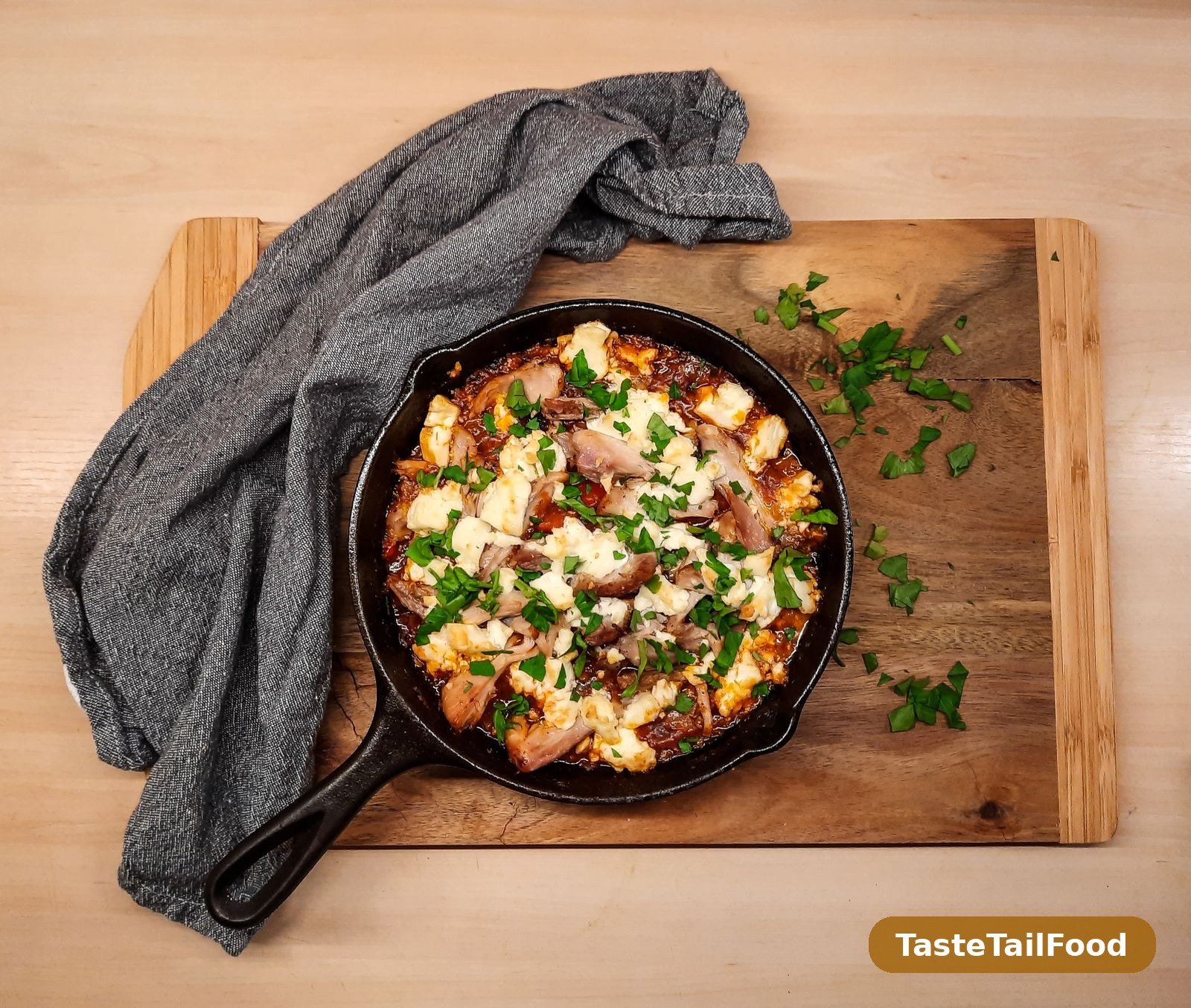
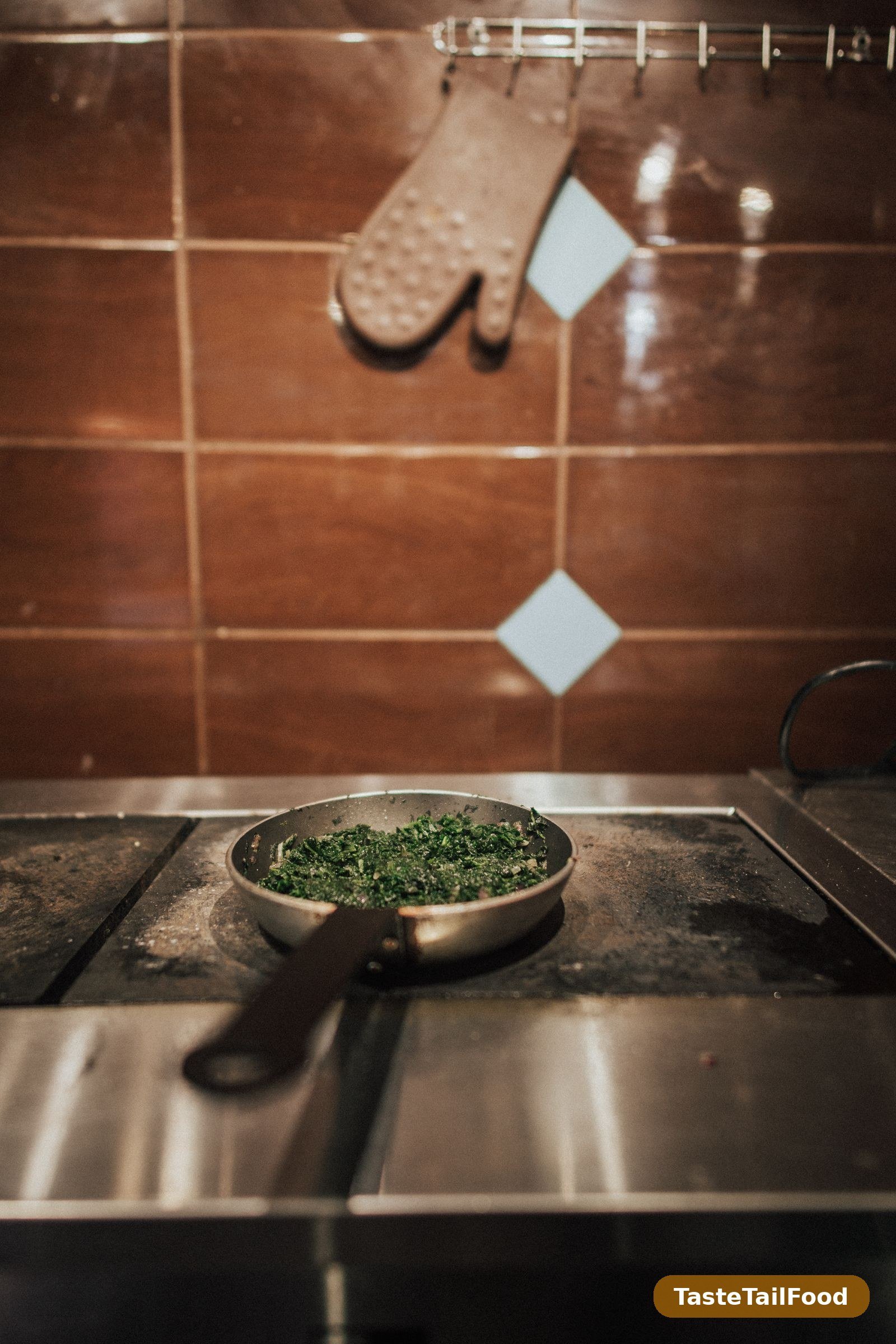
Take the lid off and add the spinach, a handful at a time, stirring it into the sauce until it wilts. It will look like far too much spinach, and then it will shrink down to almost nothing in less than a minute. That is normal. Once the spinach has wilted, taste the sauce and adjust the seasoning. It may need a pinch more salt, or a crack of black pepper, or a squeeze of lemon if you want a little brightness. Take the pan off the heat, scatter over the fresh basil if you are using it, and serve it straight from the pan. It is ready.
THE SAUCE: HOW TO KEEP IT CREAMY, NOT SPLIT
A cream sauce that splits is the one thing that can go wrong with this recipe, and it is easy to prevent once you know what causes it. The main cause is heat that is too high. Cream is an emulsion of fat and water, and when it boils hard, the emulsion breaks. The fat separates out, the sauce goes grainy, and it looks curdled. The fix is simple. Keep the sauce at a gentle simmer, never a rolling boil, from the moment the cream goes in. If you see big bubbles breaking the surface, turn the heat down. A gentle simmer is all the sauce needs to thicken, and it will never split at that temperature.
The second cause is adding the parmesan to a sauce that is too hot. Parmesan is a hard cheese, and it needs gentle heat to melt smoothly. If the sauce is boiling when the cheese goes in, the proteins in the cheese tighten up and squeeze out the fat, and you get clumps and strings instead of a smooth sauce. Always turn the heat down to low before you add the parmesan, add it a handful at a time, and stir until each handful has melted before adding the next. It takes a minute longer, and the result is a sauce that is glossy and smooth instead of grainy.
The third thing to know is that the sauce will thicken as it sits. Cream sauces always do. If you make the sauce and then leave the pan on the stove for ten minutes while you set the table, it will be noticeably thicker when you come back, and that is fine. A splash of chicken stock or cream, stirred in over low heat, will bring it back to the right consistency in seconds. Do not add water. Water thins the sauce but it also dilutes the flavour, and the sauce will taste washed out. Stock keeps the flavour, and cream keeps the richness. Either one works, and a splash is all you need.
COMMON MISTAKES AND HOW TO AVOID THEM
The most common mistake is overcooking the chicken. Chicken breast goes from juicy to dry in the space of a few minutes, and the difference is only a few degrees. The reason this recipe is forgiving is that the chicken finishes cooking in the sauce, gently, with the lid on, instead of sitting in a screaming hot pan. But it is still possible to overcook it if you sear it for too long at the start. Four to five minutes per side is enough for a breast of even thickness. If your breasts are very thick, even after pounding, give them an extra minute, but do not leave them in the pan until they are cooked through. They should still be slightly underdone when you take them out, because the sauce will finish the job.
The second mistake is crowding the pan. If the chicken breasts are packed tightly together, they release steam, and steam is the enemy of a good sear. The chicken will turn pale and grey instead of golden, and the pan will fill with liquid that has to boil off before anything can brown. Give each breast space. If your pan is not big enough for all four at once, sear them in two batches. It takes a few extra minutes, and the difference in the finished dish is enormous. The same rule applies to any pan-fried chicken, and it is the single most useful thing to remember about cooking chicken in a skillet.
The third mistake is adding the spinach too early. Spinach wilts in seconds, and if you add it at the start of the sauce, it will overcook, turn dark and stringy, and lose all of its fresh flavour. It goes in at the very end, after the chicken is cooked, and it only needs a minute in the hot sauce. Stir it in, watch it wilt, and take the pan off the heat. That is all it needs. And if you are using frozen spinach instead of fresh, squeeze it very dry before adding it, because frozen spinach holds a lot of water and that water will thin your sauce.
And if the sauce tastes flat, the fix is almost always acid or salt. A squeeze of lemon juice at the end brightens everything, and it is the kind of small addition that makes people wonder what your secret is. A pinch more salt does the same job from a different direction. Taste the sauce before you serve it, every time, and adjust it. The recipe is a starting point, not a set of orders, and your taste buds are the final judge.
STORING AND REHEATING
Leftover Tuscan chicken keeps well, and the sauce actually improves overnight as the flavours settle into each other. Let it cool completely, then store it in an airtight container in the fridge, with the sauce spooned over the chicken so it does not dry out. It will keep for three to four days. The spinach will darken a little in the fridge, and that is normal. It will still taste good, and the sauce will still be creamy.
Reheating a cream sauce needs a little care, because cream sauces do not like to be blasted with heat. The microwave will work, but heat it in short bursts of thirty seconds, stirring between each one, so the sauce warms evenly and does not split. The better way is to reheat it gently in a pan over low heat, with a splash of chicken stock or cream stirred in to loosen the sauce. It takes five minutes, and the sauce will come back glossy and smooth. If the sauce does split a little, a splash of cream and a good stir will usually bring it back together.
You can also freeze this, though the sauce will change texture slightly when it thaws. Cream sauces do not freeze as well as tomato sauces, and the sauce may look a little grainy after freezing. It will still taste good, and a splash of cream stirred in while reheating will fix most of the texture. If you want to freeze it, do so in single portions, and use it within a month. The chicken itself freezes beautifully, and if you would rather freeze just the chicken and make a fresh sauce later, that works too.
WHAT TO SERVE WITH IT
This dish is rich, so the best partners are the ones that soak up the sauce or bring something fresh to the plate. Crusty bread is the simplest choice, and it is the one I reach for most often. A good loaf, torn into pieces, is all you need to mop up the sauce, and it turns the meal into something that feels almost too simple until you taste it. Our one-pan lemon herb chicken orzo is a reminder of how well a one-pan chicken dinner works with something starchy on the side, and the same logic applies here. Pasta is the classic partner, and it is perfect because the sauce clings to every strand. A short pasta like penne or rigatoni works best, because the sauce gets inside the tubes and every bite is creamy.
For something lighter, mashed potatoes are wonderful with this sauce, and they are the side I make when I want the meal to feel a bit more substantial. A spoonful of the Tuscan sauce over the top of the mash is genuinely one of the best bites in this whole meal. Rice works just as well, especially a simple steamed rice, and if you want a vegetable side as well, our roasted broccoli with Parmesan and lemon does the same job here as it does next to any rich chicken dish. The lemon in the broccoli cuts through the cream, and the two dishes sit together happily on the plate.
If dinner is a weeknight and you want the whole thing to feel complete without much extra work, a simple green salad with a lemon dressing is enough. The acidity of the dressing is the perfect contrast to the richness of the sauce, and the crisp lettuce is a nice change of texture after the soft chicken and the creamy sauce. And if you are feeding people who like a bit of heat, a pinch of chilli flakes over the top of the finished dish, or a drizzle of the oil from the sun-dried tomato jar, gives it a gentle warmth that suits the sauce beautifully.
VARIATIONS WORTH TRYING
Once you have the basic version working, this sauce is easy to make your own, because the method stays the same and only the details change. The simplest variation is to swap the chicken for salmon. The sauce is just as good with fish, and it cooks even faster. Sear the salmon fillets skin-side down for four minutes, flip them, cook for another two, then take them out and make the sauce exactly the same way. Our air fryer honey glazed salmon is a different kind of salmon dinner, but it is a good reminder of how well salmon handles a sweet or creamy sauce. For the Tuscan version, return the salmon to the pan for just two or three minutes at the end, because fish overcooks faster than chicken and you do not want it to dry out.
For a version with mushrooms, add a cup of sliced mushrooms to the pan after the onion and before the garlic, and let them cook until they are golden and have released their liquid. Mushrooms add an earthy depth to the sauce that suits the sun-dried tomatoes beautifully, and they make the dish feel even more substantial. You can also add a handful of artichoke hearts from a jar, drained and halved, at the same time as the tomatoes. They bring a tangy, briny note that is very Tuscan, and they are one of those ingredients that makes people ask what is in the sauce.
If you want a lighter version, swap half the cream for chicken stock and add an extra spoonful of parmesan at the end to keep the flavour. The sauce will be thinner and less rich, but it will still be delicious, and it is a good option for a weeknight when you want the flavour without the full richness. You can also use chicken thighs instead of breasts. Bone-in, skin-on thighs are the closest swap, and they need a little longer in the pan, about six minutes per side, but they are even more forgiving than breasts and they stay juicy through the simmer. Our creamy garlic butter chicken thighs use the same idea of a creamy sauce with chicken thighs, and they are the recipe I reach for when I want the richest version of this kind of dinner.
WHY ONE-PAN DINNERS DESERVE A PLACE IN YOUR WEEK
There is a reason one-pan dinners have become the backbone of so many home kitchens, and it is not just the washing up. It is the way the flavours build on each other. When everything cooks in the same pan, the chicken flavours the sauce, the sauce flavours the chicken, and the whole dish tastes like it has been cooking together for hours, even though it has only been half an hour. A dish cooked in separate pots can never taste quite like that, because the flavours never meet. The pan is where they meet, and that is what makes a one-pan dinner taste like more than the sum of its parts.
It is also the most practical way to cook on a busy night. You can have this on the table in thirty minutes, with one pan to wash and a dinner that looks like you spent far longer on it than you did. That matters. Most of us do not have an hour to cook dinner on a weeknight, and we certainly do not have an hour to wash up afterwards. And if you do not want to switch the oven on at all, our easy chicken dinner without an oven is the one to reach for on those nights. A recipe that respects your time and still tastes like a proper dinner is worth keeping, and this one has earned its place in our kitchen for exactly that reason. Once you have made it, you will understand why it is in our regular rotation. And once your family has tasted it, they will ask for it just as often.
FREQUENTLY ASKED QUESTIONS
Can I use chicken thighs instead of chicken breasts?
Yes, and they work beautifully. Bone-in, skin-on thighs are the closest swap, and they need a little longer to cook, about six minutes per side in the pan, then the same simmer in the sauce. Boneless thighs will cook in roughly the same time as breasts. Thighs are more forgiving than breasts and they stay juicy even if you leave them in the pan a minute too long, so they are a good choice if you are nervous about overcooking chicken.
Can I make creamy Tuscan chicken ahead of time?
Yes, and it reheats well. You can cook it fully, let it cool, and store it in the fridge for up to three days. Reheat it gently in a pan over low heat with a splash of chicken stock or cream to loosen the sauce. You can also sear the chicken and make the sauce a few hours ahead, then store them separately and combine them when you are ready to serve. The sauce will thicken as it sits, and a splash of stock will bring it back.
Why did my cream sauce split?
The most common cause is heat that is too high. Cream splits when it boils hard, so keep the sauce at a gentle simmer, never a rolling boil, from the moment the cream goes in. The other common cause is adding the parmesan to a sauce that is too hot. Turn the heat down to low before you add the cheese, add it a handful at a time, and stir until each handful has melted. If the sauce does split, take it off the heat, add a splash of cold cream, and stir gently. It will often come back together.
Can I use milk instead of cream?
I would not recommend it. Milk has much less fat than cream, and it will split in a hot pan and give you a thin, grainy sauce. If you want a lighter version, use half cream and half chicken stock, which keeps the sauce stable and still tastes rich. Single cream will also split, so look for double cream or heavy cream with at least 35 percent fat. The cream is what makes the sauce silky, and it is worth using the right one.
What can I use instead of sun-dried tomatoes?
Cherry tomatoes, halved, are the best substitute, though the flavour will be fresher and less intense. Add them at the same point in the recipe and let them soften in the pan for a couple of minutes before adding the stock. Roasted red peppers from a jar, sliced into strips, are also lovely, and they bring a sweet, smoky note that suits the sauce. If you use either of these, you may want to add a squeeze of lemon at the end to bring back some of the tang that sun-dried tomatoes provide.
Can I freeze creamy Tuscan chicken?
You can, though the sauce will change texture slightly when it thaws. Cream sauces do not freeze as well as tomato sauces, and the sauce may look a little grainy after freezing. It will still taste good, and a splash of cream stirred in while reheating will fix most of the texture. Freeze it in single portions and use it within a month. The chicken itself freezes beautifully, so if you would rather freeze just the chicken and make a fresh sauce later, that works too.
What should I serve with creamy Tuscan chicken?
The best partners are the ones that soak up the sauce. Crusty bread is the simplest choice, and pasta is the classic one, because the sauce clings to every strand. Mashed potatoes are wonderful too, and rice works just as well. For a vegetable side, roasted broccoli or a simple green salad with a lemon dressing will balance the richness of the sauce. Anything with a bit of acidity or freshness will sit happily next to this dish.