
Roasted Broccoli with Parmesan and Lemon
Broccoli has a reputation problem, and most of it is not broccoli’s fault. For years, the only broccoli most of us knew was the soft, grey-green kind that came out of a pot of boiling water, tasting faintly of nothing and sitting sadly on the side of the plate while everyone reached for the potatoes instead. I was one of those people. I thought I did not like broccoli. Then a friend served it roasted, straight off a hot tray, with the edges browned and crisp and a snowfall of Parmesan over the top, and I realised I had never actually tasted broccoli at all. I had only tasted badly cooked broccoli.
That is the thing about roasting. It does not just cook a vegetable. It changes it. The high heat pulls the moisture out of the edges and lets them crisp and caramelise, and the flavour goes from flat and green to nutty and almost sweet. The stalks stay tender inside, the little florets on the edges go crunchy like crisps, and the whole tray smells wonderful. This recipe is the one I make when I want a side dish that takes ten minutes of actual work and still gets people asking what I did to it. The answer is almost nothing. Hot oven, enough oil, enough space on the tray, and Parmesan and lemon at the very end.
I make this two or three times a week now, usually while something else is in the oven, because it shares the temperature and the timing with so many main dishes. It works next to roast chicken, it works next to fish, it works next to pasta, and it works on its own with a bit of bread for a light lunch. Once you have made it once, you will not need the recipe again. But it is worth making it properly the first time, because there are a few small details that make the difference between broccoli that is genuinely good and broccoli that is just a bit limp.
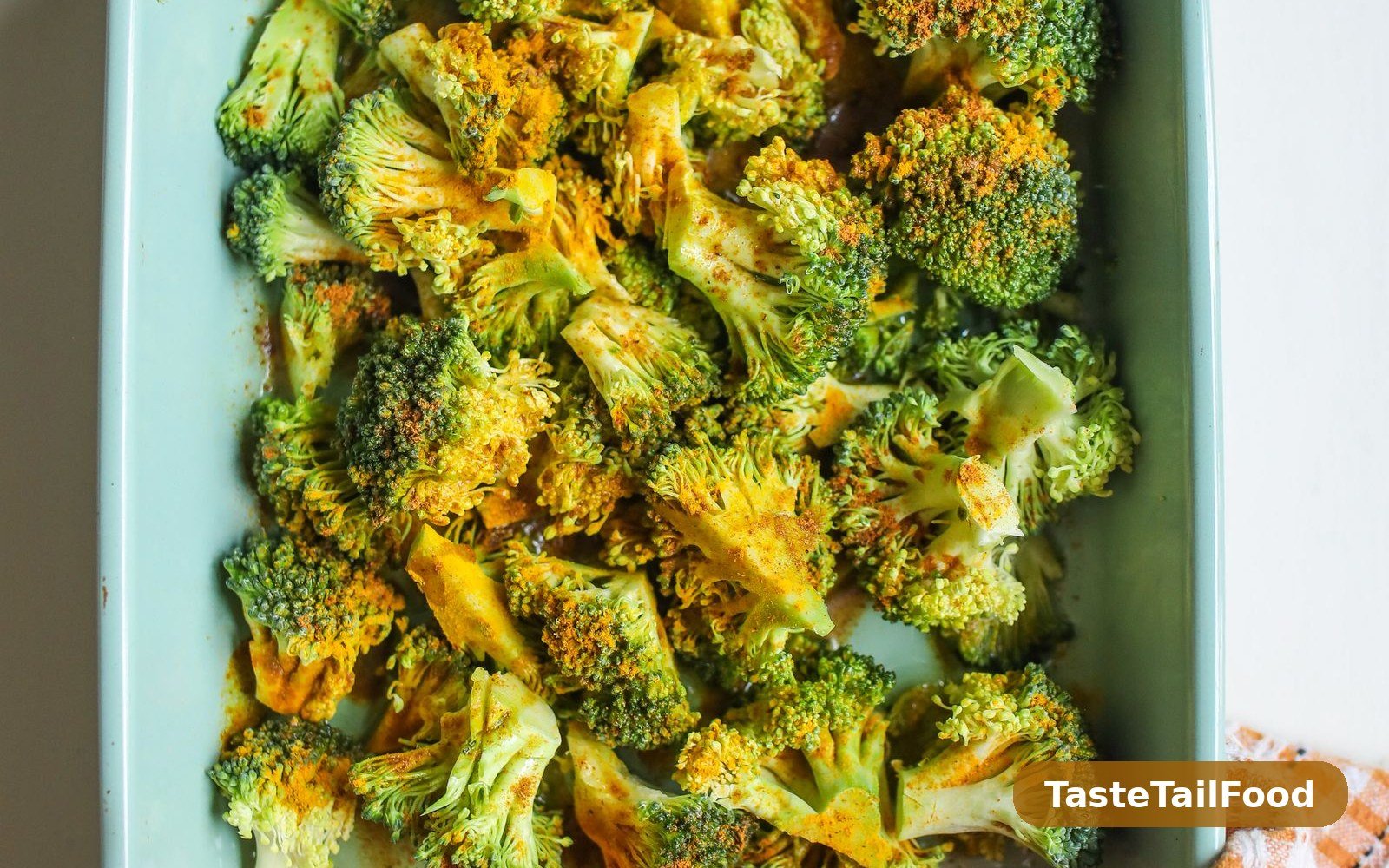
WHY THIS RECIPE WORKS
Most roasted broccoli fails for one of three reasons, and none of them is the broccoli itself. The first is the oven is not hot enough. Broccoli needs real heat to roast rather than steam, and that means 220°C (425°F). At a lower temperature, the florets sit in their own moisture and go soft before they ever get a chance to brown. At 220°C, the edges crisp in about twenty minutes while the stems stay tender, and that contrast is the whole point of the dish.
The second reason is crowding. If you pile the florets on top of each other, they steam instead of roast, and you end up with soft, pale broccoli no matter how hot the oven is. The florets need space. Each one should have a bit of tray around it, and if your tray is too small, use two trays rather than squeezing everything onto one. It feels wasteful to use two trays for one vegetable, but it is the difference between crisp edges and a soggy pile. I would rather wash an extra tray than serve limp broccoli.
The third reason is timing the Parmesan and lemon. Parmesan goes on at the very end, when the broccoli comes out of the oven, because if it goes in at the start it burns and turns bitter. The heat of the broccoli melts it just enough to cling to the florets, and the lemon goes on at the same time so its brightness cuts through the richness of the cheese. Together they do something that neither one does alone. The Parmesan brings salt and a deep, savoury flavour, and the lemon brings a sharp freshness that makes you want another forkful. It is a small thing, but it is the thing that makes people remember the dish.
THE INGREDIENTS THAT MATTER
You do not need much for this recipe, and that is part of its charm. A large head of broccoli, about 500 grams, is enough for four people as a side dish. Look for a head that feels heavy for its size, with tight, dark green florets and a firm stalk. If the florets are starting to open up and turn yellow, the broccoli is old, and no amount of roasting will save it. A fresh head will smell clean and green when you cut into it.
The oil matters more than people think. Use a good olive oil, about three tablespoons, and do not be shy with it. The oil is what carries the heat to the surface of the broccoli and helps the edges crisp, and if you skimp on it, the florets dry out instead of browning. Toss the broccoli in the oil with your hands so every piece is coated, and then season it properly. Salt before roasting, not after, because salt on raw broccoli helps draw out a little moisture from the surface, which is exactly what you want for crisp edges.
The garlic is worth a word too. I use three cloves, sliced thin rather than minced, because minced garlic burns in a hot oven and turns bitter. Thin slices soften and sweeten in the heat, and they get a little crisp at the edges, which is lovely. If you love garlic, use four cloves. If you are in a hurry, garlic powder works, about half a teaspoon, but add it with the oil so it sticks to the broccoli instead of falling to the bottom of the tray.
The Parmesan is the ingredient I will not compromise on. Use real Parmesan, grated fresh from a block, not the pre-grated kind from a tub, because the pre-grated kind contains anti-caking agents that stop it melting properly and leave a slightly gritty texture. A small handful, about 40 grams, is enough. It does not need to be a lot. It just needs to be good. And the lemon should be fresh, not bottled juice. The zest is where most of the flavour lives, and you cannot get zest from a bottle. One lemon gives you enough zest and juice for the whole tray.
Broccoli is also one of those vegetables that is genuinely good for you, and it is nice to know that the thing you are enjoying is also doing you some good. Healthline has a clear rundown of the health benefits of broccoli, and it is worth a read if you have ever wondered what is actually in the green stuff on your plate.
WHAT YOU’LL NEED
This serves four people as a side dish, or two people as a light main with some bread. It doubles easily if you are feeding a crowd, but use two trays so nothing gets crowded.
For the broccoli:
- 1 large head of broccoli (about 500 g), cut into florets
- 3 tablespoons olive oil
- 3 cloves garlic, sliced thin
- 1/2 teaspoon fine salt
- 1/4 teaspoon black pepper
- A pinch of chilli flakes (optional, but lovely)
- 40 g Parmesan, finely grated
- Zest of 1 lemon, plus 1 tablespoon lemon juice
You will need one large rimmed baking tray, or two if your tray is small, and a piece of baking paper if you want easier washing up. I use baking paper most of the time, because the browned bits stick to the tray and the paper makes cleaning up a thirty-second job. A large bowl for tossing is useful too, because it is easier to coat the broccoli evenly in a bowl than it is on the tray.
A note on cutting the florets. Cut them into pieces that are roughly the same size, about the size of a small plum, so they cook evenly. If some are big and some are tiny, the tiny ones will burn before the big ones are done. Cut through the thick stalks lengthways so the pieces are flat on one side, because a flat side sitting on the hot tray browns beautifully. And do not throw the stalk away. Peel the tough outer layer off with a vegetable peeler, slice the tender inside into coins, and roast those too. They are sweet and delicious, and throwing them away is a waste of the best part.
HOW TO MAKE ROASTED BROCCOLI WITH PARMESAN AND LEMON
Start by heating the oven to 220°C (425°F). Put the baking tray in the oven while it heats, so the tray is hot when the broccoli goes on it. A hot tray is a small trick that makes a real difference, because the broccoli starts browning the moment it touches the metal instead of warming up slowly. While the oven heats, cut the broccoli into florets and slice the peeled stalk into coins.
Put the florets in a large bowl with the olive oil, the sliced garlic, the salt, the pepper, and the chilli flakes if you are using them. Toss everything with your hands until every piece is coated. You want to see a light sheen of oil on all of it, with no dry patches. If any pieces look dry, add another drizzle of oil. This is the step where most people go wrong, because they tip the broccoli onto the tray first and then try to season it there, and the seasoning never reaches the pieces underneath.
Take the hot tray out of the oven and spread the broccoli on it in a single layer. Give each floret a bit of space, and turn as many as you can flat-side down, because that flat side is the one that will go golden and crisp. If the tray is full, use a second tray. It is better to have two half-full trays than one overcrowded one, and I say this every time because it is the single most important thing in this recipe.
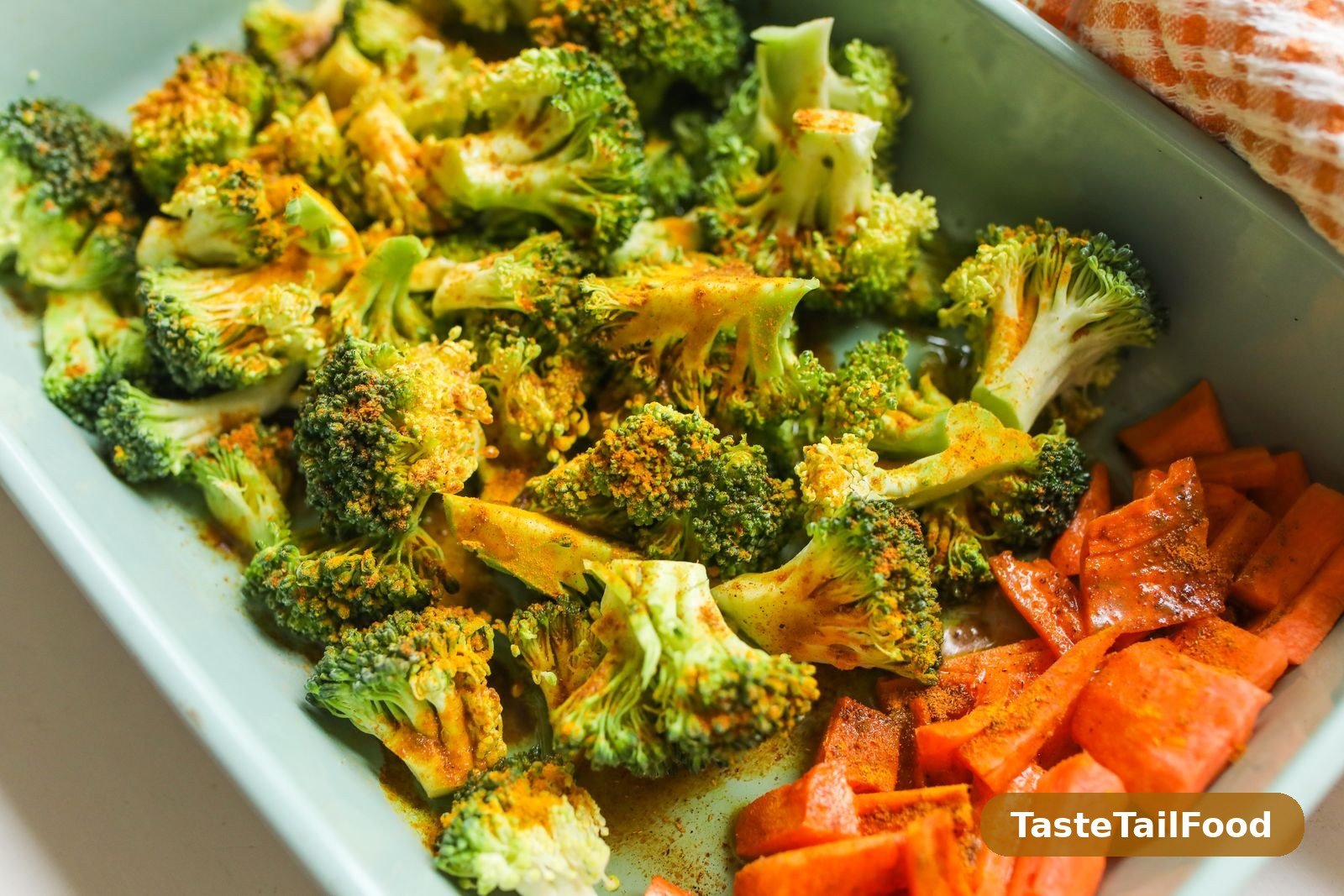
Put the tray in the oven and roast for 18 to 22 minutes. Do not stir the broccoli for the first fifteen minutes. Leave it alone so the side touching the tray can brown properly. After fifteen minutes, have a look. The edges should be starting to turn golden and the florets should look a little shrunken. If you want, give the tray a shake or turn a few pieces, but if they are browning nicely, just leave them. The broccoli is done when the edges are crisp and dark golden in places, the stems are tender when you poke them with a knife, and the whole tray smells nutty and roasted. A few dark, almost charred tips are not a mistake. They are the best bits.
Take the tray out of the oven and, while the broccoli is still hot, scatter the grated Parmesan over the top and squeeze over the lemon juice. Then grate the lemon zest over everything and toss it all gently right there on the tray. The heat melts the Parmesan just enough to cling, and the lemon juice sizzles a little on the hot tray, which smells wonderful. Taste a piece and add another pinch of salt if it needs it. Serve it straight away, on the tray or tipped into a warm serving dish, while the edges are still crisp.
THE LEMON AND PARMESAN MOMENT
I want to say a little more about this, because it is the part of the recipe that people get wrong most often, and it is also the part that makes the dish. Parmesan and lemon both go on at the end, never at the start, and there are good reasons for both.
Parmesan burns easily. It is a hard, dry cheese with very little moisture, and in a 220°C oven it goes from golden to bitter and black in a couple of minutes. If you put it on at the beginning, you will get broccoli with burnt cheese stuck to it, and the whole tray will taste of smoke. Put it on at the end, on broccoli that is still hot from the oven, and it melts gently into the florets without ever getting near burning. The difference is night and day.
Lemon is the same story, but for a different reason. Lemon juice is mostly water, and if it goes into the oven it steams the broccoli and stops the edges crisping. Lemon zest is even more delicate. The oils in the zest are what carry the flavour, and they evaporate in high heat. Put the zest on at the end, over hot broccoli, and the warmth releases those oils without destroying them, so you get a bright, fresh lemon flavour instead of a faint sourness. The juice goes on at the same time, and its sharpness cuts through the saltiness of the Parmesan in a way that makes both of them taste better.
This is also why I grate the zest first and keep it aside until the end. If you zest the lemon while the broccoli is in the oven, the zest dries out on the board. Zest it, put it in a small bowl, and use it the moment the tray comes out. It takes ten seconds, and it is worth it.
COMMON MISTAKES AND HOW TO AVOID THEM
The most common problem is soggy broccoli, and it almost always comes back to crowding or a cool oven. If your broccoli came out soft and pale, check two things. First, was the oven really at 220°C? Ovens lie, and if yours runs cool, the broccoli will steam instead of roast. An oven thermometer costs very little and tells you the truth. Second, was the tray overcrowded? If the florets were touching each other, they were steaming. Next time, use two trays, or roast in two batches. It takes a few minutes longer, but the result is completely different.
The opposite problem is burnt broccoli, and that usually means the florets were too small or the tray was left in too long. Tiny florets and loose crumbs burn fast at 220°C, so cut the pieces a decent size and shake off any loose crumbs before the broccoli goes on the tray, or they will turn black and taste bitter. If your oven has hot spots, turn the tray halfway through so one side does not burn while the other is still pale.
If the garlic burned and the whole tray tastes bitter, the garlic was minced too fine. Minced garlic has so much surface area that it burns in minutes at high heat. Sliced garlic, or whole cloves that you crush after roasting, will not burn, because they have less surface exposed. If you only have minced garlic, add it halfway through the roasting time instead of at the start, so it gets ten minutes instead of twenty.
And if the Parmesan clumped into a single melted sheet instead of coating the florets, it was probably grated too coarsely, or the broccoli had cooled down before the cheese went on. Grate it fine, almost like snow, and put it on while the broccoli is still hot from the oven. Toss it gently so it falls between the florets instead of sitting in one place.
STORING AND REHEATING
Roasted broccoli is at its best straight from the oven, when the edges are still crisp. But leftovers are still good, and they are worth keeping, because they make an easy lunch the next day. Let the broccoli cool completely, then store it in an airtight container in the fridge. It will keep for three to four days, and the flavour actually deepens a little overnight as the garlic and lemon settle in.
Reheating is where most people go wrong, because the microwave turns crisp broccoli soft in about thirty seconds. If you have a few minutes, reheat it in the oven or in an air fryer at 200°C for five to seven minutes, and the edges will crisp up again. The air fryer is especially good for this, and it is one of the reasons I use mine so often for vegetables. If you only have a microwave, reheat it in short bursts and accept that it will be softer. It will still taste good, just different.
Cold roasted broccoli is also worth trying, and I mean that. Tossed into a grain bowl or a salad the next day, with the Parmesan and lemon still on it, it is genuinely delicious. It keeps its flavour even when it loses its crunch, and a squeeze of fresh lemon over the top wakes it up again.
For general food safety, the same rules that apply to any cooked vegetable apply here. The USDA has clear guidance on leftovers and food safety that covers how long cooked food keeps in the fridge and how to store it safely, and it is a useful reference if you cook in batches like I do.
WHAT TO SERVE WITH IT
This broccoli goes with almost anything, which is why it has become my default side dish. It is the vegetable I make when the main dish is already decided and I need something that will not fight with it. Roast chicken is the most natural partner, and it is a combination I come back to again and again. A tray of this broccoli next to our easy chicken dinner without an oven is a complete meal that takes almost no effort, because both dishes are simple and both let their ingredients do the talking.
It is just as good with something richer. After a garlicky main like our easy garlic chicken without butter, this broccoli is the fresh, bright thing on the plate that keeps the meal from feeling heavy. The lemon and the Parmesan echo the garlic in the chicken without repeating it, and the two dishes sit together happily. And if dinner is something creamy, like our creamy garlic butter chicken thighs, the broccoli is the crisp, sharp contrast that the meal needs, and it soaks up the sauce in the best way.
For a lighter evening, it works beautifully next to rice. A bowl of our quick chicken and rice with frozen vegetables with a pile of this broccoli on the side is the kind of weeknight dinner that feels like a proper meal without taking more than half an hour. The broccoli adds colour and crunch to the plate, and the lemon brightens the whole thing. Children usually eat it without complaint too, especially the crispy edges, which they treat like a snack.

It also stands on its own. A big plate of this broccoli with some good bread and a soft cheese is a perfectly good light lunch, and it is the sort of thing I make for myself on a quiet afternoon when I want something quick and satisfying. Add a fried egg on top and it becomes a proper meal. Or toss the leftovers into pasta with a little more Parmesan and a splash of the pasta water, and you have a dinner that tastes far better than the effort it took.
VARIATIONS WORTH TRYING
Once you have the basic version working, this recipe is easy to make your own, because the method stays the same and only the finishing changes. The simplest variation is to swap the Parmesan for Pecorino, which is saltier and sharper, or for a hard aged cheddar, which melts a little more and gives a deeper, nuttier flavour. Both work, and both are worth trying to see which you prefer.
For a bit of heat, add a pinch of chilli flakes with the oil at the start, and finish with a drizzle of chilli oil instead of lemon juice. The warmth builds slowly and the broccoli takes on a completely different character. For a softer, richer version, scatter a few knobs of butter over the hot broccoli at the end instead of the lemon juice, and let it melt into the florets with the Parmesan. It is not as bright, but it is wonderfully comforting on a cold evening.
You can also roast other vegetables on the same tray. Carrots cut into sticks, cauliflower florets, and chunks of sweet potato all roast at the same temperature and in roughly the same time, and they turn a single vegetable side into a proper roasted vegetable medley. Just keep the pieces a similar size so everything finishes together, and do not crowd the tray. The Parmesan and lemon work just as well over a mixed tray as they do over broccoli alone.
And if you want to make it a little more substantial, add a tin of drained chickpeas to the tray for the last ten minutes of roasting. They go crisp at the edges and soak up the garlic and lemon, and the broccoli and chickpeas together, with some bread, make a meal in themselves. It is the version I make when I want something filling without cooking a separate main dish.
WHY ROASTED BEATS STEAMED
I am not against steamed broccoli. Steamed properly, for just a few minutes, it is bright green and fresh, and it has its place. But roasting does something steaming cannot do, and that is the browning. When broccoli roasts, the natural sugars in it caramelise, and the flavour deepens from green and slightly bitter to nutty and sweet. It is the same reason a roasted potato tastes different from a boiled one, and the same reason toast tastes different from bread. Heat changes flavour, and high heat changes it more.
Steaming also keeps all the moisture in, which is fine if you want a soft vegetable, but it is the reason steamed broccoli so often ends up watery and bland. Roasting drives moisture off the surface, and that is what lets the edges crisp and the flavour concentrate. You lose a little of the bright green colour, but you gain so much flavour that it is not a fair trade in the other direction. I have served this to people who told me they hated broccoli, and watched them go back for seconds. The broccoli did not change. The cooking did.
That is really what this recipe is about. It is not a clever dish, and it is not a difficult one. It is a simple vegetable cooked the right way, with two good ingredients added at the right moment. It takes ten minutes of work and twenty minutes in the oven, and it turns the most ordinary side dish into the thing people talk about after dinner. Once you have made it, you will understand why I make it two or three times a week. And once your family has tasted it, they will ask for it just as often.
FREQUENTLY ASKED QUESTIONS
Can I make roasted broccoli ahead of time?
Yes, you can roast it a few hours ahead and reheat it, though it is at its best fresh from the oven. If you need to make it ahead, roast it fully, let it cool, and store it in the fridge. Reheat it in a hot oven or an air fryer at 200°C for five to seven minutes, and the edges will crisp up again. Add the Parmesan and lemon after reheating rather than before storing, so the cheese stays fresh and the lemon stays bright.
Why is my roasted broccoli soggy?
Soggy broccoli almost always means the tray was overcrowded or the oven was not hot enough. The florets need space around them so the moisture can escape, and the oven needs to be at 220°C so the edges crisp instead of steaming. Use two trays if you have to, and make sure the oven is fully preheated before the broccoli goes in. A hot tray helps too, so put the tray in the oven while it heats.
Should I use fresh or frozen broccoli for roasting?
Fresh broccoli is much better for roasting, because frozen broccoli releases a lot of water as it thaws and that water stops the edges crisping. If frozen is all you have, thaw it completely first, pat it very dry with a clean towel, and roast it at the same temperature for a few minutes longer. It will still taste good, but it will not get as crisp as fresh broccoli, and you should expect a softer result.
Can I add the Parmesan at the start of cooking?
No, and this is the most important timing detail in the recipe. Parmesan burns quickly at 220°C and turns bitter, so it should only go on at the very end, when the broccoli comes out of the oven. The heat of the broccoli is enough to melt it gently without burning it, and it clings to the florets beautifully. If you add it at the start, you will get burnt cheese and a tray that tastes of smoke.
How do I stop the garlic from burning?
Use thin slices instead of minced garlic, because minced garlic has so much surface area that it burns in minutes at high heat. Sliced garlic softens and sweetens in the oven without burning. If you only have minced garlic, add it halfway through the roasting time so it gets ten minutes instead of twenty, and toss it with the oil so it sticks to the broccoli rather than falling onto the bare tray.
Can I make this without cheese?
Yes, and it is still a lovely dish. Leave out the Parmesan and finish with the lemon zest and juice, a little extra salt, and a drizzle of good olive oil. A sprinkle of toasted breadcrumbs adds the savoury crunch that the cheese would have given, and a few toasted pine nuts work just as well. The method does not change at all, and the broccoli is still crisp and golden.
What temperature is best for roasting broccoli?
220°C (425°F) is the sweet spot. It is hot enough to crisp the edges and caramelise the natural sugars in about twenty minutes, while the stems stay tender inside. A lower temperature will cook the broccoli, but it will steam rather than roast, and you will lose the crisp edges that make this dish special. A higher temperature risks burning the small florets before the thick stems are done.
One Comment