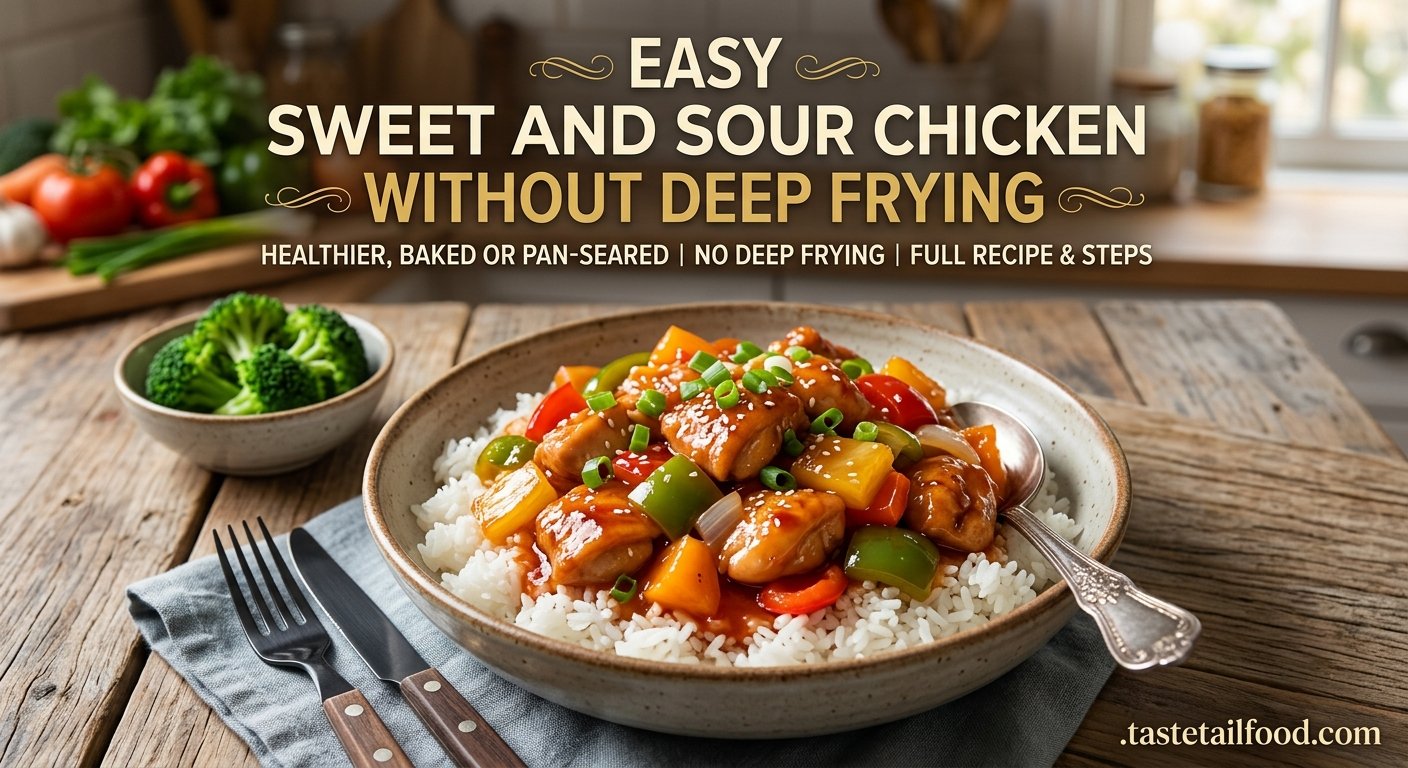
Easy Sweet and Sour Chicken Without Deep Frying
If you love sweet and sour chicken but do not want to deal with a pot full of hot oil, this easy sweet and sour chicken without deep frying is the recipe to try. You still get tender pieces of chicken coated in a glossy, flavorful sauce, but everything is cooked in a skillet with just a small amount of oil.
This homemade version is simple enough for a busy weeknight and tastes much fresher than takeout. The chicken becomes lightly golden on the outside while staying juicy inside, and the sweet and sour sauce brings together the perfect balance of tangy, sweet, and savory flavors.
The best part is that you do not need any special equipment. A large skillet, a few basic ingredients, and about 30 minutes are all you need.
Why You’ll Love This Sweet and Sour Chicken
Traditional sweet and sour chicken is often battered and deep-fried before being tossed with sauce. While delicious, deep frying can be messy and time-consuming. This recipe skips that step without sacrificing flavor.
Here are a few reasons this recipe works so well:
- No deep frying required
- Uses less oil
- Ready in about 30 minutes
- Great for a quick family dinner
- Uses simple grocery-store ingredients
- Easy to customize with vegetables
- The sauce can be made ahead
- Perfect with rice or noodles
- Much less messy than traditional frying
The chicken is lightly coated before being pan-cooked, giving it a delicate golden exterior. Once the homemade sauce is added, every piece gets covered in a shiny sweet and sour coating.
Ingredients You’ll Need
The ingredient list is straightforward, and you may already have many of these items in your kitchen.
For the Chicken
- 1 pound boneless, skinless chicken breast or thighs
- 2 tablespoons cornstarch
- 1 tablespoon all-purpose flour
- ½ teaspoon salt
- ¼ teaspoon black pepper
- 1 teaspoon garlic powder
- 1 to 2 tablespoons cooking oil
Chicken thighs are especially good if you prefer juicy meat, while chicken breast gives you a leaner option. Cut the chicken into small, evenly sized pieces so everything cooks at the same rate.
For the Sweet and Sour Sauce
- ½ cup ketchup
- ¼ cup rice vinegar or white vinegar
- ¼ cup brown sugar
- 2 tablespoons soy sauce
- ¼ cup water
- 1 teaspoon minced garlic
- 1 teaspoon grated ginger
- 1 tablespoon cornstarch
You can adjust the sauce depending on your preference. If you like it sweeter, add a little extra brown sugar. If you prefer a stronger tangy flavor, add another teaspoon or two of vinegar.
Optional Vegetables
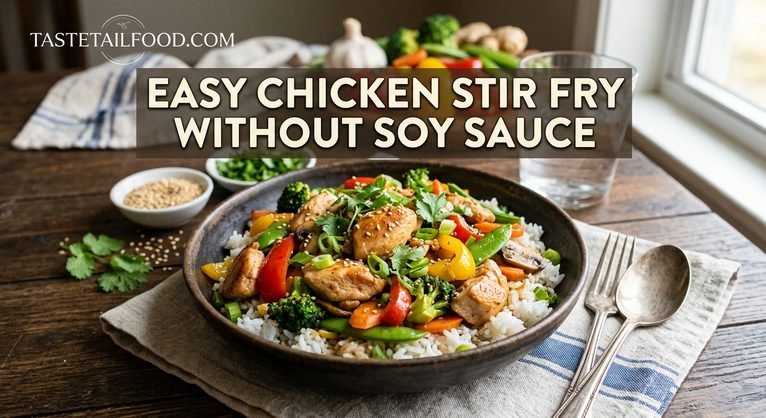
Adding vegetables makes this dish more colorful and turns it into a complete meal.
Try:
- Bell peppers
- Onion
- Pineapple chunks
- Carrots
- Broccoli
- Snow peas
Pineapple is particularly delicious because its natural sweetness works beautifully with the tangy sauce.
How to Make Sweet and Sour Chicken Without Deep Frying
The process is much easier than traditional fried sweet and sour chicken.
Step 1: Cut the Chicken
Start by cutting the chicken into bite-sized pieces. Try to keep the pieces similar in size so they cook evenly.
Pat the chicken dry with a paper towel. This small step helps the coating stick better and encourages the chicken to brown in the skillet.
Place the chicken in a bowl and season it with salt, black pepper, and garlic powder.
Step 2: Add a Light Coating
Sprinkle the cornstarch and flour over the seasoned chicken. Toss everything together until the chicken has a thin, even coating.
You do not want a thick layer of batter. The goal is simply to give the chicken a light coating that can become golden and slightly crisp when cooked in the pan.
This is one of the main tricks that makes sweet and sour chicken without deep frying work so well.
Step 3: Cook the Chicken in a Skillet
Heat a large skillet over medium-high heat. Add the oil and let it heat for a few seconds.
Place the chicken pieces in the skillet in a single layer. Avoid overcrowding the pan. If necessary, cook the chicken in two batches.
Let the chicken cook undisturbed for about 2 to 3 minutes. Once the bottom is golden, turn the pieces and continue cooking.
Cook until the chicken is golden on the outside and completely cooked through.
Remove the chicken from the skillet and place it on a plate.
Step 4: Prepare the Sauce
While the chicken is cooking, you can make the sauce.
In a small bowl, whisk together ketchup, vinegar, brown sugar, soy sauce, water, garlic, ginger, and cornstarch.
Make sure the cornstarch is fully dissolved. This prevents lumps from forming when the sauce goes into the hot skillet.
Step 5: Cook the Vegetables
If you are using vegetables, add them to the same skillet after removing the chicken.
Cook the bell peppers and onions for a few minutes. You want them to soften slightly while still keeping some texture.
If you are using broccoli or carrots, you may need to cook them a little longer.
Step 6: Add the Sauce
Pour the sweet and sour sauce into the skillet.
Stir continuously as it begins to heat. Within a couple of minutes, the cornstarch will activate and the sauce will start to thicken.
You are looking for a smooth, glossy sauce that coats the back of a spoon.
Step 7: Return the Chicken
Add the cooked chicken back to the skillet.
Toss everything together until every piece of chicken is covered with sauce.
Let it simmer for another 1 to 2 minutes. This gives the chicken time to absorb some of the sweet and sour flavor.
Then turn off the heat and serve immediately.
How to Keep the Chicken Tender
One common problem with homemade chicken recipes is dry meat. Fortunately, there are several easy ways to prevent that.
First, avoid cutting the chicken into extremely small pieces. Bite-sized pieces are ideal.
Second, do not cook the chicken for much longer than necessary. Chicken breast can become dry when overcooked.
Third, make sure your skillet is hot before adding the chicken. A properly heated skillet helps the coating brown quickly while keeping the inside moist.
Finally, allow the chicken to finish cooking in the sauce for only a short time. You want the sauce to coat the chicken, not boil it for several minutes.
How to Make the Sauce Perfectly Balanced
The sauce is what gives this dish its signature flavor.
A good sweet and sour sauce should not taste overwhelmingly sweet or sharply acidic. Instead, the flavors should balance each other.
The ketchup contributes sweetness and tomato flavor. Vinegar provides the sour element. Brown sugar adds a deeper sweetness, while soy sauce provides saltiness and umami.
If your sauce tastes too sweet, add a little vinegar.
If it tastes too sour, add a little brown sugar.
If it tastes too salty, add a splash of water.
If you want more depth, add a small amount of fresh ginger or garlic.
Taste the sauce before adding the chicken and adjust it to your liking.
Best Vegetables for Sweet and Sour Chicken
Vegetables are completely optional, but they add flavor, texture, and color.
Bell Peppers
Red, green, yellow, and orange bell peppers all work well. They become slightly sweet as they cook and complement the sauce.
Onions
Yellow or white onions are excellent. Cook them until slightly softened but not completely mushy.
Pineapple
Pineapple is a classic addition to sweet and sour chicken. You can use fresh pineapple or canned pineapple chunks.
If using canned pineapple, drain it well before adding it to the skillet.
Broccoli
Broccoli gives the dish a fresh flavor and makes it more filling. Cook it until bright green and slightly tender.
Carrots
Thinly sliced carrots add natural sweetness and a nice crunch.
Can You Make This Recipe Without Cornstarch?
Yes. Cornstarch helps create a light coating on the chicken and thickens the sauce, but you can make substitutions.
For the chicken, you can use flour alone. The texture will be slightly different, but the recipe will still work.
For the sauce, use a small amount of flour mixed thoroughly with water. Keep in mind that flour usually produces a slightly less glossy sauce than cornstarch.
Arrowroot powder can also work as a thickener if you have it available.
Can You Use Chicken Thighs?
Absolutely.
Chicken thighs are an excellent choice for this recipe because they contain more fat than chicken breast, which helps keep them tender and flavorful.
Cut boneless chicken thighs into bite-sized pieces and cook them using the same method.
If you prefer white meat, chicken breast works perfectly well too.
How to Make It Spicier
Sweet and sour chicken does not have to be mild.
For a spicy version, add:
- Red pepper flakes
- Sriracha
- Chili garlic sauce
- Fresh sliced chili peppers
- A small amount of hot sauce
Start with a little and taste the sauce before adding more.
A sweet and spicy combination can be especially delicious served over plain white rice.
How to Make This Recipe Healthier
Skipping deep frying already makes this recipe lighter than traditional versions.
You can make a few additional changes if you want.
Use chicken breast instead of thighs, reduce the amount of brown sugar, increase the vegetables, and serve the chicken with steamed rice or cauliflower rice.
You can also reduce the amount of oil used for cooking as long as your skillet is good quality and the chicken does not stick.
The goal is not to remove everything that makes the dish enjoyable. A balanced homemade meal can still be flavorful and satisfying.
What to Serve With Sweet and Sour Chicken
This chicken is incredibly versatile.
White Rice
Steamed white rice is probably the easiest choice. The mild flavor allows the sweet and sour sauce to stand out.
Brown Rice
Brown rice adds a slightly nutty flavor and more texture.
Fried Rice
For a more filling meal, serve the chicken with homemade fried rice.
Noodles
Egg noodles, rice noodles, or simple stir-fried noodles pair beautifully with the sauce.
Steamed Vegetables
If your chicken already contains vegetables, you can keep the side dish simple with steamed broccoli or green beans.
Tips for the Best Results
A few small details can make a big difference.
Do not overcrowd the skillet. If too much chicken is packed into the pan, it will steam instead of browning.
Cut the chicken evenly. Similar-sized pieces cook at the same speed.
Keep the coating light. Too much flour or cornstarch can create a thick, doughy exterior.
Mix the sauce before adding it. Cornstarch settles quickly, so give the mixture another stir before pouring it into the skillet.
Taste before serving. Adjust the sweetness and acidity according to your preference.
Serve immediately. The coating is at its best when the chicken is freshly cooked and covered with warm sauce.
Common Mistakes to Avoid
Using Too Much Oil
You do not need a lot of oil to brown the chicken. A tablespoon or two is usually enough in a good skillet.
Cooking on Very Low Heat
Low heat can cause the chicken to release moisture and steam instead of becoming golden. Medium-high heat works better for browning.
Making the Sauce Too Thick
The sauce should coat the chicken rather than turn into a paste. If it becomes too thick, add a tablespoon or two of water.
Adding Cold Chicken to a Crowded Pan
If the skillet is overcrowded, the temperature drops quickly. Cook in batches if necessary.
Overcooking the Chicken
Once the chicken reaches a safe internal temperature and is no longer pink in the center, it is ready. Overcooking can make breast meat dry.
Can You Make Sweet and Sour Chicken Ahead of Time?
Yes, but it is best when freshly prepared.
You can make the sauce ahead and store it in the refrigerator for several days in an airtight container.
You can also cut and season the chicken several hours before cooking.
For the best texture, cook the chicken shortly before serving.
If you have leftovers, refrigerate them in a sealed container and reheat them gently in a skillet or microwave.
Keep in mind that the chicken coating will soften after sitting in the sauce. It will still taste delicious, but it will not have the same texture as freshly cooked chicken.
How to Store Leftovers
Allow the chicken to cool before transferring it to an airtight container.
Store it in the refrigerator and enjoy it within a few days.
When reheating, a skillet is usually better than very high microwave heat because it warms the chicken more evenly.
Add a small splash of water if the sauce has become too thick.
Easy Variations
Once you have the basic recipe, there are many ways to change it.
Pineapple Sweet and Sour Chicken
Add pineapple chunks along with bell peppers and onions.
Spicy Sweet and Sour Chicken
Add chili flakes or your favorite hot sauce to the sauce.
Vegetable Sweet and Sour Chicken
Increase the vegetables and reduce the amount of chicken for a more vegetable-focused meal.
Honey Sweet and Sour Chicken
Replace some of the brown sugar with honey for a slightly different sweetness.
Garlic Sweet and Sour Chicken
Increase the garlic for a stronger savory flavor.
Frequently Asked Questions
Can I make sweet and sour chicken without deep frying?
Yes. This recipe uses a skillet and a small amount of oil instead of deep frying. A light cornstarch and flour coating helps the chicken develop a golden exterior.
Is sweet and sour chicken better with breast or thighs?
Both work well. Chicken breast is leaner, while chicken thighs tend to be juicier and more forgiving if cooked slightly longer.
Can I make this recipe without pineapple?
Absolutely. Pineapple is optional. The sauce will still have a classic sweet and tangy flavor without it.
Can I use frozen vegetables?
Yes. Frozen bell peppers, broccoli, or mixed vegetables can be used. Add them directly to the skillet and cook until heated through and slightly tender.
How do I thicken sweet and sour sauce?
Cornstarch is one of the easiest options. Always mix it with cool liquid before adding it to the hot sauce to avoid lumps.
Can I make this recipe gluten-free?
Yes, provided you use gluten-free soy sauce or tamari and make sure the other ingredients are certified gluten-free.
Final Thoughts
This easy sweet and sour chicken without deep frying proves that you do not need a deep fryer to make a delicious homemade version of a takeout favorite. The chicken gets lightly golden in a skillet, while the homemade sauce delivers that familiar combination of sweetness, tanginess, and savory flavor.
It is quick enough for a weeknight dinner but tasty enough to serve when you want something a little more special. Add bell peppers, onions, and pineapple for a colorful meal, or keep things simple with chicken and sauce served over steamed rice.
Once you make it at home, you may find yourself choosing this version over takeout. It is easier, less messy, uses less oil, and gives you complete control over the flavor.
For a simple dinner that delivers big flavor without the hassle of deep frying, this recipe is definitely worth adding to your regular meal rotation.